
Senate is making progress on market structure bill, Banking panel head says
Senate Crypto Bill Gains Momentum as Stablecoin Yield Debate Nears Resolution
In a significant development for the cryptocurrency industry, the long-stalled Senate crypto market structure bill appears to be making substantial progress behind closed doors, with lawmakers potentially releasing a new draft addressing stablecoin yield provisions as early as this week.
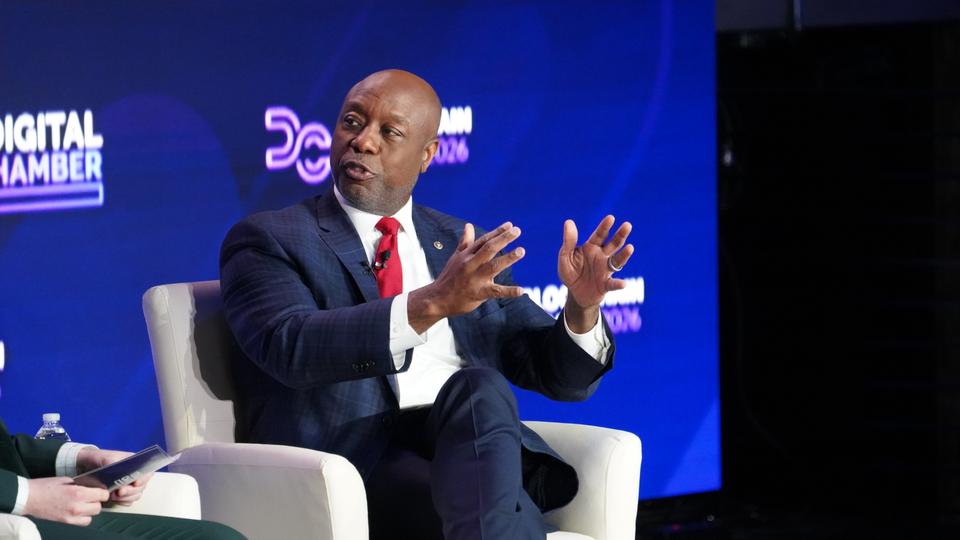
Senator Tim Scott, chairman of the Senate Banking Committee, delivered the encouraging update during his keynote address at the Digital Chamber’s DC Blockchain Summit in Washington, D.C. The South Carolina Republican indicated that after months of negotiations and public debate, a breakthrough may finally be at hand.
“We’re seeing real movement on the stablecoin yield question,” Scott told attendees. “I believe that this week we will have the first proposal in my hands to take a look at. If that actually happened before the end of this week, and I think that it will, we’ll at least know that the sketch looks like the person. If that’s the case, I think we’re gonna be in much better shape.”
The stablecoin yield provision has emerged as the most contentious element of the broader market structure legislation. The debate centers on whether stablecoin issuers should be permitted to generate and distribute yield to holders, a practice that has become increasingly popular in the crypto ecosystem but raises significant regulatory and consumer protection concerns.
Scott specifically credited several key players for their work on resolving the yield issue, including Democratic Senator Angela Alsobrooks, Republican Senator Thom Tillis, and Patrick Witt from the White House. Their collaborative efforts suggest a rare moment of bipartisan cooperation in an otherwise polarized legislative environment.
Beyond the stablecoin yield question, Scott revealed that other critical issues have also seen substantial progress over the past month. The negotiations have addressed several sensitive topics that had previously threatened to derail the entire legislative effort.
One major concern has been the appearance of conflicts of interest involving U.S. President Donald Trump and his family’s crypto ventures. Lawmakers have worked to craft provisions that would prevent any perception of regulatory capture or special treatment for politically connected projects.
The composition of regulatory agencies has also been a sticking point, with lawmakers expressing concern about the lack of bipartisan commissioners at key agencies like the Securities and Exchange Commission and the Commodity Futures Trading Commission. The current makeup has raised questions about the legitimacy and balance of regulatory oversight.
Know-your-customer (KYC) regulations and anti-money laundering (AML) provisions have proven particularly challenging, especially as they relate to decentralized finance (DeFi) protocols. Senator Mark Warner has been especially vocal about the need for robust AML frameworks that can effectively monitor and regulate the rapidly evolving DeFi landscape.
“I think we’re very close to landing the plane on the ethics issue, on quorum,” Scott said. “We know that that’s a big issue for our friends on the other side of the aisle, so we’re fixing that as well. I think we’re moving forward with some [nominations], which is great news that we were able to get some out of the other side. I think the issue of DeFi is something that [Senator] Mark Warner’s held on tightly, AML being a very important part. So I think we’re working on that issue.”
The progress on these various fronts suggests that lawmakers may be nearing a comprehensive agreement that could finally bring regulatory clarity to the U.S. cryptocurrency market. Industry observers have long argued that clear, thoughtful regulation is essential for the continued growth and maturation of the crypto sector.
The timing of this potential breakthrough is particularly significant given the accelerating pace of institutional adoption and the growing mainstream acceptance of digital assets. Major financial institutions, payment processors, and technology companies have all been expanding their crypto offerings, creating increased pressure for regulatory frameworks that can accommodate innovation while protecting consumers and maintaining financial stability.
If Scott’s assessment proves accurate and a draft addressing stablecoin yield emerges this week, it could signal the beginning of the end for what has been a protracted legislative process. The crypto industry, which has operated in a regulatory gray area for years, appears poised to finally receive the clarity it has been seeking.
The potential resolution of these issues would represent a major victory for proponents of crypto regulation, demonstrating that even in today’s highly partisan political environment, lawmakers can find common ground on complex technological issues. It would also provide a template for how Congress might approach other emerging technologies that challenge existing regulatory paradigms.
As the week unfolds, all eyes will be on Capitol Hill to see whether Scott’s optimism is warranted and whether the long-awaited crypto market structure bill is indeed on the verge of taking a significant step forward. The implications for the multi-trillion dollar cryptocurrency industry could be profound, potentially setting the stage for the next phase of digital asset adoption and innovation in the United States.
crypto regulation, stablecoin yield, Senate Banking Committee, Tim Scott, Angela Alsobrooks, Thom Tillis, DeFi regulation, AML compliance, KYC requirements, crypto market structure, blockchain legislation, digital assets, SEC oversight, CFTC authority, institutional adoption, regulatory clarity, bipartisan cooperation, crypto innovation, financial technology, emerging markets
Senate crypto breakthrough, stablecoin yield resolution, bipartisan crypto deal, DeFi regulatory framework, AML crypto compliance, KYC crypto regulations, market structure bill progress, blockchain legislative update, crypto regulatory clarity, institutional crypto adoption, bipartisan crypto cooperation, emerging tech regulation, crypto industry transformation, digital asset oversight, SEC crypto authority, CFTC crypto jurisdiction, Trump crypto ventures, political crypto conflicts, crypto market maturation, legislative crypto victory
The crypto market structure bill is finally gaining momentum after months of stalled negotiations, with lawmakers potentially releasing a new draft addressing stablecoin yield provisions as early as this week. Senator Tim Scott, chairman of the Senate Banking Committee, revealed that bipartisan cooperation is yielding results on issues ranging from DeFi regulation to political conflict-of-interest concerns. The potential breakthrough comes at a critical time as institutional adoption accelerates and the $2 trillion crypto industry awaits regulatory clarity. If successful, this legislation could set the standard for how Congress approaches emerging technologies in an increasingly digital financial landscape.
,


Leave a Reply
Want to join the discussion?Feel free to contribute!