
Senators move to block federal officials from betting on political prediction markets
U.S. Senators Move to Block Federal Officials from Betting on Political Prediction Markets
In a bold legislative push that has sent shockwaves through Washington and the tech industry alike, two U.S. senators have introduced groundbreaking legislation to prevent federal officials from profiting off prediction markets tied to political and geopolitical events. The move comes amid growing concerns about potential insider trading and the integrity of America’s democratic institutions.
The End Prediction Market Corruption Act: A Closer Look
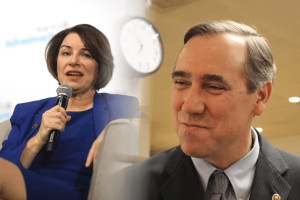
Senators Jeff Merkley (D-OR) and Amy Klobuchar (D-MN) have unveiled the End Prediction Market Corruption Act, a bill designed to amend the Commodity Exchange Act and create a firewall between federal leadership and event-based financial instruments. The legislation specifically targets prediction markets where participants wager on the outcomes of real-world events, from elections to international conflicts.
“We cannot allow public officials to use their privileged positions to line their pockets at the expense of public trust,” Merkley stated in a press release. “When government insiders can bet on the very events they influence, we have a fundamental conflict of interest that threatens the integrity of our democracy.”
Klobuchar echoed these sentiments, emphasizing the need for regulatory clarity in an industry experiencing explosive growth. “As prediction markets have exploded in popularity, we’ve seen increasing reports of questionable activity,” she explained. “This legislation strengthens the Commodity Futures Trading Commission’s ability to crack down on bad actors and establishes clear rules to prevent those with confidential information from exploiting their access.”
What the Legislation Would Actually Do
The proposed law would establish a comprehensive ban preventing the President, Vice President, and all members of Congress from participating in prediction markets. The prohibition extends to “event contracts” – financial instruments whose value fluctuates based on whether specific real-world developments occur.
But the restrictions don’t stop at elected officials. The bill would also limit senior executive branch officials from trading in markets related to matters where they have personal and substantial involvement as government employees. This provision aims to close potential loopholes that could allow high-ranking bureaucrats to profit from their policy decisions.
Violations would carry significant penalties. The Attorney General would have authority to pursue civil enforcement actions, with violators facing fines of up to $10,000 per violation or the amount of profit gained from the prohibited trades – whichever is greater.
The Prediction Market Boom and Growing Scrutiny
The legislation arrives at a critical juncture for prediction markets, which have seen unprecedented growth and attention in recent years. Platforms like Kalshi and Polymarket have attracted millions of dollars in trading volume, with users betting on everything from election outcomes to cryptocurrency prices to geopolitical developments.
Proponents argue these markets serve as valuable forecasting tools, aggregating dispersed information to generate surprisingly accurate predictions about future events. Some economists and technologists view them as superior to traditional polling or expert analysis for gauging public expectations.
However, critics contend the line between legitimate forecasting and gambling has become dangerously blurred. The ability to profit from sensitive political developments has raised alarms about potential manipulation and the exploitation of non-public information.
Controversial Trades Fuel Legislative Action
Recent high-profile trades have intensified scrutiny of prediction markets and appear to have directly influenced the timing of this legislation. Reports have surfaced of traders earning substantial profits by placing wagers shortly before major geopolitical developments became public knowledge.
In one particularly striking example, a trader reportedly cleared over $400,000 by betting on the removal of Venezuelan leader Nicolás Maduro just before the event unfolded. Another instance involved millions of dollars flowing into contracts related to Iran’s Supreme Leader Ali Khamenei ahead of significant regional developments.
While no definitive evidence of insider trading has emerged in these specific cases, the timing and magnitude of the trades have raised serious questions. The appearance of impropriety alone has been enough to galvanize legislative action, with lawmakers concerned about the potential for abuse.
Industry Pushback and Regulatory Challenges
Prediction market operators have pushed back against the proposed restrictions, arguing that regulated platforms already maintain safeguards against insider trading and must comply with Commodity Futures Trading Commission rules. Kalshi, one of the leading platforms, has repeatedly defended its practices while emphasizing its commitment to regulatory compliance.
However, the company has found itself on the defensive multiple times, particularly regarding controversial contracts related to geopolitical events. The firm has had to repeatedly explain its position on sensitive contracts, including those tied to the status of foreign leaders.
The legislative effort also comes amid broader regulatory uncertainty. The CFTC, which oversees derivatives markets including prediction contracts, has faced mounting pressure from lawmakers to investigate certain market activities and consider tighter restrictions on contracts tied to death, war, or other sensitive topics.
A Bipartisan Concern?
While the Merkley-Klobuchar bill has garnered support primarily from Democratic senators, including co-sponsors Chris Van Hollen, Adam Schiff, and Kirsten Gillibrand, the underlying concerns appear to transcend party lines. Several Republican lawmakers have also expressed unease about prediction markets, particularly those involving political events or national security matters.
The legislation has earned endorsements from government ethics organizations, including Public Citizen, Citizens for Responsibility and Ethics in Washington, and the Project on Government Oversight. These groups argue that preventing federal officials from trading event contracts would reduce conflicts of interest and strengthen ethical standards in public service.
The Broader Context: Gambling vs. Investing Debate
The prediction market controversy is part of a larger national conversation about the distinction between gambling and investing. Some critics argue that prediction platforms are essentially offering casino-style betting dressed up in sophisticated financial terminology, allowing them to circumvent state gaming laws.
Nevada Senator Dina Titus has introduced separate legislation, the “Fair Markets and Sports Integrity Act,” which would prohibit contracts tied to sporting events or casino-style games. A coalition called “Gambling is Not Investing” has formed to argue that prediction platforms are exploiting regulatory loopholes to avoid consumer protections that govern legal gambling.
This framing pits prediction market advocates, who see these platforms as innovative forecasting tools, against critics who view them as predatory gambling operations targeting unsophisticated investors.
What Happens Next?
The fate of the End Prediction Market Corruption Act remains uncertain, particularly given the current partisan composition of Congress. The bill’s progress will likely depend on how the issue resonates with the broader public and whether additional evidence of misconduct emerges.
Industry observers note that even if the federal official ban doesn’t pass, the heightened scrutiny could prompt self-regulatory changes from prediction market operators seeking to avoid more restrictive legislation.
The controversy also raises fundamental questions about the role of financial markets in a democracy. As technology continues to blur the lines between information, speculation, and influence, policymakers face the challenge of crafting regulations that protect both market innovation and democratic integrity.
For now, the debate over prediction markets and government ethics is just beginning, with this legislation representing perhaps the most significant regulatory challenge yet to an industry that has grown from niche novelty to mainstream financial phenomenon in just a few short years.
Tags: prediction markets, insider trading, federal officials, Jeff Merkley, Amy Klobuchar, commodity futures trading commission, Kalshi, Polymarket, event contracts, government ethics, political betting, regulatory reform
Viral Phrases: “End Prediction Market Corruption Act,” “perfect recipe to undermine public trust,” “bad bet for democracy,” “insider information to make a fortune,” “confidential government or policy information,” “exploiting their access for financial gain,” “safeguard is meant to prevent situations where insiders could benefit”
Viral Sentences: “No one should be abusing insider information to profit. Not about war in Iran. Not about anything.” “When public officials use non-public information to win a bet, you have the perfect recipe to undermine the public’s belief that government officials are working for the public good, not for their own personal profits.” “This legislation strengthens the Commodity Futures Trading Commission’s ability to go after bad actors and provides rules of the road to prevent those with confidential government or policy information from exploiting their access for financial gain.”
,

Leave a Reply
Want to join the discussion?Feel free to contribute!