
Sony LinkBuds Clip Review: Solid Buds, Premium Price
Sony LinkBuds Clip Review: Premium Price, Mid-Tier Performance
Sony’s latest open-ear earbuds, the LinkBuds Clip, arrive with a hefty $180 price tag and the promise of all-day comfort combined with Sony’s signature audio polish. But in a market flooded with increasingly competent competitors, do these clip-on buds justify their premium positioning? After extensive testing, the answer is complicated.
Design: Familiar Territory, Awkward Execution
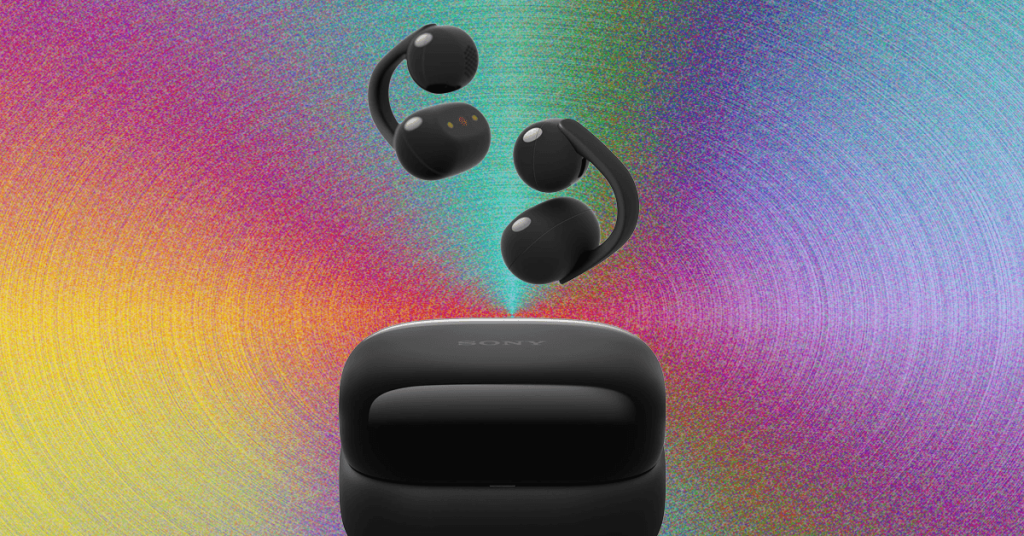
The LinkBuds Clip follow the now-standard open-ear design philosophy: lightweight buds that rest outside your ear canal, allowing ambient sound to pass through while delivering audio from a forward-facing driver. Sony’s execution, however, feels curiously derivative. The aesthetic strongly resembles Soundcore’s Aeroclip—a $100 alternative—right down to the clip-on mechanism that wraps around your ear.
At 6.4 grams per bud, they’re noticeably heavier than competitors like the Shokz OpenRun Pro (6 grams) or the Soundcore Aeroclip (5.5 grams). While not uncomfortable, the extra weight becomes noticeable during extended wear, particularly during workouts or long walks.
The charging case follows Sony’s typical design language: compact, pocketable, and constructed from a mix of gloss and matte plastics. The magnetic stands position the buds facing downward toward the front of the case—a departure from the industry standard of outward-facing orientation. This seemingly minor detail creates an awkward insertion ritual. Instead of the natural one-motion attachment most clip-on buds afford, you’ll find yourself contorting your hands to properly seat the buds in your ears.
Battery life is where Sony redeems itself somewhat: nine hours of continuous playback per charge, with the case providing an additional 27 hours. This outpaces most competitors, including the Aeroclip’s seven hours per bud.
Controls: Smart Placement, Limited Customization
Sony deserves credit for adopting Soundcore’s best design decision: placing touch controls on the connecting loop between earbud segments rather than on the bulky rear barrel. This placement makes volume adjustments and track skipping genuinely convenient—no more fumbling with the back of your ear to change songs.
However, Sony’s implementation falls short of its potential. The Sony Connect app offers minimal customization options, allowing only preset control combinations rather than individual button mapping. Want to swap volume controls for track skipping? Too bad. Need quick access to your voice assistant? You’ll need to sacrifice another function. This rigidity feels particularly disappointing at this price point.
The app does provide Sony’s usual array of features: DSEE (Digital Sound Enhancement Engine) for upscaling compressed audio, 360 Reality Audio for spatial sound (subscription required), a 10-band customizable EQ, and three sound modes including a “Sound Leakage” option designed to minimize audio escape. Whether you need this last feature in open-ear headphones is debatable, but it’s there if you want it.
Audio Performance: Clear, But Unremarkable
For open-ear headphones, the LinkBuds Clip deliver competent audio. The sound signature leans bright, with clear mids and adequate bass presence—though bassheads will find themselves wanting more depth. The customizable EQ helps tailor the sound to personal preferences, and Sony’s DSEE processing does provide noticeable improvement to compressed streaming audio.
What’s missing is the audio innovation you’d expect from Sony at this price. Competitors like the Shokz OpenRun Pro offer bone conduction technology that, while different, provides superior bass response and a more immersive experience. The LinkBuds Clip sound fine, but they don’t sound special.
Call Quality: A Significant Letdown
Here’s where the LinkBuds Clip stumble badly. Despite Sony’s claims of AI Voice Pickup technology with bone conduction elements designed to isolate speech and suppress background noise, call quality proved consistently disappointing.
On my end, voices frequently sounded tinny and occasionally distorted, particularly in noisier environments. Call recipients consistently reported that I sounded as though I were on speakerphone, with one describing the audio quality as “underwater-like.” This is particularly problematic for a product positioned as a premium daily driver.
The Verdict: Hard to Recommend
At $180, the Sony LinkBuds Clip face stiff competition from several directions. The Soundcore Aeroclip delivers nearly identical functionality for $100. The Shokz OpenRun Pro, while using different bone conduction technology, offers superior call quality and a more distinctive audio experience for $130.
Sony’s brand recognition and the LinkBuds Clip’s impressive battery life are their primary selling points, but they’re not enough to overcome the awkward case design, limited app customization, and subpar call quality. For most users, the value proposition simply doesn’t add up.
If you’re deeply invested in Sony’s ecosystem or specifically need the LinkBuds Clip’s battery endurance, they’re serviceable. But for everyone else, the market offers better options at lower prices.
Tags & Viral Phrases:
SonyLinkBudsClip #OpenEarHeadphones #TechReview #AudioGear #SonyHeadphones #WirelessEarbuds #TechNews #GadgetReview #SoundQuality #BatteryLife #CallQuality #AudioTechnology #ConsumerElectronics #TechInnovation #HeadphoneReview #PremiumAudio #WirelessAudio #SonyEcosystem #SoundcoreAeroclip #ShokzOpenRunPro #BoneConduction #SpatialAudio #EQSettings #MultipointPairing #TechComparison #AudioExperience #DailyDriver #ValueProposition #DesignFlaws #UserExperience #SoundLeakage #DSEE #360RealityAudio #AITechnology #BoneConductionTechnology #AudioIsolation #VoicePickup #TechDisappointment #PremiumPricedDisappointment #WorthTheMoney #TechInvestment #AudioPerformance #CallingExperience #BatteryEndurance #DesignAesthetics #ControlCustomization #AppFeatures #AudioQuality #TechMarket #CompetitiveAnalysis #ConsumerChoice #AudioInnovation #TechStandards #ProductReview #TechTrends #AudioTechnology #WirelessFreedom #SoundExperience #TechLifestyle #AudioEnthusiast #GadgetLover #TechSavvy #AudioPerfection #SoundSignature #TechSpecifications #ProductFeatures #TechSpecifications #AudioEngineering #SoundDesign #TechAnalysis #AudioReview #TechInsights #SoundTechnology #WirelessTechnology #AudioGearReview #TechProduct #AudioEquipment #SoundQualityMatters #TechEvaluation #AudioComparison #TechSpecifications #SoundPerformance #TechAssessment #AudioTesting #TechBenchmark #SoundTesting #TechEvaluation #AudioBenchmark #TechReview2024 #SoundTechnology #WirelessAudioReview #TechProductLaunch #AudioLaunch #TechNews2024 #SoundTechnology #WirelessAudio #AudioLaunch #TechProductReview #SoundTechnology #WirelessAudio #AudioLaunch #TechProductReview #SoundTechnology #WirelessAudio #AudioLaunch #TechProductReview
,

Leave a Reply
Want to join the discussion?Feel free to contribute!