
Sophia Space raises $10M to accelerate creation of orbital computing systems
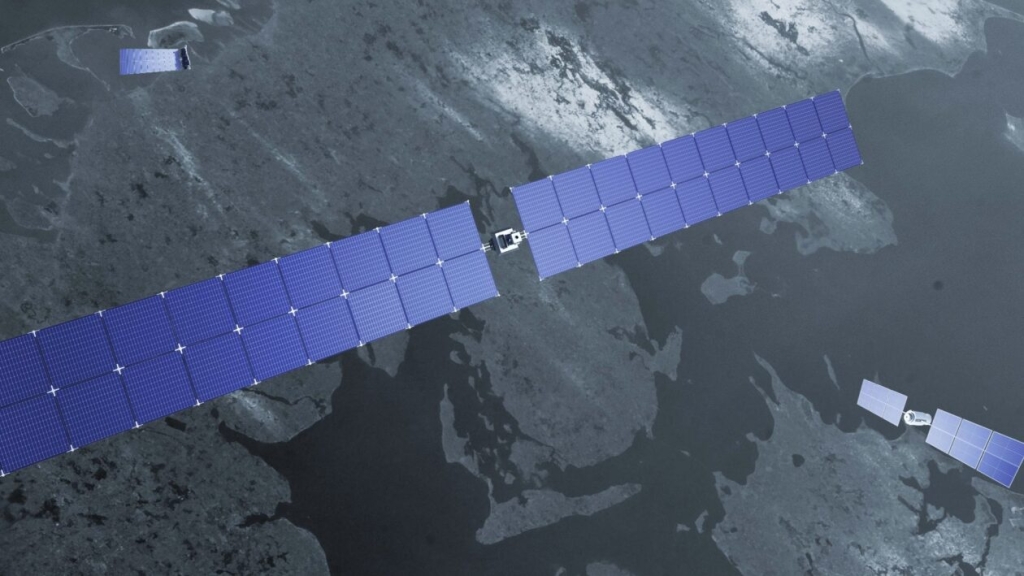
Space Startup Sophia Secures $10M to Build Orbital Data Centers for AI
In a bold leap toward the future of computing, Pasadena-based space tech startup Sophia Space has closed a $10 million seed funding round to accelerate development of its groundbreaking orbital computing infrastructure. The investment, led by Alpha Funds, KDDI Green Partners Fund, and Unlock Venture Partners, marks a major milestone in the race to establish space-based data centers capable of powering next-generation AI workloads.
The company’s flagship innovation, the TILE (Thermal-Integrated LEO Edge) platform, is a modular, tabletop-sized satellite system that integrates solar power generation and radiative cooling into a single, scalable unit. Multiple TILE modules can be connected into racks, creating a distributed computing network in low Earth orbit (LEO). This architecture is designed to overcome the twin challenges of energy scarcity and thermal management that have long plagued terrestrial and orbital computing alike.
“With this seed round, we’re not just building compute modules,” said Rob DeMillo, CEO of Sophia Space. “We’re building the infrastructure for the next era of space-based AI and data processing.” The funding will fuel hiring of top engineering talent, further maturation of the TILE platform, and the forging of strategic partnerships within the emerging orbital computing ecosystem.
A Pacific Northwest Connection
While Sophia Space is headquartered in California, the company has deep ties to the Pacific Northwest tech scene. Brian Monnin, the company’s chief growth officer, brings a wealth of experience from his time at Intel and Microsoft, as well as his entrepreneurial ventures, Play Impossible and Quivr. Monnin’s expertise in scaling innovative hardware and software solutions is expected to play a pivotal role in Sophia’s growth trajectory.
The startup was founded by Leon Alkalai, a former fellow at NASA’s Jet Propulsion Laboratory and now Sophia’s chief technology officer. Alkalai’s vision is rooted in the belief that the next frontier of computing lies beyond Earth’s atmosphere, where the unique conditions of space can be harnessed to unlock unprecedented computational power.
The Promise of Orbital Data Centers
The concept of in-space computing is gaining traction as the demand for AI-driven data processing skyrockets. Traditional data centers on Earth face mounting challenges, including land scarcity, energy consumption, and cooling requirements. Orbital data centers, by contrast, could operate in the vacuum of space, leveraging solar energy and radiative cooling to achieve unparalleled efficiency.
Sophia’s TILE architecture is specifically designed to address the cooling challenge. By positioning satellites in orbits near Earth’s day-night terminator—the line separating day and night—the system can maximize radiative cooling while maintaining consistent solar exposure. This innovative approach could pave the way for sustainable, high-performance computing in space.
Edge Computing as a Stepping Stone
While the ultimate goal is to deploy full-fledged orbital data centers, Sophia Space is taking a phased approach. The company plans to begin with edge computing applications, such as on-orbit processing of imaging data collected by Earth observation satellites. This strategy allows Sophia to generate revenue, refine its technology, and build its reputation in the space industry.
“Until we get to the level where we’re going to be putting up our own orbital data centers, selling these as edge computers allows income to flow into the company and gets our name out there, and allows us to refine things going forward,” DeMillo explained.
Sophia is targeting 2028 for the delivery of its first TILE modules to customers, with in-space demonstrations of its software slated for later this year using an existing communications network.
A New Era of Space-Based AI
The implications of Sophia’s work extend far beyond the realm of computing. By enabling real-time data processing in orbit, the company’s technology could revolutionize industries ranging from climate monitoring and disaster response to telecommunications and national security. The ability to analyze data at the edge of space could also reduce latency and bandwidth constraints, unlocking new possibilities for global connectivity and innovation.
As the space economy continues to expand, Sophia Space is positioning itself at the forefront of a paradigm shift in how we think about computing. With its innovative TILE platform and a clear vision for the future, the company is poised to play a pivotal role in shaping the next era of space-based AI and data processing.
Tags & Viral Phrases:
orbital computing, space-based AI, TILE platform, thermal-integrated LEO edge, radiative cooling, edge computing, low Earth orbit, space data centers, NASA JPL, Pasadena tech, Pacific Northwest innovation, Alpha Funds, KDDI Green Partners, Unlock Venture Partners, 2028 delivery, in-space demonstrations, Earth observation satellites, day-night terminator, scalable satellite modules, solar-powered computing, space economy, next-gen data processing, AI workloads, orbital edge computing, space tech startup, Sophia Space, Leon Alkalai, Rob DeMillo, Brian Monnin, Intel, Microsoft, Play Impossible, Quivr, space industry disruption, future of computing, space-based infrastructure, sustainable space tech, orbital computing revolution.
,


Leave a Reply
Want to join the discussion?Feel free to contribute!