
South Korea National Tax Service’s Mistake Resulted In $4.8 Million Crypto Loss
South Korea’s $4.8 Million Crypto Blunder: How a Government Agency Accidentally Gave Away Private Keys
In a stunning display of digital incompetence that would make even the most amateur crypto enthusiast cringe, South Korea’s National Tax Service (NTS) has found itself at the center of what might be the most expensive screenshot ever taken. The government agency, tasked with collecting taxes and enforcing financial regulations, just accidentally published photos containing the private keys to cryptocurrency wallets worth nearly $5 million—and then watched helplessly as someone drained them.
The Costly Press Release That Went Horribly Wrong
Picture this: You’re a government agency trying to flex your enforcement muscles. You’ve just seized millions in crypto from tax delinquents, and you want the world to know you mean business. So what do you do? You release photos of the confiscated hardware wallets, of course! What could possibly go wrong?
Everything, apparently.
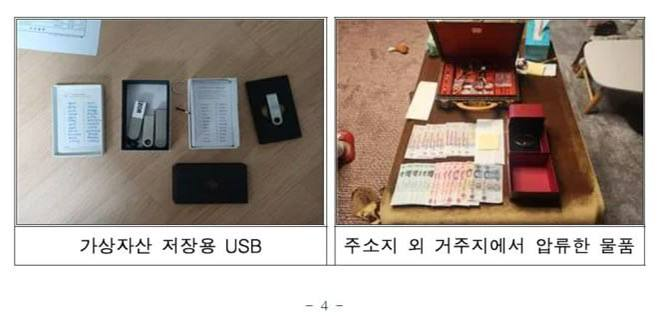
On February 26, the NTS proudly announced it had seized approximately 8.1 billion KRW (about $5.61 million) from repeat tax offenders. To prove they weren’t bluffing, officials released images showing the confiscated items, including Ledger hardware wallets sitting next to sheets of paper with handwritten 12-word seed phrases—fully visible, completely unredacted, and essentially screaming “TAKE MY MONEY!”
The Professor Who Called It Like It Is
A local professor, likely trying to process the sheer magnitude of this operational security failure, didn’t mince words. The mistake was compared to “publicly inviting someone to empty your wallet”—which, in crypto terms, is exactly what happened.
The professor’s assessment cuts to the heart of the matter: this wasn’t just a minor oversight; it was a fundamental misunderstanding of how cryptocurrency security works. The original wallet owner had taken the proper precautions by using a hardware wallet, but all that security was instantly vaporized when government officials decided to photograph the seed phrase recovery sheet.
The Great Token Heist: A Real-Time Blockchain Drama
What happened next played out like a high-stakes thriller on the Ethereum blockchain, with every transaction visible for the world to see. Within hours of the press release going live, an unknown actor sprang into action with the precision of a seasoned crypto thief.
The sequence of events, as recorded on-chain, reads like a playbook for crypto theft:
First, the attacker sent a small amount of ETH to the compromised wallets—just enough to cover gas fees for the upcoming transactions. Then, like a digital vacuum cleaner, they swept up 4 million Pre-Retogeum (PRTG) tokens and transferred them to a new address.
The $4.8 Million Question: What Are These Tokens Actually Worth?
Here’s where the story takes an interesting turn. Early reports breathlessly announced that $4.8 million in tokens had been stolen. But anyone who’s spent five minutes in crypto knows that nominal value and actual value are two very different things.
The PRTG tokens represented roughly 40% of the token’s total supply. However, the only active trading pair showed minimal volume, and even a small sell order would have cratered the price. In other words, trying to cash out $4.8 million worth of these tokens would have been like trying to sell a mansion in a ghost town—technically valuable on paper, but good luck finding a buyer.
The Plot Twist: The Tokens Come Home
Just when you thought you were witnessing the perfect crypto heist, the story took another bizarre turn. The tokens were eventually returned to their original wallets. Was this a white-hat hacker’s conscience kicking in? Did the thief realize they’d stolen digital Monopoly money? Or was it simply the realization that moving illiquid tokens is about as useful as stealing a truckload of Beanie Babies in 2024?
The motivation remains unclear, but the return of the funds doesn’t erase the fundamental problem: a government agency with zero understanding of crypto custody just published the keys to the kingdom for all to see.
The Bigger Picture: Governments vs. Digital Assets
This incident exposes a critical vulnerability in how governments are handling the increasing prevalence of cryptocurrency seizures. As digital assets become more mainstream and tax authorities worldwide ramp up their enforcement efforts, agencies are finding themselves in unfamiliar territory.
The NTS had the right idea—they wanted to demonstrate their capability to seize crypto assets and enforce tax compliance. But they completely missed the execution. It’s like a police department showing off confiscated weapons by publishing photos of the ammunition codes.
The Technical Reality: Why This Was So Devastating
For those unfamiliar with crypto security, let’s break down why this mistake was so catastrophic:
A hardware wallet like Ledger is designed to keep your private keys completely offline—theoretically making them unhackable. The device itself never exposes the seed phrase, and even if someone steals the physical device, they can’t access the funds without the PIN code.
However, the seed phrase is the ultimate master key. Anyone with those 12 words can recreate the wallet on any device and drain the funds instantly. It’s the crypto equivalent of having the combination to a bank vault written on a Post-it note attached to the door.
The Aftermath: Crickets from the NTS
As of now, the NTS has remained conspicuously silent about the incident. No detailed explanation, no apology, no announcement of new protocols to prevent future mistakes. Just radio silence while the crypto community collectively facepalms.
This lack of response is perhaps the most troubling aspect of the entire affair. It suggests either a complete denial of responsibility or a stunning lack of understanding about the severity of what transpired.
The Global Implications
South Korea isn’t alone in this struggle. Tax authorities and law enforcement agencies worldwide are grappling with how to properly seize, store, and manage cryptocurrency assets. This incident serves as a cautionary tale for every government official who thinks taking a screenshot of a crypto wallet is as simple as photographing a stack of cash.
The reality is that digital assets require entirely different handling procedures, specialized knowledge, and strict operational security protocols. What works for physical currency is completely inadequate—and potentially catastrophic—for cryptocurrency.
Lessons Learned (Hopefully)
For government agencies handling crypto seizures:
- Never, under any circumstances, photograph or document seed phrases
- Use multi-signature wallets for added security
- Employ professional custody solutions designed for institutional use
- Train staff on basic crypto security principles
- When in doubt, consult with blockchain security experts
For crypto users everywhere: if the government can screw this up, imagine what could happen with less competent actors. Keep your seed phrases offline, in multiple secure locations, and never share them with anyone—not even trusted officials.
Tags & Viral Phrases
CryptoFail #GovernmentIncompetence #SeedPhraseLeak #BlockchainBlunder #NTS #SouthKorea #CryptoSecurity #DigitalAssetDisaster #Ethereum #LedgerWallet #PRTG #TaxAuthority #OperationalSecurity #CryptoHeist #WhiteHat #BlockchainDrama #GovernmentVsCrypto #CryptoCustody #SeedPhrase #HardwareWallet #CryptoNews #ViralCrypto #SecurityFail #DigitalAssets #Blockchain #Cryptocurrency #NTSBlunder #CryptoMistake #GovernmentCrypto #BlockchainSecurity #CryptoIncident
,

Leave a Reply
Want to join the discussion?Feel free to contribute!