
SpaceX Is Building Its Own Particle Accelerator
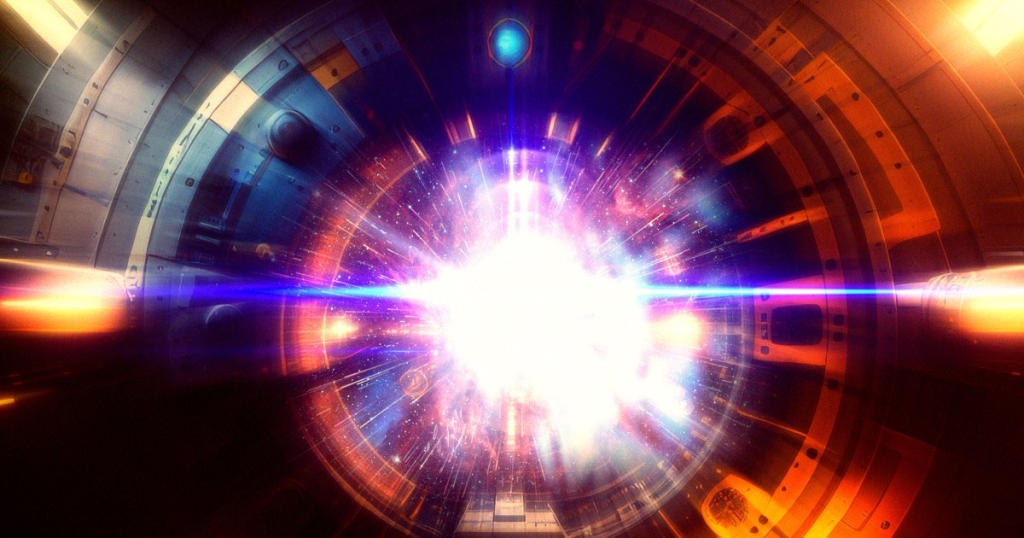
SpaceX Builds Its Own Cyclotron to Test Satellites Against Space Radiation
SpaceX is constructing a particle accelerator in Florida—a cyclotron capable of firing protons at near-light speed—to test how its spacecraft, especially its Starlink broadband satellites, withstand the relentless bombardment of space radiation.
The move signals a shift toward in-house testing as the company seeks to reduce its reliance on external facilities and accelerate development across its expanding fleet of orbital vehicles.
Why Space Radiation Is a Growing Problem
Solar activity constantly spews charged particles into space. While Earth’s atmosphere and magnetic field shield us from most of it, satellites in orbit are directly exposed. These particles can penetrate electronics, flipping bits in computer memory or damaging circuits—a phenomenon known as a single-event effect.
For SpaceX, the stakes are high. Its Starlink constellation already operates thousands of satellites, and its ambitions include deep-space missions, lunar landers, and AI-driven satellite constellations. A single solar storm can accelerate satellite degradation, forcing premature deorbiting and replacement.
The Cyclotron Advantage
A cyclotron is a type of particle accelerator that uses a magnetic field to bend charged particles into a circular path, repeatedly accelerating them until they reach extremely high energies. At 230 MeV (mega-electronvolts), SpaceX’s facility will be powerful enough to simulate the harshest radiation environments satellites face in space.
The facility will allow engineers to bombard satellite components—especially computer chips and printed circuit boards—with high-energy protons to observe their behavior under stress. This will enable rapid iteration and hardening of hardware before it ever leaves the ground.
Testing Across the Fleet
The cyclotron isn’t just for Starlink. SpaceX’s job postings indicate it will be used to test hardware for Dragon capsules, Falcon rockets, Starship, lunar landers, and even Starshield, the company’s military satellite program.
“As a member of our fast-paced Radiation Effects team, you will be responsible for ensuring avionics hardware performance across our fleet of vehicles… through some of the harshest and varied radiation environments imaginable,” one posting states.
This in-house capability could give SpaceX a competitive edge, allowing it to validate designs faster and more thoroughly than competitors who rely on shared or external testing facilities.
How It Stacks Up Globally
While 230 MeV is impressive, it’s still less powerful than the 590 MeV Ring Cyclotron at the Paul Scherrer Institute in Switzerland, currently the most powerful by beam power. CERN’s Large Hadron Collider, though vastly more energetic, is a different type of accelerator altogether.
Still, for commercial aerospace applications, SpaceX’s cyclotron will be among the most advanced in the world—built specifically to meet the company’s unique testing needs.
The Human Factor
Radiation isn’t just a threat to machines. Astronauts on the International Space Station receive 2.6 times more radiation exposure than they would on Earth. On the Moon, that exposure is even higher. Understanding and mitigating these risks is critical as SpaceX pushes toward crewed deep-space missions.
By mastering radiation testing for both hardware and, eventually, human-rated systems, SpaceX is laying the groundwork for safer, more resilient space exploration.
More on SpaceX:
- SpaceX Gives $1 Million Prize to Literal Nazi Who Has Bragged About His Profound Racism
Tags & Viral Phrases
- SpaceX builds particle accelerator
- Cyclotron for satellite testing
- Space radiation simulation
- Starlink satellite durability
- Proton accelerator in Florida
- Radiation hardening electronics
- SpaceX hires elite engineers
- 230 MeV cyclotron facility
- Solar storms and satellite damage
- In-house radiation testing
- SpaceX deep space ambitions
- AI constellations and space hardware
- Electronics under proton bombardment
- SpaceX vs solar weather
- Particle accelerator for satellites
- Radiation effects on spacecraft
- SpaceX radiation testing facility
- Cyclotron engineer jobs Florida
- SpaceX space radiation breakthrough
- Starlink satellites deorbiting early
- SpaceX cyclotron hiring now
- Elon Musk space radiation solution
- SpaceX satellite radiation shield
- SpaceX cyclotron facility revealed
- Proton testing for space tech
,


Leave a Reply
Want to join the discussion?Feel free to contribute!