
SpaceX sets new time for Crew-12 launch to ISS — here’s how to watch
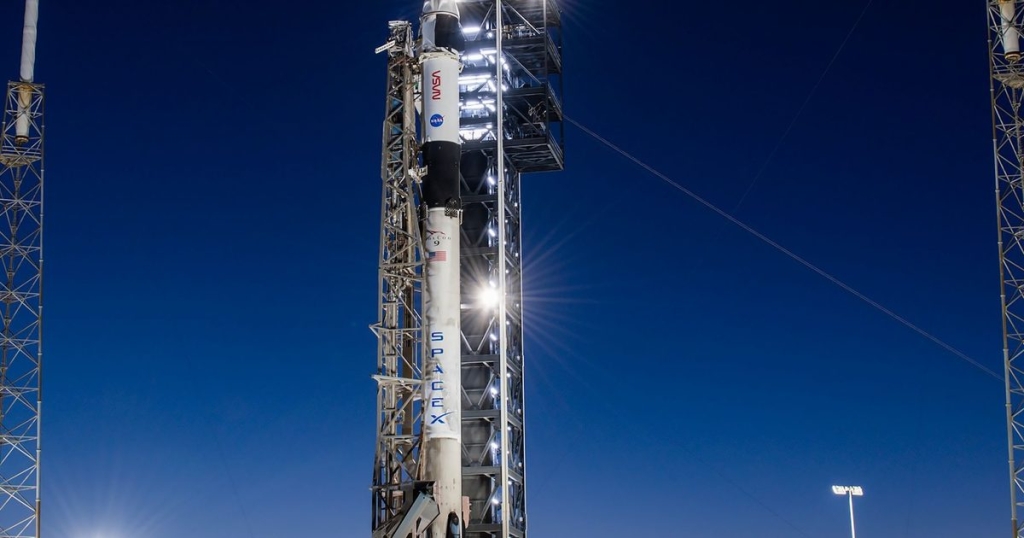
SpaceX and NASA Delay Historic Crew-12 Mission to ISS Amid Weather Concerns
In a dramatic turn of events that has space enthusiasts on the edge of their seats, SpaceX and NASA have announced a one-day delay for the highly anticipated Crew-12 mission to the International Space Station (ISS). Originally slated for liftoff on Wednesday, February 11, the mission is now targeting Thursday, February 12, as mission controllers carefully monitor weather patterns along the ascent corridor.
This delay underscores the meticulous attention to safety that defines modern spaceflight operations. The decision to postpone wasn’t taken lightly—launch teams at Cape Canaveral Space Force Station in Florida were prepared to proceed, but Mother Nature had other plans. Weather conditions in the critical ascent corridor simply weren’t cooperating, forcing the postponement that has space fans worldwide holding their breath.
The mission represents a significant milestone for NASA, marking its first crewed launch since Crew-11 successfully reached the ISS last August. This gap between missions has been filled with intense preparation, rigorous testing, and the kind of anticipation that only space exploration can generate.
Meet the Crew-12 Astronauts
The Crew-12 mission brings together an international team of exceptional spacefarers who represent the collaborative spirit of modern space exploration. Leading the charge are NASA astronauts Jessica Meir and Jack Hathaway, joined by ESA (European Space Agency) astronaut Sophie Adenot and Roscosmos cosmonaut Andrey Fedyaev.
This diverse crew embodies the global nature of space exploration, with representatives from America, Europe, and Russia working together aboard humanity’s orbital outpost. Each astronaut brings unique expertise and experience to the mission, promising groundbreaking research and international cooperation at 250 miles above Earth.
The Spacecraft: A Veteran of Space
The Crew Dragon capsule selected for this mission isn’t new to the rigors of spaceflight—far from it. This particular spacecraft has already completed an impressive résumé, having flown the Crew-4, Ax-2, Ax-3, and Crew-9 missions to and from the ISS. Its proven track record provides additional confidence as it prepares to ferry Crew-12 to their orbital destination.
The capsule’s reusability represents a cornerstone of SpaceX’s revolutionary approach to spaceflight economics. By refurbishing and reflying spacecraft, SpaceX has dramatically reduced the cost per mission, making regular crewed flights to the ISS a reality rather than a rare occurrence.
The Rocket: A Star Performer
Propelling the Crew Dragon to orbit will be SpaceX’s workhorse Falcon 9 rocket, featuring a first-stage booster that’s no stranger to spaceflight either. This particular booster previously launched a batch of Starlink internet satellites on its maiden flight, demonstrating the reliability and reusability that have become hallmarks of SpaceX’s operations.
The Falcon 9’s performance capabilities are nothing short of remarkable. Standing approximately 230 feet tall and capable of generating over 1.7 million pounds of thrust at liftoff, this rocket represents the pinnacle of modern launch vehicle technology. Its nine Merlin engines work in perfect harmony to deliver the Crew Dragon and its precious human cargo to their precise orbital insertion point.
The Art of the Landing
One of the most spectacular aspects of any Falcon 9 launch is the return of the first stage booster. Approximately eight minutes after stage separation, spectators will witness a breathtaking display of engineering precision as the booster executes a controlled descent back to Landing Zone 40 (LZ-40) at Cape Canaveral.
This autonomous landing capability represents a quantum leap in rocket technology. Rather than allowing expensive hardware to crash into the ocean as was standard practice for decades, SpaceX has mastered the art of bringing rockets home safely. The booster will execute a series of complex maneuvers, using its engines to slow its descent and guide itself to a precise landing on the concrete pad.
The successful recovery of the booster means it can be refurbished, tested, and flown again—potentially multiple times. This reusability is the key to SpaceX’s ability to offer competitive launch pricing while maintaining the highest safety standards.
Scientific Mission Objectives
While the launch itself captures public attention, the true purpose of Crew-12 extends far beyond the journey to orbit. According to SpaceX, “During their time on the orbiting laboratory, the crew will conduct new research to prepare for human exploration beyond low-Earth orbit and to benefit humanity on Earth.”
These research objectives span a wide range of scientific disciplines. The microgravity environment of the ISS provides unique opportunities for experiments that simply cannot be conducted on Earth. From studying the effects of long-duration spaceflight on the human body to developing new materials and pharmaceuticals, the research conducted by Crew-12 could have profound implications for future deep space exploration and terrestrial applications.
How to Watch History Unfold
Space enthusiasts around the world can witness this historic launch through multiple live streaming options. SpaceX will begin its official broadcast approximately one hour before the targeted 5:38 a.m. ET liftoff on Thursday, February 12. The stream will be available on SpaceX’s website and X (formerly Twitter) account, providing viewers with unprecedented access to the mission.
NASA will also carry the same live stream on its website, ensuring that space fans can choose their preferred viewing platform. The broadcast promises to deliver an immersive experience, featuring multiple camera angles of the launch, real-time communications between the crew and Mission Control, and the thrilling spectacle of the first-stage booster landing.
Viewers can expect expert commentary explaining the technical aspects of the mission, behind-the-scenes insights into the preparation process, and live updates on weather conditions and launch status. The broadcast will capture not just the launch itself, but the entire sequence of events from final preparations through orbital insertion.
What Could Go Wrong?
Spaceflight remains an inherently challenging endeavor, and several factors could potentially impact the launch schedule. Beyond weather concerns, technical issues with the rocket, spacecraft, or ground systems could necessitate additional delays. The launch window is carefully calculated, and even minor problems could require rescheduling.
Mission controllers will be monitoring dozens of parameters in real-time, from engine performance to weather conditions along the flight path. The decision to proceed with launch ultimately rests with both NASA and SpaceX teams, who must unanimously agree that all systems are go before giving the final “launch” command.
The Future of Human Spaceflight
The Crew-12 mission represents more than just another trip to the ISS—it’s a testament to the maturing commercial spaceflight industry and the enduring partnership between NASA and private companies like SpaceX. This collaboration has transformed space access, making what was once the exclusive domain of government agencies into a regular commercial service.
As Crew-12 prepares for launch, it’s worth reflecting on how far we’ve come since the early days of human spaceflight. What was once a risky, expensive, and rare endeavor has become increasingly routine, yet no less awe-inspiring. Each successful mission builds confidence in the systems and procedures that will eventually carry humans beyond Earth orbit to the Moon, Mars, and beyond.
The research conducted by crews like Crew-12 provides essential data for these future missions, helping scientists understand how to keep astronauts healthy during long-duration spaceflight and how to utilize resources in space environments. Every experiment, every observation, and every sample returned from the ISS contributes to humanity’s expanding presence in space.
Looking Ahead
As the space community eagerly awaits the Crew-12 launch, attention will remain focused on weather forecasts, technical preparations, and the final readiness reviews that will determine whether Thursday’s window proves viable. The excitement surrounding this mission reflects not just the inherent drama of spaceflight, but the broader human aspiration to explore, discover, and push the boundaries of what’s possible.
Whether you’re a longtime space enthusiast or someone newly captivated by the wonders of space exploration, the Crew-12 mission offers a perfect opportunity to witness the cutting edge of human achievement. As the countdown clock ticks toward liftoff, millions around the world will be watching, waiting, and dreaming of the day when humans will venture even farther into the cosmos.
Tags: SpaceX, NASA, Crew-12, International Space Station, ISS, Falcon 9, Crew Dragon, Jessica Meir, Jack Hathaway, Sophie Adenot, Andrey Fedyaev, Cape Canaveral, space launch, human spaceflight, commercial space, reusable rocket, landing zone, mission delay, weather delay, space exploration, astronaut launch, orbital insertion, microgravity research, space partnership, commercial crew program, space livestream, launch broadcast, mission control, booster recovery, space technology, aerospace engineering, space science, cosmic journey, stellar mission, orbital outpost, space collaboration, interplanetary future, space frontier, cosmic exploration, stellar achievement, space innovation, aerospace breakthrough, space milestone, cosmic adventure, stellar journey, space odyssey, cosmic frontier, stellar exploration, space partnership, cosmic achievement, stellar mission, space breakthrough, cosmic innovation, stellar technology, space milestone, cosmic journey, stellar adventure, space frontier, cosmic exploration, stellar achievement, space odyssey, cosmic frontier, stellar exploration, space partnership, cosmic achievement, stellar mission, space breakthrough, cosmic innovation, stellar technology, space milestone, cosmic journey, stellar adventure, space frontier, cosmic exploration, stellar achievement, space odyssey, cosmic frontier, stellar exploration.
,


Leave a Reply
Want to join the discussion?Feel free to contribute!