
SpaceX takes down Dragon crew arm, giving Starship a leg up in Florida
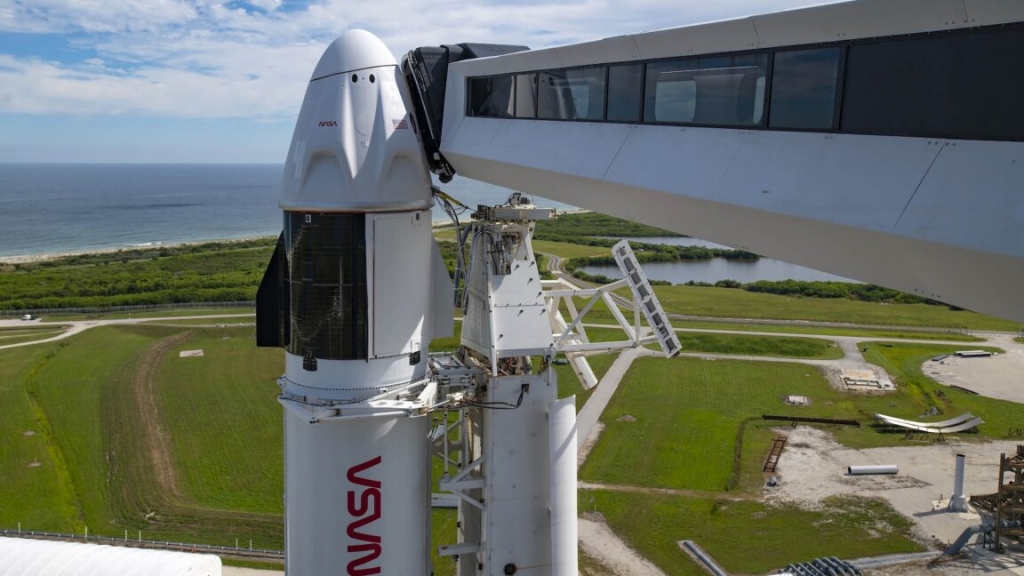
SpaceX Decommissions Crew Access Arm at Pad 39A as Starship Era Nears
In a striking shift that underscores the rapid evolution of spaceflight operations, SpaceX has begun dismantling the crew access arm at Launch Complex 39A (LC-39A) at NASA’s Kennedy Space Center—a structure that has played a central role in human spaceflight since the dawn of the Commercial Crew Program. The removal of this towering arm marks more than a routine maintenance operation; it signals a broader strategic pivot as SpaceX accelerates its transition from Falcon 9 to the fully reusable Starship system.
For over a decade, Pad 39A has been synonymous with SpaceX’s human spaceflight ambitions. The site, steeped in history as the launch pad for Apollo 11 and numerous Space Shuttle missions, was leased by SpaceX in 2014 and quickly adapted for the company’s modern rockets. The crew access arm, a 50-foot-tall bridge-like structure, was installed in 2018 specifically to support NASA’s Commercial Crew Program, allowing astronauts to board Crew Dragon capsules atop Falcon 9 rockets. Since then, it has facilitated dozens of crewed missions to the International Space Station, including the historic Demo-2 mission in 2020 that restored human spaceflight capability to the United States.
However, the operational landscape at SpaceX is changing. Pad 39A has also served as a secondary launch site for Falcon 9, complementing the busier Space Launch Complex 40 (SLC-40) at Cape Canaveral Space Force Station. Last year alone, SpaceX achieved a record-breaking 165 Falcon 9 launches, demonstrating the rocket’s reliability and the company’s unmatched launch cadence. Yet, industry observers and company insiders alike have noted signs that this blistering pace may be reaching its zenith as SpaceX channels more resources and attention toward Starship—the massive, next-generation vehicle designed to carry humans to the Moon, Mars, and beyond.
The removal of the crew arm is not a sign of abandoning human spaceflight, but rather a pragmatic step driven by both operational efficiency and urgent maintenance needs. According to Bill Gerstenmaier, SpaceX’s vice president of build and flight reliability, the bearings connecting the arm to the launch tower require immediate attention. “To physically get access to those, the arm needs to be removed,” Gerstenmaier explained. The bearings, essential for the arm’s movement and stability, must be extracted, serviced, and upgraded—a process best performed on the ground rather than at height amid the rigors of launch operations.
This maintenance window presents an opportunity for SpaceX to reassess its infrastructure needs. With Falcon 9 launches increasingly consolidated at SLC-40—where turnaround times have been slashed to under 48 hours—the company has found it can meet its launch demands without relying as heavily on Pad 39A. Gerstenmaier emphasized that if a crewed mission is called for in the future, SpaceX has ample time to reinstall the arm. “When we get a call-up for a mission and we have to go fly a mission, if it requires that, we have plenty of time to get the arm back up,” he said.
The ongoing construction of Starship facilities at Kennedy Space Center adds another layer of complexity. SpaceX is building a massive launch tower and integration hangar near Pad 39A, designed to support the frequent and powerful launches of Starship and its Super Heavy booster. As these operations ramp up, Pad 39A may need to be temporarily closed to personnel for safety reasons during Starship tests and launches. Removing the crew arm now avoids potential conflicts and streamlines operations during this transitional period.
Despite these changes, SpaceX has assured that Falcon 9 and Falcon Heavy launches from Pad 39A will continue uninterrupted for the foreseeable future. The company’s ability to maintain a steady launch cadence while simultaneously advancing Starship development is a testament to its operational agility and forward-thinking approach.
The decommissioning of the crew access arm at Pad 39A is emblematic of a broader trend in the space industry: the relentless march toward more capable, reusable, and ambitious spacecraft. As SpaceX prepares to make Starship the centerpiece of its launch manifest, the company is reconfiguring its infrastructure to match its vision for the future. This shift is not without nostalgia—Pad 39A’s crew arm has been a literal and symbolic bridge between Earth and orbit for NASA astronauts—but it is a necessary evolution as humanity’s aspirations in space grow ever bolder.
In the coming years, all eyes will be on Starship as it aims to revolutionize space travel, making missions to the Moon, Mars, and beyond more routine and affordable. The changes at Pad 39A are just one chapter in this unfolding story, a story that promises to redefine our relationship with the cosmos.
Tags: SpaceX, Starship, Falcon 9, Launch Complex 39A, Kennedy Space Center, crew access arm, Bill Gerstenmaier, human spaceflight, Commercial Crew Program, Cape Canaveral, space industry, reusable rockets, NASA, Super Heavy booster, launch cadence, space exploration
Viral Sentences:
- “SpaceX is dismantling the crew access arm at Pad 39A as Starship takes center stage.”
- “The bearings need repairs—so the arm is coming down, but it can go back up when needed.”
- “Falcon 9’s record 165 launches last year may be peaking as Starship rises.”
- “Pad 39A could be closed during Starship tests—removing the arm avoids operational conflicts.”
- “SpaceX’s pivot to Starship marks a new era in space exploration.”
- “The legendary Pad 39A is evolving to support humanity’s boldest missions yet.”
- “SpaceX is making room for the future—one bearing, one launch, one giant leap at a time.”
,


Leave a Reply
Want to join the discussion?Feel free to contribute!