
SpaceX Veteran Says He’s Figured Out How to Make Rocket Fuel From Water
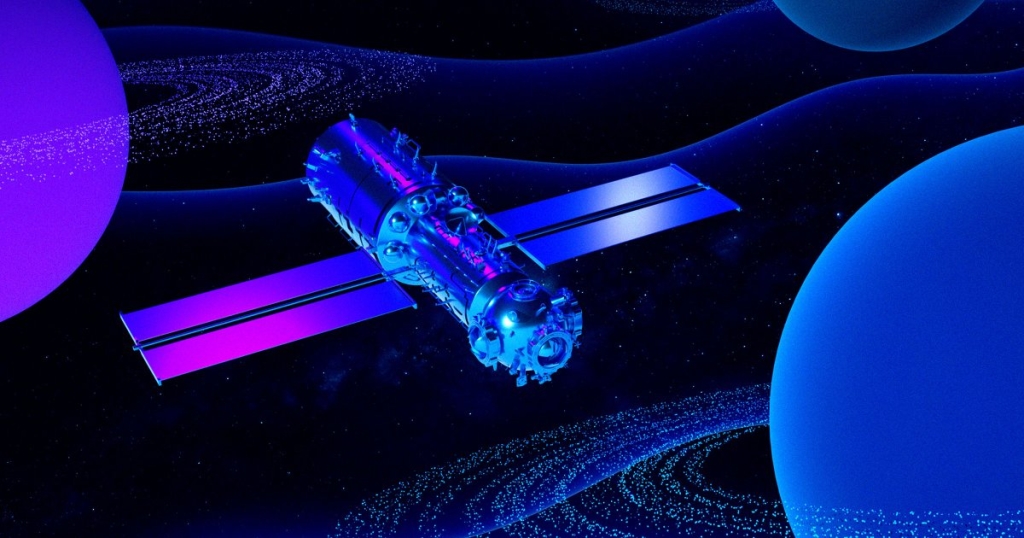
Former SpaceX Engineer Unveils Water-Powered Satellite Propulsion System in Groundbreaking Test
In a bold leap toward sustainable space exploration, a team of aerospace innovators is preparing to launch a revolutionary satellite that could transform how we think about rocket fuel forever. Former SpaceX engineer Halen Mattison, alongside his pioneering startup General Galactic, is set to conduct a historic demonstration this October that may rewrite the rulebook on in-space propulsion.
The concept at play here isn’t entirely new—scientists have been theorizing about using extraterrestrial water as rocket fuel for decades. The Moon’s frozen reserves have long been eyed as potential refueling stations for future lunar missions, offering astronauts a way to manufacture their return journey fuel right where they land. But what Mattison and his team are attempting goes far beyond theoretical discussions.
Their 1,100-pound experimental satellite, scheduled to ride into orbit aboard a SpaceX Falcon 9 rocket this October, represents the most comprehensive test yet of water’s viability as a dual-purpose propulsion solution. The mission aims to demonstrate water’s effectiveness in both electrical propulsion systems—which provide continuous, gentle thrust through plasma generation—and chemical propulsion systems that deliver powerful, short-duration bursts of acceleration.
The technical approach is elegantly straightforward yet remarkably sophisticated. Through electrolysis, water molecules will be split into their constituent hydrogen and oxygen components. For chemical propulsion, these gases will be recombined in a combustion chamber, where the hydrogen serves as fuel and oxygen acts as the oxidizer, generating thrust through controlled explosion. In the electrical propulsion experiment, the oxygen will be ionized using high-voltage electrical currents to create plasma, which is then expelled to produce continuous low-thrust propulsion.
This dual-system approach addresses one of space travel’s most persistent challenges: the need for both sustained maneuverability and emergency thrust capabilities. Electrical propulsion excels at providing steady, fuel-efficient movement ideal for orbital adjustments and station-keeping, while chemical propulsion delivers the raw power necessary for rapid course corrections or evasive maneuvers.
Mattison sees immediate practical applications for this technology in Earth’s increasingly congested orbital environment. With military and commercial satellites already experiencing concerning proximity incidents—Russian spacecraft have been observed shadowing American satellites, while Chinese assets demonstrate similar behaviors—the ability to quickly reposition defensive assets could prove crucial. Water-based propulsion could give these satellites the agility needed to avoid potential threats or reposition for optimal coverage.
However, the path to proving water’s worth as rocket fuel is fraught with technical obstacles that have left many experts deeply skeptical. Ryan Conversano, a consultant for General Galactic and former NASA technologist, highlights one particularly daunting challenge: ionized oxygen’s corrosive properties. The aggressive nature of plasma could potentially damage sensitive satellite electronics and structural components, creating a cascade of reliability issues that could compromise entire missions.
The mass penalty presents another significant hurdle. While water itself is relatively dense and storable, the electrolysis equipment required to split it into usable propellants adds considerable weight. When engineers factor in the mass of solar panels, batteries, and the electrolysis system itself, the question becomes whether water-based propulsion can compete with traditional chemical fuels that come pre-refined and ready for immediate use.
Material science presents additional complications. Standard spacecraft components may not withstand prolonged exposure to ionized oxygen plasma, necessitating expensive specialized alloys or protective coatings that could offset any mass savings from using water as fuel. The thermal management challenges are equally daunting, as both electrolysis and plasma generation generate substantial heat that must be dissipated in the vacuum of space.
Despite these formidable challenges, the potential rewards of mastering water-based propulsion extend far beyond Earth orbit. As space agencies and private companies set their sights on establishing permanent lunar bases and mounting crewed missions to Mars, the ability to manufacture rocket fuel from local resources becomes increasingly critical. The Moon’s polar craters contain billions of tons of water ice, while Mars’s subsurface ice deposits and hydrated minerals offer additional sources.
The economics of space exploration shift dramatically when fuel can be produced on-site rather than launched from Earth’s deep gravity well. Every kilogram of propellant manufactured in space represents a kilogram that doesn’t need to be accelerated through Earth’s atmosphere, potentially reducing launch costs by orders of magnitude for long-duration missions.
General Galactic’s test represents more than just a technical demonstration—it’s a crucial step toward validating the entire concept of in-situ resource utilization. If successful, the technology could enable a new paradigm of space exploration where spacecraft refuel at waypoints like lunar orbit or Martian orbit, dramatically extending mission ranges and capabilities.
The implications extend to planetary defense as well. The ability to quickly refuel and reposition spacecraft could prove invaluable for intercepting potentially hazardous asteroids or responding to unexpected astronomical events. Water, being non-toxic and stable, also offers safety advantages over traditional hypergolic fuels that pose significant handling risks.
As the October launch window approaches, the aerospace community watches with cautious optimism. While the technical challenges are substantial and the skepticism warranted, the potential payoff—a sustainable, widely available rocket fuel source that could enable humanity’s expansion throughout the solar system—makes the endeavor worth pursuing. Whether General Galactic’s water-powered satellite succeeds or fails, the data gathered will prove invaluable in advancing our understanding of in-space resource utilization and propulsion technologies.
The future of space exploration may very well depend on our ability to “live off the land” in space, and water, the most fundamental substance for life, might also prove to be the key to unlocking the solar system. As Mattison and his team prepare for their groundbreaking test, they carry with them not just the hopes of their company, but the aspirations of an entire generation of space explorers dreaming of a future where the cosmos becomes truly accessible.
tags
space propulsion breakthrough, water rocket fuel, General Galactic satellite launch, in-situ resource utilization, lunar water ice mining, Mars fuel production, sustainable space travel, SpaceX Falcon 9 payload, electrical vs chemical propulsion, plasma rocket technology, aerospace innovation 2024, orbital defense capabilities, extraterrestrial resource extraction, electrolysis in space, future of interplanetary travel
viral phrases
“Water: The rocket fuel of the future?” “From Moon ice to Mars missions: The water revolution” “Spacecraft that drink from cosmic wells” “Turning H2O into go-go juice for rockets” “The day water became more valuable than gold… in space” “Elon’s former engineer takes on the final frontier with H2O” “Why your next rocket might run on tap water” “The cosmic gas station coming to a Moon near you” “Water-powered satellites: Science fiction becomes science fact” “Breaking the Earth-to-orbit fuel chain forever”
,


Leave a Reply
Want to join the discussion?Feel free to contribute!