
SpaceX’s next-gen Super Heavy booster aces four days of “cryoproof” testing
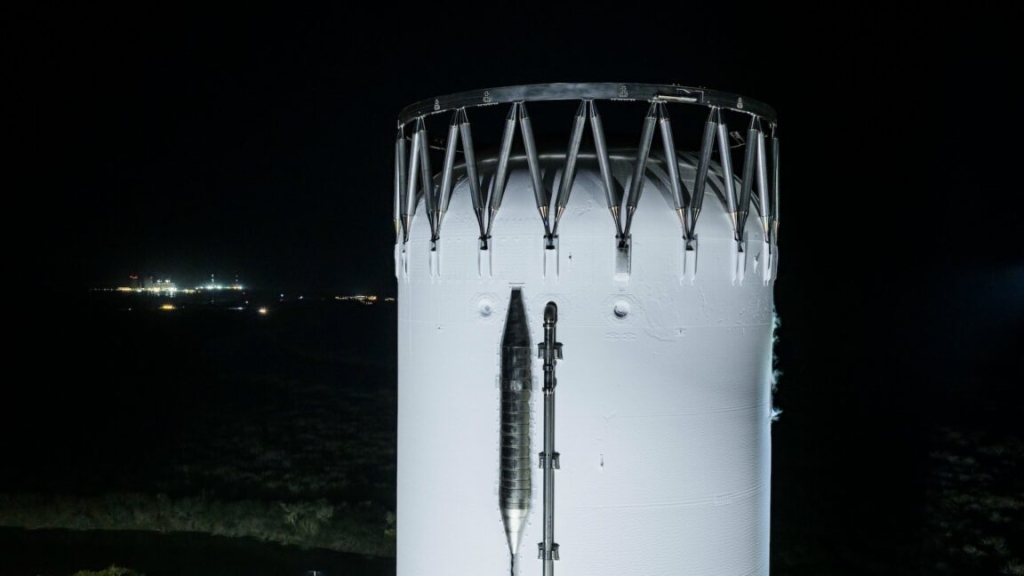
SpaceX’s Super Heavy Booster 19 Survives Cryogenic Test Marathon, Paving Way for Starship V3’s Maiden Flight
In a pivotal moment for SpaceX’s Starship program, the company’s upgraded Super Heavy booster has successfully completed a rigorous cryogenic proof test campaign—a critical milestone that evaded the previous iteration and resulted in its catastrophic failure. The stainless-steel behemoth, standing 237 feet tall, endured six days of punishing thermal and pressure cycles at SpaceX’s Starbase facility in Texas, marking a significant leap forward in the development of the next-generation Starship V3.
The Cryogenic Gauntlet: Six Days of Brutal Testing
The cryogenic proof test, conducted at Massey’s Test Site just miles from SpaceX’s manufacturing hub, subjected Booster 19 to a series of increasingly demanding challenges. Engineers began with ambient temperature pressure testing before introducing super-cold liquid nitrogen—a stand-in for the actual cryogenic propellants of liquid methane and oxygen that will power the rocket’s eventual launch.
Over four separate loading cycles spanning six days, the Super Heavy booster was pushed to its limits, experiencing extreme temperature differentials and pressure variations designed to simulate the harshest conditions it will face during actual flight operations. This methodical torture test represents a quantum leap in SpaceX’s testing protocols, incorporating lessons learned from the dramatic failure of the previous booster in November 2024.
Learning From Catastrophe: The November Disaster
The path to this successful test was paved with hard-earned lessons from Booster 16’s catastrophic failure. During a routine pressure test last November, the rocket’s liquid oxygen tank catastrophically ruptured, scattering debris across the test site and forcing SpaceX to abandon the vehicle entirely. The incident served as a stark reminder of the unforgiving nature of rocket engineering and the razor-thin margins between success and failure when dealing with cryogenic propellants at extreme pressures.
SpaceX’s rapid response to the setback demonstrated the company’s characteristic resilience. Rather than dwelling on the failure, engineers immediately began analyzing the wreckage, identifying the root cause, and implementing design modifications. The result is Booster 19—a significantly improved iteration featuring redesigned propellant systems and enhanced structural integrity.
Starship V3: The Next Evolution
The successful completion of cryogenic proof testing moves SpaceX one step closer to launching the first Starship V3—also designated as Block 3—marking the most significant upgrade to the mega-rocket since its inception. The previous Starship V2 configuration, despite experiencing three initial failures out of five total launches in 2024, ultimately achieved its mission objectives in the final two flights, giving SpaceX the confidence to proceed with the next-generation design.
Starship V3 represents a fundamental reimagining of the rocket’s architecture, incorporating numerous improvements gleaned from the intensive flight test campaign of its predecessor. The changes span every aspect of the vehicle, from its propulsion systems to its structural design, promising enhanced performance, reliability, and ultimately, reusability.
Raptor 3 Engines: The Heart of the Beast
Perhaps the most significant upgrade in Starship V3 lies in its propulsion system. The new Raptor 3 engines, which will be mounted on Booster 19, represent a substantial evolution from the Raptor 2 engines used on previous flights. These next-generation engines produce increased thrust while incorporating design changes specifically aimed at improving reliability and manufacturability.
The engineering team has achieved remarkable weight savings by integrating plumbing and sensors directly into the engine’s main structure, eliminating the need for separate heat shields between engines at the base of the rocket. This integration not only reduces weight but also simplifies the overall design, potentially increasing the rocket’s payload capacity and reducing manufacturing complexity.
The Road to Launch: What Comes Next
With cryogenic proof testing successfully completed, Booster 19 has returned to SpaceX’s factory at Starbase, where technicians will begin the process of integrating the 33 Raptor 3 engines onto the rocket’s base. Following engine installation, the team will attach the booster’s grid fins—aerodynamic control surfaces critical for the rocket’s descent and landing maneuvers.
Once these major components are in place, the booster will undergo additional testing, including engine static fire tests, before being mated with its Starship upper stage counterpart. The integrated vehicle will then face a battery of combined system tests before receiving clearance for its inaugural flight.
The Stakes Have Never Been Higher
The successful completion of Booster 19’s cryogenic proof test carries implications that extend far beyond SpaceX’s Starbase facility. As the company races to establish a fully reusable transportation system capable of carrying humans to Mars, each successful test brings humanity one step closer to becoming a multi-planetary species.
The Starship program represents NASA’s chosen lunar lander for the Artemis program, with the space agency investing billions in the vehicle’s development. A successful Starship V3 test flight would not only validate SpaceX’s engineering approach but also provide crucial data for NASA’s own lunar ambitions.
Industry-Wide Implications
The progress made with Starship V3 sends ripples throughout the aerospace industry. Traditional aerospace contractors, long accustomed to multi-year development cycles and astronomical budgets, are watching SpaceX’s rapid iteration approach with a mixture of admiration and concern. The company’s ability to design, build, test, and iterate on rocket designs at unprecedented speed continues to disrupt the established order of spaceflight.
Competitors in both the private sector and government agencies are taking note of SpaceX’s methodology, with many beginning to adopt similar rapid prototyping and testing approaches in their own programs. The success of Starship V3 could accelerate this trend, potentially ushering in a new era of faster, cheaper space exploration across the entire industry.
Looking Ahead: The Future of Spaceflight
As SpaceX prepares for Starship V3’s maiden flight, the broader implications of the program continue to unfold. The fully reusable architecture promised by Starship has the potential to reduce the cost of accessing space by orders of magnitude, opening up possibilities that were previously relegated to the realm of science fiction.
From satellite megaconstellations providing global internet coverage to interplanetary colonization efforts, the successful development of Starship V3 could catalyze a new space age. The rocket’s massive payload capacity and fully reusable design make previously impossible missions—such as large-scale space-based manufacturing or rapid point-to-point transportation on Earth—suddenly feasible.
The Human Element
Behind the stainless steel and rocket fuel, thousands of engineers, technicians, and support staff have contributed to reaching this milestone. The successful cryogenic test represents countless hours of design work, analysis, fabrication, and testing—a testament to human ingenuity and perseverance in the face of extraordinary technical challenges.
As SpaceX moves forward with Booster 19 and Starship V3, the world watches with anticipation. Each successful test brings us closer to a future where space travel becomes as routine as air travel is today—a future where the resources of the solar system are within humanity’s reach.
SpaceX Starship
Super Heavy booster
Cryogenic proof testing
Raptor 3 engines
Starship V3 Block 3
Starbase Texas
Massey’s Test Site
Reusable rocket technology
Mars colonization
NASA Artemis program
Aerospace innovation
Rapid prototyping
Multi-planetary species
Space exploration revolution
Stainless steel rocket
Liquid nitrogen testing
Engine static fire
Grid fins
Propulsion system evolution
Spaceflight cost reduction
,


Leave a Reply
Want to join the discussion?Feel free to contribute!