
SpaceX’s Starlink dodged 300,000 satellite collisions in 2025
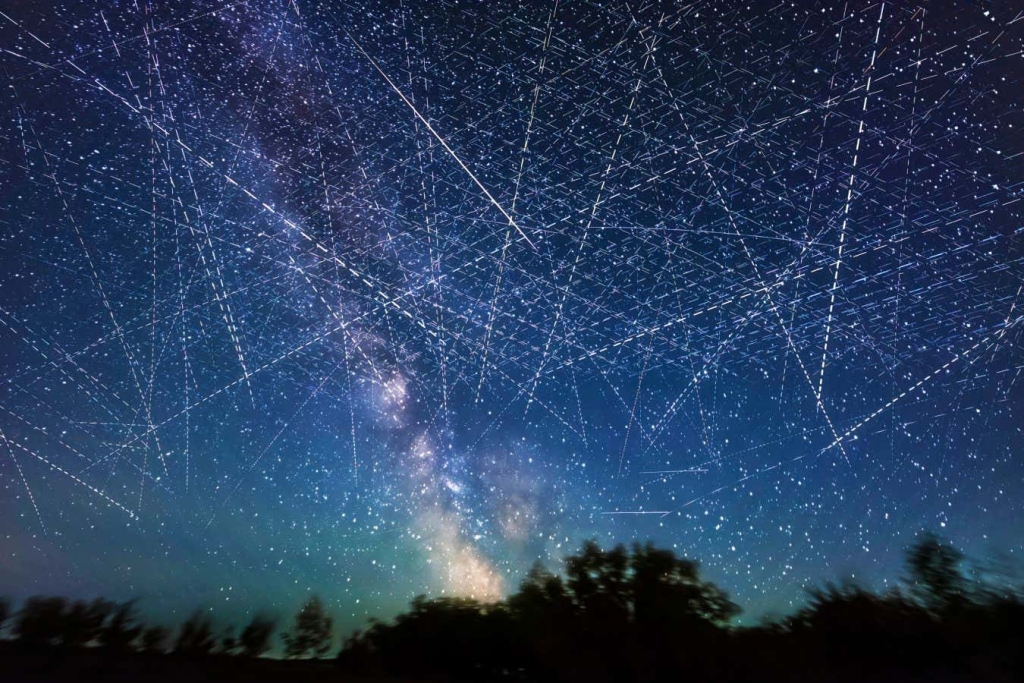
SpaceX’s Starlink Satellites Perform 300,000 Collision-Avoidance Maneuvers in 2025: A Growing Space Traffic Crisis
In a stunning revelation that has sent shockwaves through the global space community, SpaceX has disclosed that its Starlink satellites executed approximately 300,000 collision-avoidance maneuvers in 2025 alone. This astronomical figure, detailed in a report filed with the U.S. Federal Communications Commission (FCC) in late December, underscores the escalating challenges of managing space traffic as mega-constellations proliferate.
Starlink, SpaceX’s ambitious satellite internet project, has been a game-changer in global connectivity since its first launch in 2019. Today, the constellation boasts around 9,400 satellites, accounting for a staggering 65% of all active satellites in orbit. However, this rapid expansion has come at a cost—both in terms of operational complexity and the growing risk of collisions in space.
The FCC requires SpaceX to provide bi-annual updates on Starlink’s safety protocols, given the catastrophic potential of satellite collisions. Such incidents could generate thousands of pieces of debris, rendering parts of Earth’s orbit unusable and potentially triggering a cascade of collisions—a scenario known as the Kessler Syndrome.
In its latest report, SpaceX revealed that its satellites performed approximately 149,000 collision-avoidance maneuvers between June and November 2025. This brings the total for the year to around 300,000, marking a 50% increase from the 200,000 maneuvers recorded in 2024. “That’s a huge amount of maneuvers,” said Hugh Lewis, a space debris expert at the University of Birmingham, UK. “It’s just an incredibly high number.”
To put this into perspective, a typical satellite pre-Starlink might have performed only a handful of maneuvers per year. SpaceX’s satellites, however, are executing up to 40 maneuvers annually, each. Lewis warns that if current trends continue, the company could be performing 1 million maneuvers per year by 2027. This projection doesn’t even account for the growing number of mega-constellations being deployed by other nations, including China, which has applied to launch 200,000 satellites.
The implications of this surge in space traffic are profound. “From a physics point of view, it’s not good,” Lewis said. “We are moving ourselves towards a pretty bad scenario in orbit. It is not sustainable.”
SpaceX’s report also highlighted repeated close encounters with other satellites, particularly a Chinese satellite named Honghu-2, which had over 1,000 near-misses with Starlink satellites. This is likely due to the similar orbits they occupy. “It highlights how SpaceX really owns that orbit,” said Samantha Lawler, an astronomer at the University of Regina in Canada. Most Starlink satellites operate at altitudes between 340 and 570 kilometers, effectively dominating this region of space. “According to the Outer Space Treaty, everybody is supposed to have access to all parts of space, but they’ve kind of occupied it.”
The report also shed light on a Starlink satellite that exploded in December, releasing dozens of pieces of debris. SpaceX attributed the incident to a “suspected hardware failure” and stated that it had identified and removed the faulty components from future designs.
Despite these challenges, SpaceX’s autonomous collision-avoidance system has been largely successful in managing the high volume of maneuvers. However, there was one incident involving a spacecraft operated by the Japanese company Astroscale, which SpaceX claimed performed an unannounced maneuver that could have increased the risk of collision. Astroscale disputes this account, stating that the maneuver was publicly shared in advance and conducted in compliance with Japanese on-orbit servicing guidelines.
The sheer scale of Starlink’s operations is both impressive and concerning. “They’re doing all these maneuvers and they’re doing them perfectly,” Lawler said. “But if they make a mistake, we’re in really big trouble.”
As the number of satellites in orbit continues to grow, the need for robust international regulations and cooperation has never been more urgent. The space industry is at a critical juncture, and the decisions made today will shape the future of space exploration and utilization for generations to come.
Tags: SpaceX, Starlink, satellite collision, space debris, orbital traffic, FCC, mega-constellations, Kessler Syndrome, space sustainability, Honghu-2, Astroscale, space exploration, satellite internet, space safety, orbital dominance, space treaty, hardware failure, autonomous systems, space industry, satellite maneuvers, space traffic management.
Viral Phrases: “300,000 maneuvers in 2025,” “Starlink dominates Earth’s orbit,” “Space traffic crisis,” “Kessler Syndrome looms,” “SpaceX’s orbital monopoly,” “Satellite explosion releases debris,” “Autonomous systems save the day,” “Space sustainability at risk,” “China’s 200,000 satellite plan,” “Astroscale vs. SpaceX,” “The future of space exploration,” “Collision-avoidance on overdrive,” “Space debris nightmare,” “Starlink’s orbital empire,” “Space traffic overload,” “SpaceX’s hardware failure,” “International space regulations needed,” “Starlink’s 40 maneuvers per year,” “Space industry at a crossroads,” “Orbital chaos averted.”
,
Leave a Reply
Want to join the discussion?Feel free to contribute!