
Spreading crushed rock on farms could absorb 1 billion tonnes of CO2
Enhanced Rock Weathering: The Controversial Climate Solution That Could Transform Global Agriculture
In a groundbreaking development that’s sending shockwaves through both the agricultural and climate science communities, researchers have unveiled a revolutionary technique that could simultaneously tackle our planet’s carbon crisis while boosting global food production. But beneath the surface of this promising solution lies a complex web of scientific debates, logistical nightmares, and potential environmental risks that could make or break this billion-dollar climate strategy.
The Science Behind the Breakthrough
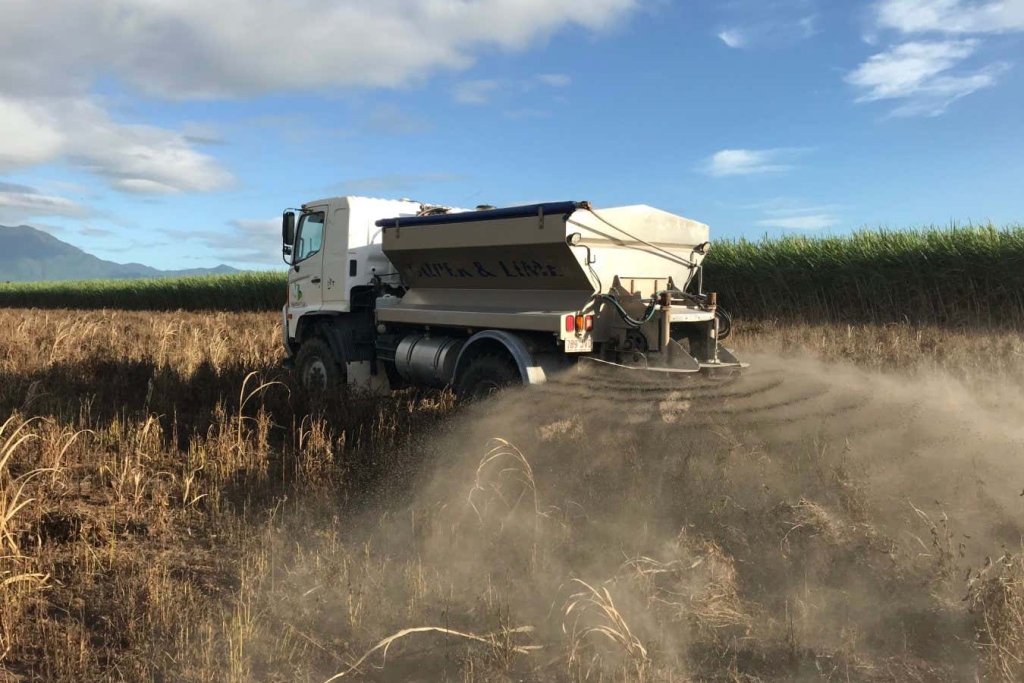
Enhanced rock weathering (ERW) represents humanity’s bold attempt to accelerate one of Earth’s most fundamental geological processes. The concept is elegantly simple: by crushing silicate rocks like basalt and spreading them across agricultural fields, we can dramatically increase the surface area exposed to rainwater, thereby speeding up the natural carbon capture process that has regulated our planet’s climate for millions of years.
When rainwater—which naturally absorbs carbon dioxide from the atmosphere—comes into contact with crushed silicate rocks, a chemical reaction occurs. The carbonic acid in the rain reacts with silicon dioxide and various metals in the rock, transforming atmospheric CO2 into bicarbonate ions. These ions then wash into rivers and eventually the ocean, where they can remain locked away for thousands of years or become incorporated into the calcium carbonate structures of marine life.
The Promise: A Climate Solution That Feeds the World
According to the most recent comprehensive analysis conducted by Chuan Liao and his team at Cornell University, enhanced rock weathering could remove between 350 million and 750 million tonnes of CO2 annually by 2050, potentially scaling up to an astonishing 1.1 billion tonnes per year by 2100. To put this in perspective, that’s roughly equivalent to the annual CO2 emissions of the entire European Union.
But the benefits don’t stop at carbon capture. Farmers have long used ground limestone to improve soil quality, and enhanced rock weathering takes this practice to the next level. The process naturally releases essential nutrients like magnesium and calcium into the soil, potentially reducing the need for synthetic fertilizers while simultaneously improving crop yields. In developing nations where fertilizer costs can devastate farming communities, this dual benefit could be transformative.
The Global Economic Opportunity
The economic implications of widespread enhanced rock weathering adoption are staggering. As supply chains for silicate rocks become established and costs decrease, regions in Asia, Latin America, and sub-Saharan Africa could emerge as the new leaders in carbon removal. These regions, blessed with higher temperatures and precipitation rates that accelerate weathering, could potentially sell more carbon-removal credits per tonne of rock spread.
This creates a fascinating economic dynamic where farmers in the Global South could find themselves at the forefront of the climate economy, earning revenue not just from their crops but from the carbon credits generated by their fields. It’s a potential pathway to climate justice, where those who have contributed least to the climate crisis could become some of its most significant mitigators.
The Controversy: A Mountain of Uncertainty
However, not everyone is convinced that enhanced rock weathering is the silver bullet it’s being promoted as. Marcus Schiedung of the Thünen Institute of Climate-Smart Agriculture in Germany has emerged as one of the technique’s most vocal critics, arguing that current projections may be dangerously optimistic.
Schiedung points to several critical uncertainties that could dramatically reduce the effectiveness of enhanced rock weathering. In regions with high soil pH, rainfall may weather existing carbonates in the ground rather than the crushed rock, potentially resulting in no net carbon removal. In acidic soils, naturally occurring acids can react with the crushed rock, again preventing CO2 capture. Even more concerning, as soil acidity decreases due to the rock weathering process, microbial activity in the soil can increase, potentially releasing more CO2 than is being captured.
The Logistical Nightmare
Perhaps the most damning criticism comes from Newcastle University’s David Manning, who has calculated that removing one gigatonne of CO2 would require mining and processing five gigatonnes of rock annually. This creates a massive logistical challenge that current infrastructure is simply not equipped to handle.
The problem is compounded by the quality of available rock. While olivine—the rock used in many projections—contains heavy metals like nickel and chromium that could contaminate food supplies, even more common rocks like basalt present their own challenges. Most existing mines produce rock that’s contaminated with various metals, meaning that truly clean rock would likely need to come from new quarries specifically opened for enhanced rock weathering.
The Energy Equation
Adding another layer of complexity is the energy required to crush and transport these massive quantities of rock. If the mining, crushing, and transportation processes rely on fossil fuels, the carbon emissions generated could potentially offset much of the CO2 being captured. This creates a paradox where the solution to climate change might actually contribute to the problem if not implemented with renewable energy sources.
The Time Factor
Enhanced rock weathering is not a quick fix. The process occurs over years, not days or weeks, meaning that the carbon removal benefits are realized gradually. This time lag could be problematic given the urgent need to reduce atmospheric CO2 levels. Additionally, the effectiveness of the process varies dramatically based on local conditions including temperature, precipitation, soil composition, and even the specific microorganisms present in the soil.
The Verdict: Promising but Problematic
The enhanced rock weathering debate represents a microcosm of the larger climate crisis: we need solutions, but those solutions must be implemented carefully and with full understanding of their potential consequences. While the technique shows genuine promise as both a carbon removal strategy and an agricultural enhancement tool, the significant uncertainties and logistical challenges cannot be ignored.
The path forward likely involves continued research to better understand the process’s effectiveness under different conditions, development of more efficient rock crushing and transportation methods, and perhaps most importantly, the establishment of rigorous monitoring systems to ensure that carbon is actually being removed rather than just redistributed within the Earth’s systems.
As the world grapples with the dual challenges of feeding a growing population and mitigating climate change, enhanced rock weathering stands as one of the most intriguing potential solutions. But like all climate interventions, it requires careful consideration, continued research, and perhaps most importantly, a healthy dose of scientific skepticism.
Viral Tags
ClimateCrisis #CarbonCapture #AgriculturalRevolution #EnhancedRockWeathering #ClimateSolutions #SustainableFarming #GlobalWarming #CarbonRemoval #GreenTechnology #ClimateInnovation #FutureOfFarming #EnvironmentalScience #ClimateAction #SustainableDevelopment #ClimateJustice #CarbonCredits #AgriculturalTechnology #ClimateResearch #GreenRevolution #ClimateMitigation
Viral Phrases
“This could be the breakthrough we’ve been waiting for” “The future of farming is here” “A solution that feeds the world while saving the planet” “Climate change meets agricultural revolution” “The billion-tonne carbon capture opportunity” “From lab to field: The enhanced weathering journey” “Why this controversial technique might just work” “The logistical nightmare nobody’s talking about” “Could this be the answer to our climate prayers?” “The science behind the hype” “When geology meets agriculture” “The carbon capture method that’s dividing scientists” “A promising solution with a dark side” “The economic opportunity in climate action” “Why timing matters in carbon removal” “The energy equation nobody wants to solve” “From theory to practice: The enhanced weathering challenge” “The promise and peril of accelerated geology” “Could farmers become the new climate heroes?” “The billion-dollar question in carbon capture”
,


Leave a Reply
Want to join the discussion?Feel free to contribute!