
Starlink teases next-gen V2 satellites, promising insane 5G speeds and data density that could transform mobile connectivity forever
Starlink V2 Satellites Promise 5G Speeds from Space: A Revolutionary Leap in Mobile Connectivity
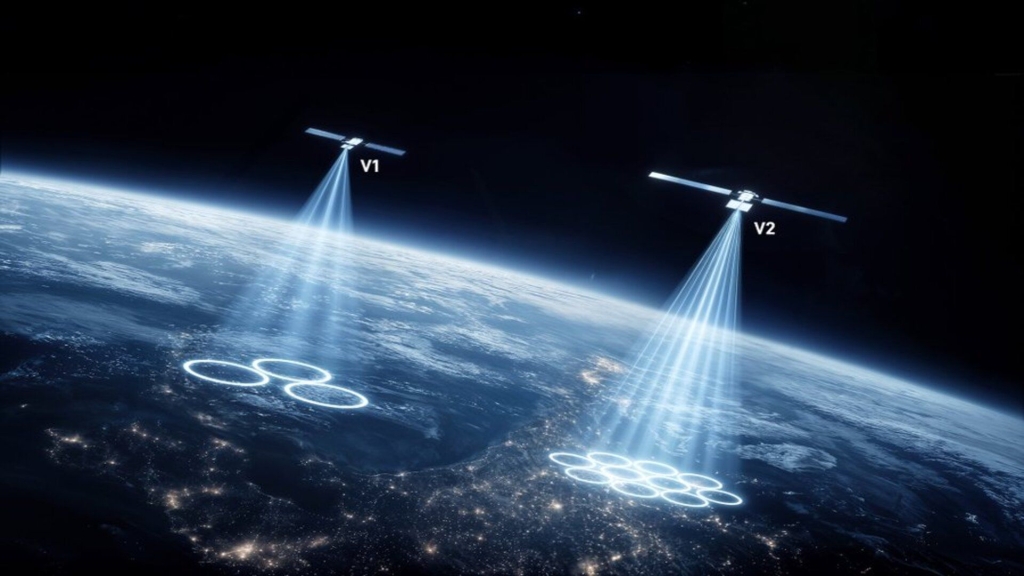
Starlink’s Next-Generation Satellites to Deliver 100x Data Density, Enabling 150 Mbps Peak Speeds and Direct-to-Smartphone Connectivity
In a groundbreaking announcement that could reshape the global mobile landscape, SpaceX’s Starlink has unveiled plans for its next-generation V2 satellites, promising to deliver “5G speeds from space” with a staggering 100x increase in data density compared to current V1 satellites. This technological leap forward represents one of the most ambitious infrastructure projects in telecommunications history, potentially bridging the digital divide between urban centers and remote regions while challenging traditional mobile network operators.
The Evolution of Satellite Connectivity
For decades, satellite communication has been synonymous with limited bandwidth, high latency, and specialized equipment. Traditional satellite phones required bulky handsets and expensive subscriptions, making them impractical for everyday use. Starlink’s announcement marks a paradigm shift in this dynamic, leveraging advancements in miniaturization, orbital deployment, and signal processing to create a network that can interface directly with standard LTE smartphones.
The current Starlink mobile service, while revolutionary in its own right, offers only basic text messaging and light data usage. The V2 upgrade promises to transform this capability into something approaching terrestrial 5G performance, potentially reaching peak speeds of 150 Mbps per user. This represents not just an incremental improvement but a fundamental reimagining of what satellite connectivity can achieve.
Technical Breakthroughs Behind the V2 Revolution
The 100x data density improvement claimed by Starlink stems from several key technological advancements. First, the V2 satellites incorporate more sophisticated phased-array antennas capable of beamforming with greater precision, allowing them to focus signals more effectively on specific devices while minimizing interference. Second, the satellites utilize advanced modulation schemes and error correction algorithms that maximize spectral efficiency, squeezing more data through the same frequency bands.
Perhaps most significantly, the V2 satellites feature enhanced processing capabilities that enable real-time network optimization. These satellites can dynamically adjust their transmission parameters based on user density, weather conditions, and orbital position, ensuring optimal performance across varying scenarios. The satellites also incorporate improved inter-satellite laser links, reducing the need for ground station relays and further decreasing latency.
Direct-to-Smartphone Connectivity: No Extra Hardware Required
One of the most compelling aspects of Starlink’s V2 announcement is the promise of compatibility with hundreds of existing LTE phones. This means users won’t need to purchase specialized satellite phones or external antennas to access the enhanced service. The technology works by leveraging the existing LTE bands that smartphones already use, with the V2 satellites acting as additional cell towers in orbit.
This approach dramatically reduces the barrier to entry for satellite connectivity. Users can simply continue using their current devices while gaining access to coverage in previously unreachable areas. The system is designed to be completely transparent to the end user, with phones automatically switching between terrestrial and satellite networks based on availability and signal strength.
The Scale of the V2 Constellation
To achieve the promised performance levels, Starlink plans to deploy up to 15,000 V2 satellites into low Earth orbit (LEO). This represents a massive scaling of their existing constellation, which currently consists of approximately 6,000 satellites. The sheer scale of this deployment is unprecedented in space-based communications history, with the potential to create a mesh network capable of providing global coverage with minimal dead zones.
The deployment strategy involves launching satellites in batches, with early V2 Mini satellites already being deployed as transitional solutions. These smaller versions of the full V2 satellites help bridge the gap between generations while the complete constellation is being assembled. The phased deployment allows for real-world testing and optimization before full-scale implementation.
Partnership with Terrestrial Operators
Starlink’s strategy extends beyond standalone satellite service. The company has announced partnerships with terrestrial mobile operators, most notably T-Mobile in the United States, to create a seamless hybrid network. This collaboration allows users to transition smoothly between satellite and ground-based networks without experiencing service interruptions or degradation.
The partnership model represents a significant shift in how satellite and terrestrial networks interact. Rather than competing directly, Starlink is positioning itself as a complementary service that fills coverage gaps and provides redundancy. This approach could prove particularly valuable in disaster scenarios, remote areas, and during network outages when terrestrial infrastructure fails.
Performance Expectations and Timeline
While the promised 150 Mbps peak speeds represent a substantial improvement over current capabilities, it’s important to note that actual performance will depend on several factors. Network congestion, user density, and the number of operational satellites in a given area will all influence achievable speeds. Starlink has indicated that early testing of the enhanced service is expected around early 2027, though this timeline could shift based on regulatory approvals and deployment progress.
The company’s ability to successfully deploy larger satellites will directly impact how quickly users can access the full benefits of the V2 network. Technical challenges related to satellite manufacturing, launch logistics, and orbital traffic management could potentially delay the rollout. However, Starlink’s track record of rapid deployment suggests they are well-positioned to meet their ambitious goals.
Implications for Global Connectivity
The V2 satellite initiative has profound implications for global connectivity. In developed nations, it could provide a reliable backup for terrestrial networks, enhancing emergency communications and supporting critical infrastructure. In developing regions and remote areas, it could offer the first reliable mobile connectivity, enabling economic development, education, and healthcare access.
The technology also has significant implications for industries operating in challenging environments. Maritime operations, aviation, mining, and agriculture could all benefit from enhanced satellite connectivity, improving safety, efficiency, and data collection capabilities. Emergency responders could maintain communications in disaster zones where terrestrial networks have been compromised.
Challenges and Considerations
Despite the promising technology, several challenges remain. The deployment of thousands of satellites raises concerns about space debris and orbital congestion. Starlink will need to work with regulatory bodies and other satellite operators to ensure responsible deployment and operation. Additionally, the company must address potential interference with astronomical observations and other satellite services.
The business model for the enhanced service also remains to be fully articulated. While the technology promises improved performance, the cost structure and subscription models will need to balance accessibility with the substantial investment required for deployment. Questions about data caps, roaming charges, and international service availability will need to be addressed as the service matures.
The Future of Mobile Connectivity
Starlink’s V2 satellite initiative represents a pivotal moment in the evolution of mobile connectivity. By combining the ubiquity of satellite coverage with the performance of terrestrial networks, it promises to create a truly global communication system. The technology has the potential to democratize access to high-speed mobile data, bringing reliable connectivity to billions of people who currently lack it.
As we approach the 2027 timeline for early testing, the mobile industry will be watching closely. If successful, Starlink’s V2 satellites could fundamentally alter the competitive landscape, forcing traditional operators to innovate or partner with satellite providers. The initiative also accelerates the timeline for truly global, high-performance mobile connectivity, potentially making the concept of “dead zones” obsolete.
The coming years will reveal whether Starlink can deliver on its ambitious promises. The technology is undoubtedly impressive, but execution at this scale has never been attempted before. Regardless of the outcome, the V2 satellite initiative represents one of the most significant technological undertakings in telecommunications history, with the potential to connect the world in ways previously thought impossible.
Tags: Starlink V2, 5G from space, satellite mobile, direct-to-smartphone, SpaceX constellation, global connectivity, LEO satellites, mobile network evolution, T-Mobile partnership, 150 Mbps satellite, space-based communications, digital divide solution, satellite LTE, next-gen connectivity, orbital internet
Viral Phrases: “5G speeds from space,” “100x data density breakthrough,” “satellites that work with your existing phone,” “the end of dead zones,” “connecting the unconnected,” “space-based cellular towers,” “15,000 satellites transforming global communication,” “seamless terrestrial-satellite handover,” “democratizing high-speed mobile data,” “the future of mobile is in orbit”
,


Leave a Reply
Want to join the discussion?Feel free to contribute!