
Startup is building the first data centre to use human brain cells
Australia’s Cortical Labs Unveils World’s First “Biological” Data Centers—Powered by Human Brain Cells
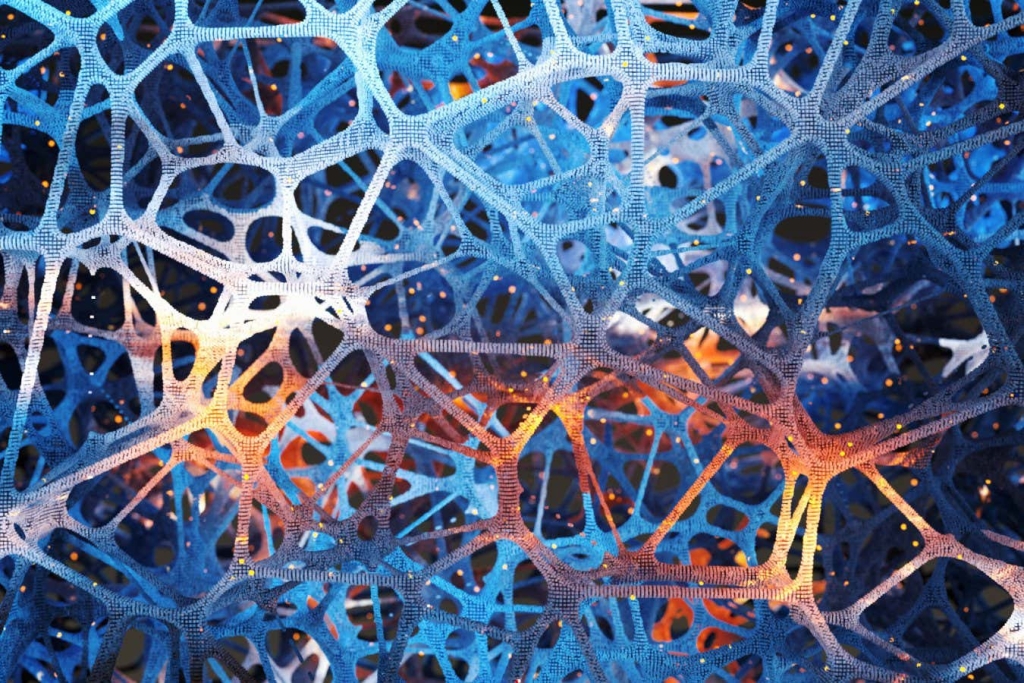
In a development that sounds ripped straight from a science fiction blockbuster, Melbourne-based neurotech startup Cortical Labs has announced plans to build the world’s first data centers powered not by silicon chips, but by living human brain cells. The company’s ambitious project aims to revolutionize computing by harnessing the raw processing power of biological neurons, potentially offering a radical alternative to energy-hungry conventional data centers.
From Pong to Doom: The Rise of Biological Computing
Cortical Labs isn’t new to pushing the boundaries of what’s possible with biological computing. The company first made waves when it demonstrated that its flagship CL1 system—a hybrid of living neurons and microelectrode arrays—could learn to play Pong faster than traditional AI algorithms. Just weeks ago, they upped the ante by showing their system mastering Doom in under a week.
“Our biological computers don’t just compute—they adapt, learn, and evolve in real-time,” explained Dr. Hon Weng Chong, CEO of Cortical Labs. “Traditional silicon-based systems require massive datasets and energy consumption to achieve similar results. Our neurons do it naturally.”
Melbourne and Singapore: The Birthplaces of Biological Data Centers
The company’s first facility, located in Melbourne, will house approximately 120 CL1 units. But the real game-changer is their collaboration with the National University of Singapore, where they plan to deploy an initial 20 units with aspirations to scale up to 1,000 units in a massive biological data center.
“We’re not just building data centers—we’re creating living computational ecosystems,” said a Cortical Labs spokesperson. “These facilities will offer cloud-based brain-computing services to researchers, enterprises, and eventually, the general public.”
The Energy Efficiency Revolution
Perhaps the most compelling argument for biological computing is its potential to dramatically reduce energy consumption. While a state-of-the-art AI chip can consume thousands of watts, each CL1 unit reportedly requires just 30 watts—comparable to a standard household light bulb.
“When we scale up and have these as whole rooms, just like you have now with data servers, then there could be huge power savings,” noted Dr. Paul Roach, a bioelectronics expert at Loughborough University. “The amount of energy that’s saved with their figures is fairly conservative.”
The Science Behind the Silicon
The CL1 systems consist of neuronal cells grown on microelectrode arrays that can both stimulate and measure cellular responses. Unlike traditional computers that rely on binary code, these biological systems process information through the natural firing patterns of neurons.
“You don’t program neurons like standard computers,” explained Reinhold Scherer, a neuroengineering researcher at the University of Essex. “You train them, nurture them, and guide their development—almost like raising a child.”
Expert Skepticism and Technical Challenges
Despite the excitement, many experts urge caution. The technology remains in its infancy, and significant hurdles must be overcome before biological data centers can compete with conventional systems.
“It’s a very long way from production-ready,” cautioned Professor Steve Furber, a computer engineering pioneer at the University of Manchester. “It’s a very big step from a small network playing a computer game to an LLM.”
Key challenges include:
- Memory Storage: Unlike silicon chips, biological neurons don’t have conventional memory storage. Once trained for a specific task, retraining becomes necessary.
- Algorithm Implementation: Running traditional computational algorithms on biological systems remains problematic.
- Lifespan Limitations: Neuronal cultures typically last only 30-60 days before requiring replacement, raising questions about long-term viability.
“You need to retrain every 30 days,” Scherer pointed out. “Then it’s not an optimal solution to keep a technology going if you need to retrain every 30 days.”
The Competitive Landscape
Cortical Labs isn’t alone in exploring biological computing. Companies like FinalSpark and research institutions worldwide are developing similar technologies. However, Cortical Labs appears to be the first to attempt large-scale commercial deployment.
“What they’re doing is essentially allowing their biocomputer to be accessible at a large scale,” said Michael Barros of the University of Essex. “They’ll be the first ones to do that.”
Ethical Considerations and Future Implications
The use of human brain cells for computing raises profound ethical questions. While Cortical Labs uses ethically sourced cells and emphasizes that their systems don’t possess consciousness, the line between biological computing and artificial intelligence continues to blur.
“We’re not creating conscious entities,” Dr. Chong insisted. “We’re leveraging the incredible computational architecture that nature has already perfected over millions of years.”
Timeline and Market Impact
Cortical Labs aims to have its Melbourne facility operational within 18 months, with the Singapore center following shortly after. If successful, this could mark the beginning of a new era in computing—one where data centers are more like biological gardens than industrial facilities.
“The implications are staggering,” said Tjeerd Olde Scheper of Oxford Brookes University. “If we can harness biological computation at scale, we could solve problems that are currently intractable for conventional computers.”
The Verdict: Revolutionary or Overhyped?
As with any groundbreaking technology, the truth likely lies somewhere between revolutionary promise and practical reality. Biological computing offers tantalizing possibilities for energy efficiency and novel problem-solving approaches, but significant technical and ethical hurdles remain.
What’s clear is that Cortical Labs has forced the tech world to confront a fundamental question: In an age of silicon saturation and energy crisis, could the future of computing be… alive?
Tags & Viral Phrases:
- 🧠 Biological Data Centers
- ⚡ 30-Watt Computing Revolution
- 🎮 Brain Cells Play Doom
- 🌱 Living Computer Chips
- 🚀 Silicon’s Biological Successor
- 💡 Energy-Efficient AI
- 🧪 Lab-Grown Neurons
- 🌍 Sustainable Computing
- 🤖 The Future is Alive
- 🔬 Neurotech Breakthrough
- 📈 Computing Paradigm Shift
- 🧠 Human Brain Cells in the Cloud
- 📊 Biological AI Training
- 🏗️ Melbourne’s Living Data Center
- 🇸🇬 Singapore’s Bio-Computing Hub
- ⚠️ Ethical Computing Frontier
- 🔄 Neurons vs. GPUs
- 🧬 Synthetic Biology Meets AI
- 🌟 Next-Gen Computing Architecture
- 💥 Game-Changing Technology
,

Leave a Reply
Want to join the discussion?Feel free to contribute!