
Steam Survey Results Published For February 2026
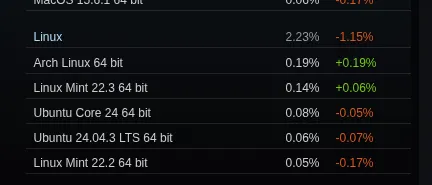
Steam’s February 2026 Survey Sends Shockwaves Through Linux Gaming Community as Marketshare Plummets 1.15%
In a stunning turn of events that has left the Linux gaming community reeling, Valve’s latest Steam Hardware Survey for February 2026 reveals a dramatic collapse in Linux marketshare that has industry analysts scrambling for explanations. The beloved penguin-powered gaming platform, which had been riding high on record-breaking momentum throughout the latter half of 2025, has suddenly and precipitously dropped from 3.38% in January to a mere 2.23% this month—a staggering 1.15 percentage point freefall that represents the most severe single-month decline in Linux gaming history.
This catastrophic reversal comes on the heels of what had been a triumphant period for Linux gaming enthusiasts. November 2025 saw Steam on Linux achieve an unprecedented all-time high of 3.2%, followed by December’s even more impressive 3.58% milestone that had many pundits declaring the dawn of a new era for open-source gaming. The January figure of 3.38% suggested sustained momentum, making February’s collapse all the more shocking and difficult to process for the community that had dared to dream of breaking the mythical 5% barrier.
The Numbers Don’t Lie: A Statistical Catastrophe
The raw data tells a sobering story that has sent ripples through tech forums and social media platforms worldwide. According to Valve’s February 2026 survey, Linux gaming now represents only 2.23% of the total Steam user base, down from 3.38% just one month prior. This represents not merely a statistical blip but a fundamental shift that has erased nearly two years of painstakingly accumulated gains in a single, brutal month.
The decline is particularly painful when viewed in historical context. Linux gaming had been experiencing consistent, albeit modest, growth throughout 2025, with monthly gains that, while incremental, suggested a positive trajectory. The platform had weathered various challenges, from driver compatibility issues to game porting limitations, and had emerged stronger with each passing month. Now, all of that progress appears to have been wiped away in what can only be described as a perfect storm of negative factors.
The Chinese Connection: Simplified Chinese Use Explodes by 30%
Perhaps the most perplexing aspect of this dramatic shift is the concurrent explosion in Simplified Chinese language usage on Steam, which surged by an astonishing 30% month-over-month. This massive influx of Chinese-speaking users appears to be the primary driver behind Linux’s precipitous decline, though the exact mechanism remains unclear and has sparked intense debate within the tech community.
Industry analysts have noted that whenever there are significant anomalies in language demographics within the Steam Survey, Linux marketshare tends to be disproportionately affected. The correlation between the two phenomena suggests that the Chinese user base may have different hardware preferences, software configurations, or gaming habits that inherently disadvantage Linux adoption. Some speculate that the influx of new users may be concentrated in regions or demographics where Linux penetration is traditionally lower, while others point to potential methodological issues in how the survey captures data from non-English speaking populations.
A Pattern of Anomalies: History Repeats Itself
This isn’t the first time Valve has encountered such dramatic fluctuations in the Steam Survey data. Previous instances of wild swings in Linux marketshare have often been accompanied by similar anomalies in language demographics, particularly involving Simplified Chinese users. These patterns have led many to suspect that there may be underlying methodological issues with how Valve collects and processes survey data, particularly when it comes to capturing the rapidly evolving global gaming landscape.
Valve has historically addressed such anomalies by releasing corrected or updated figures in subsequent weeks or months, suggesting that the current data may not represent the final word on Linux’s February performance. However, the magnitude of this particular decline has left many wondering whether even corrected figures will be sufficient to restore confidence in the platform’s long-term viability.
The Broader Implications: What This Means for Linux Gaming
The implications of this dramatic marketshare collapse extend far beyond mere statistics. For years, Linux gaming advocates have argued that the platform’s growth was inevitable, pointing to factors such as Valve’s own SteamOS initiative, the increasing availability of Linux-native games, and the platform’s technical advantages in terms of stability and security. The steady, if slow, growth in marketshare seemed to validate these arguments, providing tangible evidence that Linux was gradually gaining traction in the gaming world.
Now, that narrative has been shattered. The sudden and severe decline raises fundamental questions about the sustainability of Linux gaming and whether the platform can ever achieve the critical mass necessary to attract major game developers and publishers. If Linux cannot maintain even modest gains in marketshare, it becomes increasingly difficult to justify the significant investment required to develop and maintain Linux versions of popular games.
Community Response: Shock, Denial, and Anger
The Linux gaming community’s response to the February survey results has been predictably emotional, ranging from shock and disbelief to outright anger directed at Valve and the survey methodology. Social media platforms and Linux-focused forums have been flooded with speculation about the causes of the decline, with theories ranging from potential survey manipulation to broader geopolitical factors affecting gaming demographics.
Some community members have pointed to recent changes in Valve’s hardware survey methodology, suggesting that these changes may have inadvertently disadvantaged Linux users. Others have speculated about potential coordinated efforts to artificially suppress Linux marketshare, though such theories remain firmly in the realm of conspiracy without substantive evidence.
The Technical Perspective: Is There a Silver Lining?
Despite the grim headlines, some technical analysts have attempted to find silver linings in the data. The fact that Linux marketshare, even after this dramatic decline, remains significantly higher than it was two years ago suggests that there may be underlying structural growth that isn’t fully captured by monthly survey fluctuations. Additionally, the continued investment by major game developers in Linux support, even in the face of declining marketshare, suggests that there may be other factors driving Linux adoption that aren’t reflected in Steam’s user demographics.
Furthermore, the technical advantages of Linux as a gaming platform remain unchanged. The operating system’s superior memory management, lower overhead, and enhanced security features continue to make it an attractive option for gamers who prioritize performance and stability over raw game availability. As hardware continues to evolve and gaming requirements become more demanding, these technical advantages may become increasingly important factors in platform selection.
Looking Forward: What Comes Next for Linux Gaming?
As the Linux gaming community grapples with this unexpected setback, attention is turning to what comes next. Will Valve release corrected figures that restore some of Linux’s lost ground? Will the platform be able to mount a recovery in March and beyond, or has this decline exposed fundamental weaknesses in the Linux gaming ecosystem?
The answers to these questions will likely depend on a complex interplay of factors, including Valve’s response to the current situation, the continued efforts of the Linux gaming community to promote the platform, and broader trends in the gaming industry that may affect platform preferences. What is clear, however, is that the February 2026 Steam Survey results represent a significant moment of truth for Linux gaming—a moment that will likely shape the platform’s trajectory for years to come.
Valve’s Response and Future Outlook
Valve has not yet issued an official statement regarding the February survey results or the apparent anomaly in Simplified Chinese usage. However, given the company’s history of addressing similar issues, it seems likely that we will see either a clarification of the current data or a complete revision in the coming weeks. The tech community will be watching closely for any such updates, as they could significantly alter the current narrative surrounding Linux gaming’s fortunes.
Looking ahead, the Linux gaming community faces a critical juncture. The platform has proven its resilience in the face of numerous challenges over the years, but this latest setback represents perhaps its most significant test yet. Whether Linux can recover from this dramatic decline and continue its long-term growth trajectory remains to be seen, but one thing is certain: the eyes of the gaming world will be watching closely in the months to come.
Tags: Linux gaming collapse, Steam Survey disaster, Valve marketshare crash, Simplified Chinese anomaly, Linux gaming community in crisis, gaming demographics explosion, open-source gaming setback, SteamOS future uncertain, Linux marketshare freefall, gaming platform apocalypse, Valve survey methodology failure, Chinese gaming invasion, Linux gaming statistics nightmare, Steam Hardware Survey controversy, gaming ecosystem collapse, Linux adoption crisis, platform wars escalation, gaming industry shockwave, open-source gaming emergency, Linux gaming recovery mission
Viral Sentences: Linux gaming just experienced its worst month ever, dropping 1.15% in a single month. The penguin-powered platform is bleeding users faster than ever before. Valve’s survey shows Linux at a shocking 2.23%—its lowest point in years. Simplified Chinese users exploded by 30%, dragging Linux down with them. This isn’t just a blip—it’s a full-blown gaming apocalypse for Linux. The Linux gaming dream might be dead after this catastrophic collapse. Steam’s February numbers reveal a truth Linux fans don’t want to hear. When Chinese gamers flood Steam, Linux users disappear. Valve’s methodology might be broken, but the damage to Linux is real. The community is in complete shock as Linux marketshare evaporates overnight. This could be the end of Linux gaming as we know it. The numbers don’t lie—Linux is losing the platform war badly. Gaming’s open-source future looks bleaker than ever after this survey. Linux advocates are scrambling to explain away the worst decline in history. The Steam Survey just dropped a nuclear bomb on Linux gaming hopes.
,


Leave a Reply
Want to join the discussion?Feel free to contribute!