
Stop Clicking on Junk: How to Identify and Ignore AI-Generated Slop Today
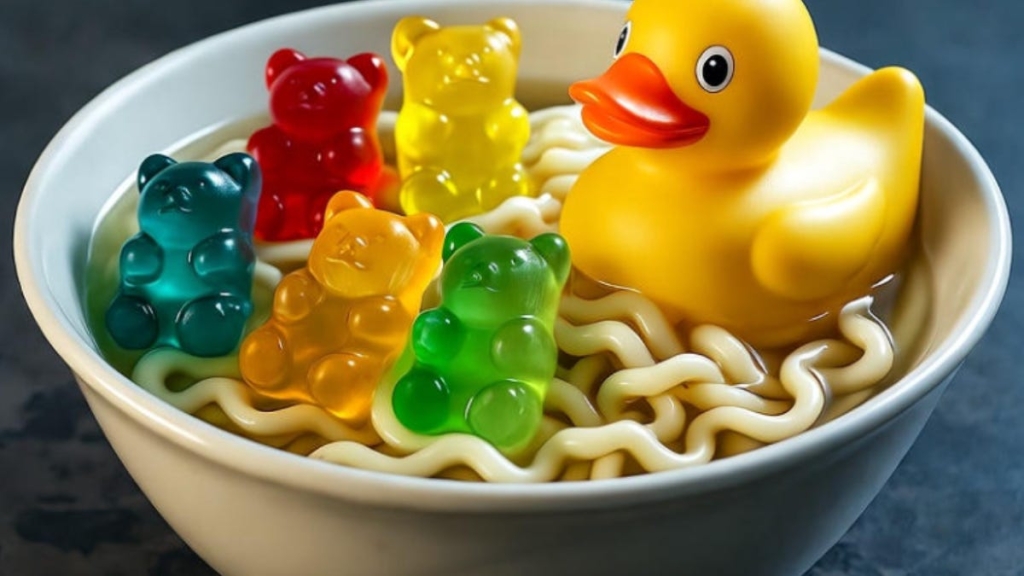
The Internet Is Drowning in AI Slop — And It’s Ruining Everything
Scrolling through your social media feed lately? You’re not alone if something feels… off. Whether it’s Facebook, Instagram, or TikTok, the internet has become a digital wasteland of low-quality, AI-generated “content” that’s impossible to escape. This phenomenon, known as “AI slop,” has exploded across every platform, turning our once-vibrant online spaces into a monotonous sea of machine-made mediocrity.
What Exactly Is AI Slop?
The term “slop” originally referred to animal feed made from leftovers—and that’s precisely what this digital garbage represents. AI slop is content generated quickly and carelessly, with zero originality or factual accuracy. Think of it as spam for the social media age: bad email scams replaced by bland blog posts, fake news clips, and surreal videos that frankly should never see the light of day.
You’ll find AI slop everywhere. YouTube videos with robotic narration over stolen footage. “News” websites copying each other’s AI-written articles. TikTok clips featuring voices that sound like Siri trying to pass as human. Even Google search results are starting to feel sloppier, with AI-generated how-tos and product reviews ranking above legitimate journalism.
The problem isn’t that AI is inherently bad at creating—it’s that too many people use it to flood the internet with content that looks informative but isn’t. As John Oliver recently highlighted in a dedicated segment, we’re drowning in digital detritus.
The Real Danger: Deepfakes vs. Hallucinations vs. Slop
AI slop isn’t the same as a deepfake or a hallucination, though the three often blur together. The difference is intent and quality.
Deepfakes are precision forgeries that use AI to generate or alter realistic video and audio, making someone appear to do or say something they never did. The goal is deception—from fake political speeches to voice clones used in scams. Deepfakes target individuals, and their danger lies in how convincing they can be.
AI hallucinations are technical errors. A chatbot might cite a study that doesn’t exist or invent a legal case from thin air. The model isn’t trying to mislead—hallucinations happen when it predicts the next likely word and gets it wrong.
AI slop is broader and more careless. It happens when people use AI to mass-produce content—articles, videos, music, art—without checking accuracy or coherence. It clogs feeds, boosts ad revenue, and fills search results with repetitive or nonsensical material. Its inaccuracy comes from neglect, not deceit or error.
In short: deepfakes deceive on purpose, hallucinations fabricate by accident, and AI slop floods the internet out of indifference, often fueled by greed for a quick buck.
Where Is All This AI Slop Coming From?
Part of the reason AI slop spread so fast is that AI technology became powerful and cheap. AI companies created these models hoping to reduce barriers for people with great ideas but lacking talent or finances. What actually happened? People are asking AI tools to churn out text and images by the thousands for clicks or ad revenue.
It’s a volume game. If a video performs well, more just like it are created, so we end up with digital clutter and uncanny online iterations.
Once tools like ChatGPT, Gemini, and Claude made it possible to generate readable text, images, and videos in seconds—especially with newer AI generators like Sora and Veo—content farms jumped in. They realized they could fill websites, social feeds, and YouTube with AI content faster than any human team could write, edit, or film.
Platforms have played a role too. Algorithms often reward quantity and engagement, not quality. The more you post, the more attention you grab, even if what you post is nonsense (mukbang much?). AI makes it trivial to scale that strategy.
There’s also money involved. Some creators pump out fake celebrity news or clickbait videos stuffed with ads. Others repurpose AI content to trick recommendations and drive traffic to low-effort sites. The goal isn’t to inform or entertain. It’s to make a fraction of a cent per view, multiplied by millions.
How AI Slopification Is Ruining the Internet
At first glance, slop looks harmless—a few bad posts in your feed and maybe you get a laugh or two out of it. But volume changes everything and fatigues the audience. As more junk circulates, it pushes credible sources down in search results and crowds out human creators. It also blurs the line between truth and fabrication. When half of what you see looks like a simulation, it’s harder to trust the rest.
That erosion of trust has real consequences. Misinformation spreads faster when no one knows what’s real. Scammers weaponize AI to build convincing fake brands or impersonate people and even officials. Advertisers are struggling because their campaigns sometimes appear alongside AI slop on platforms like YouTube, damaging brand credibility by association.
There’s a deeper cultural cost. Award-winning filmmaker Sean King O’Grady sees a long arc of numbness online, giving the example of Bob Ross punching Stephen Hawking. “I think the internet, in a strange way, has desensitized all of us to violence in a pretty horrible way,” he tells CNET. “I wonder what does that say about our humanity when violent or grotesque AI mashups go viral?”
The thought of where we’re going as a culture and what we do with these tools scares O’Grady more than thinking about the economic consequences of generative AI videos.
What Can We Do About AI Slop?
No one has a perfect fix yet, but some companies are trying. Platforms like Spotify have started labeling AI-generated media and adjusting algorithms to downrank low-quality output. Google, TikTok, and OpenAI have promised watermarking systems to help you tell human content apart from synthetic material. Though those methods are still easy to evade if someone screenshots an image, re-encodes the video, or rewrites AI text.
Some of the fixes rely on a framework called C2PA, short for Coalition for Content Provenance and Authenticity. It’s an industry standard backed by companies like Adobe, Amazon, Microsoft, and Meta that embeds metadata directly into digital files to show when and how they were created and edited.
If it works as intended, C2PA will help you trace whether an image, video, or article came from a verified human source or an AI generator. The challenge is adoption, since metadata can be stripped or ignored and most platforms do not enforce it consistently.
O’Grady is skeptical about labels alone, worried that even authentic videos of serious events, such as a politician committing a crime, could be easily dismissed as fake with a false AI watermark. “I might be pessimistic on this front, but I don’t think labeling will do much,” he says. “I think the watermarks could be also used to de-authenticate things that were authentically real.”
Creators are pushing back in their own way too. Many journalists and artists emphasize human craft. Some writers include a simple note, “no AI was used,” to reassure readers that a person, not a prompt, made the work.
Can AI Slop Be Stopped?
Probably not completely. Once mass production of words and images became nearly free and fairly easy, the floodgates opened. AI doesn’t care about truth, taste, or originality. It cares about probability. And that’s exactly what makes slop so easy to make and so hard to escape.
But bringing awareness helps. People are learning to spot patterns—the same phrasing (“tapestry,” “in the era of,” “not only but also,” are some of the common ones), the same empty language that feels human but lands hollow.
However, AI tools are advancing rapidly and whatever AI model is currently out is the worst as it will ever be.
The cognitive cost is real. “I think all of this is probably very bad for your brain, the same way that junk food is,” O’Grady says. “Your mind is what you put into it. If it’s what we’re consuming all day, because it’s all that’s out there, I think that’s pretty dangerous.”
Instead of leading to the predicted “galactic techno-utopia,” as O’Grady calls it, or singularity where consciousnesses merge, he says the current trend of AI suggests our future might just be an endless, senseless universe of Bob Ross memes, “shrimp Jesus,” and other absurd slop.
For now, the best defense is our attention. Slop thrives on automation and on scrolling or sharing without thinking—something we’ve all been guilty of doing. Slow down, check sources, reward creators who still put in real effort. It may not fix this mess overnight, but it’s a start.
The internet has been here before. We fought spam, clickbait, dis- and misinformation. AI slop is the next version of the same story, faster and slicker but harder to detect. Whether the web keeps its integrity depends on how much we still value human work over machine output.
Tags: AI slop, artificial intelligence, deepfakes, hallucinations, social media, content farms, misinformation, digital trust, generative AI, ChatGPT, Gemini, Claude, Sora, Veo, C2PA, Coalition for Content Provenance and Authenticity, John Oliver, Sean King O’Grady, Bob Ross, shrimp Jesus, clickbait, spam, watermarking, metadata, human creativity, digital detox, online authenticity, algorithm manipulation, ad revenue, content quality, internet culture, tech ethics, digital literacy
Viral Phrases: “Get that AI slop out of my face,” “galactic techno-utopia,” “shrimp Jesus,” “Bob Ross punching Stephen Hawking,” “your mind is what you put into it,” “junk food for your brain,” “the internet has desensitized us,” “volume changes everything,” “deepfakes deceive, hallucinations fabricate, slop floods,” “the worst AI will ever be,” “endless universe of absurdity,” “automation thrives on our attention,” “human work over machine output”
Viral Sentences: “Scrolling through social media online just isn’t fun anymore.” “The internet is positively riddled with AI slop.” “Bad email scams have been replaced by bland blog posts.” “AI doesn’t care about truth, taste, or originality.” “Your mind is what you put into it.” “The worst AI will ever be is the one we have right now.” “Whether the web keeps its integrity depends on how much we still value human work.” “Slow down, check sources, reward creators who still put in real effort.”
,


Leave a Reply
Want to join the discussion?Feel free to contribute!