
Study of Buddhist Monks Finds Meditation Alters Brain Activity
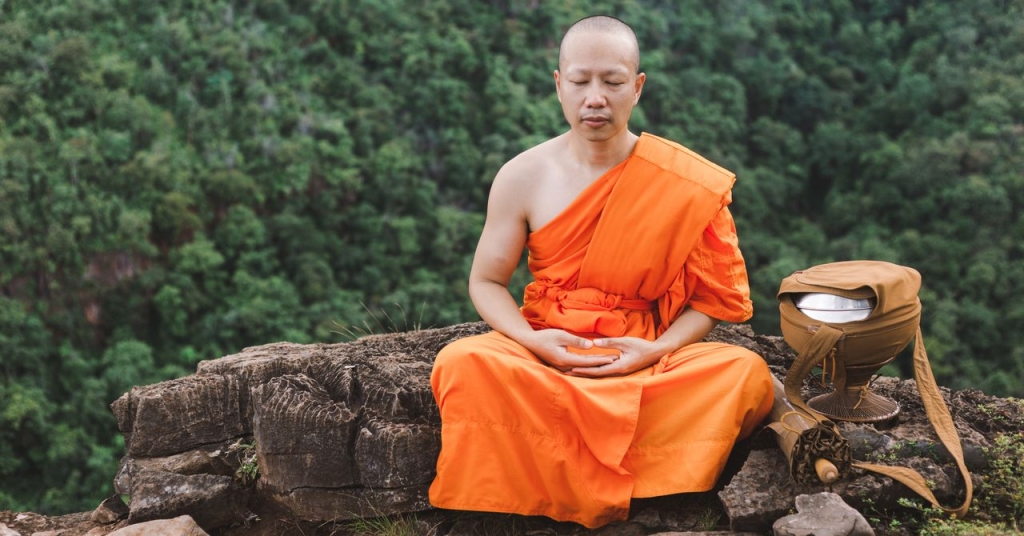
The ancient practice of meditation, long revered for its calming effects on the mind and body, has been revealed to be far more than just a mental escape. A groundbreaking international study led by researchers from the University of Montreal and Italy’s National Research Council has uncovered that meditation is not a state of rest for the brain, but rather a state of heightened cerebral activity that profoundly reshapes brain dynamics. The findings, published in the journal Neuroscience of Consciousness, challenge long-held assumptions about meditation and offer new insights into how this ancient practice optimizes brain function.
The study focused on two classical forms of meditation: Samatha and Vipassana, practiced by 12 monks of the Thai Forest Tradition at Santacittārāma, a Buddhist monastery outside Rome. Using magnetoencephalography (MEG), a cutting-edge technology capable of recording the brain’s electrical signals with exceptional precision, the researchers analyzed the monks’ brain activity as they alternated between the two meditation techniques and brief periods of rest.
Samatha, which emphasizes sustained attention to a specific object, such as steady breathing, aims to stabilize the mind and achieve deep calm and concentration. Vipassana, on the other hand, involves equanimous observation of sensations, thoughts, and emotions as they arise, fostering mental clarity and a deeper understanding of experience. “With Samatha, you narrow your field of attention, somewhat like narrowing the beam of a flashlight; with Vipassana, you widen the beam,” explains Karim Jerbi, professor of psychology at the University of Montreal and one of the study’s coauthors. “Both practices actively engage attentional mechanisms, though Vipassana is often more challenging for beginners.”
The researchers measured multiple indicators of brain dynamics, including neural oscillations, signal complexity, and parameters related to “criticality,” a concept borrowed from statistical physics and applied to neuroscience over the past two decades. Criticality describes systems that operate efficiently at the boundary between order and chaos, and in neuroscience, it is considered a state optimal for information processing in a healthy brain. “A brain that lacks flexibility adapts poorly, while too much chaos can lead to malfunction, as in epilepsy,” Jerbi explained in a press release. “At the critical point, neural networks are stable enough to transmit information reliably, yet flexible enough to adapt quickly to new situations. This balance optimizes the brain’s processing, learning, and response capacity.”
The results were striking. Both forms of meditation increased the complexity of brain signals compared to a brain at rest, suggesting that meditation does not simply calm the brain but rather engages it in a dynamic, information-rich state. However, the study also revealed distinct differences between the two practices. The analysis of the criticality deviation coefficient showed that Vipassana brought practitioners closer to the balance of stability and flexibility, while Samatha produced a more focused and stable state. This finding aligns with the subjective experiences of practitioners: Vipassana’s broad, open awareness contrasts with Samatha’s narrow, concentrated focus.
The implications of these findings are profound. They suggest that meditation is not a passive activity but an active process that reshapes the brain’s dynamics, enhancing its ability to process information, adapt to new situations, and maintain a state of optimal functioning. This challenges the common misconception that meditation is about “emptying the mind” and instead positions it as a powerful tool for cognitive enhancement and mental resilience.
Moreover, the study highlights the potential of meditation as a therapeutic intervention. By bringing the brain closer to the critical state of balance, meditation may help individuals improve their ability to switch tasks, store information, and respond to challenges with greater efficiency and flexibility. This could have significant implications for mental health, cognitive performance, and overall well-being.
As the scientific community continues to explore the mechanisms underlying meditation, this study provides a compelling glimpse into the transformative power of this ancient practice. Far from being a simple relaxation technique, meditation emerges as a sophisticated method for optimizing brain function, offering a pathway to greater mental clarity, resilience, and adaptability. For those seeking to harness the full potential of their minds, the evidence is clear: meditation is not just a rest for the brain—it’s a workout for the mind.
Tags and Viral Phrases:
- Meditation rewires the brain
- Ancient practice, modern science
- Brain activity during meditation
- Samatha vs. Vipassana
- Criticality in neuroscience
- Meditation as a mental workout
- Brain complexity and meditation
- Mindfulness and brain dynamics
- Meditation for cognitive enhancement
- The science of stillness
- Meditation’s hidden power
- Unlocking the brain’s potential
- Meditation is not rest—it’s transformation
- The mind’s ultimate upgrade
- Meditation: The brain’s secret weapon
- From chaos to clarity: The meditation effect
- Meditation: The ultimate brain hack
- Ancient wisdom meets cutting-edge science
- Meditation: More than meets the eye
- The brain on meditation: A new frontier
,

Leave a Reply
Want to join the discussion?Feel free to contribute!