
Study Reveals an Unexpected Way to Boost Recovery After a Stroke : ScienceAlert
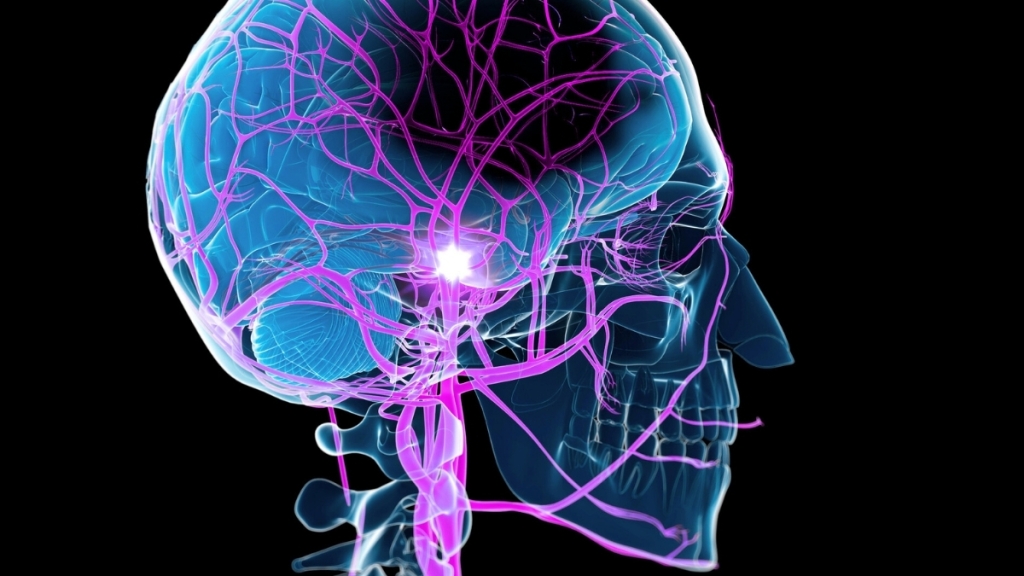
Stroke Survivors Discover Unexpected Path to Recovery: Training the “Good” Arm
In a groundbreaking development that challenges conventional rehabilitation wisdom, researchers have uncovered a counterintuitive approach to stroke recovery that could transform millions of lives worldwide. The discovery centers on strengthening the less-affected arm of stroke survivors, rather than focusing exclusively on the most severely impaired limb.
The Hidden Challenge of “Recovery”
When stroke strikes, it typically leaves one arm significantly weakened or paralyzed, while the other arm—often considered the “good” arm—becomes the primary tool for daily living. However, new research published in JAMA Neurology reveals that this supposedly unaffected arm is far from normal.
According to the study, stroke survivors using their less-impaired arm for daily tasks take up to three times longer to complete activities compared to healthy individuals using their dominant hand. This creates a cascade of challenges that extend far beyond the immediately obvious impairments.
“We’ve been approaching stroke rehabilitation with the wrong assumption,” explains Candice Maenza, Research Project Manager at Penn State’s Center for Translational Neuromechanics in Rehabilitation. “The arm that survivors rely on most heavily is often working at only a fraction of its potential capacity.”
The Science Behind the Discovery
The research team, led by Maenza and Professor Robert Sainburg, conducted a clinical trial involving over 50 patients living with chronic stroke. All participants had severe impairments in one arm that rendered it unusable for everyday tasks, forcing them to depend almost entirely on their less-impaired arm.
What makes this finding particularly significant is the brain’s role in controlling both arms. While each side of the brain primarily controls the opposite side of the body, decades of research have demonstrated that both hemispheres contribute to movements of both arms, albeit in different ways. When one side of the brain is damaged by stroke, it affects movement coordination on both sides of the body.
The experimental design was elegantly simple yet revolutionary. Participants were randomly assigned to one of two rehabilitation groups: one focused on training their most-impaired arm, while the other concentrated on strengthening their less-impaired arm. Both groups underwent five weeks of intensive therapy featuring challenging, goal-directed hand movements and virtual reality tasks designed to improve coordination and timing.
The results were nothing short of remarkable. Participants who trained their less-impaired arm showed significant improvements in everyday hand function, becoming faster and more efficient at tasks like picking up small objects or lifting cups. Even more impressively, these improvements persisted six months after the training concluded.
Why This Approach Works
The researchers believe the lasting benefits stem from a powerful feedback mechanism. When the less-impaired arm becomes more capable, survivors naturally use it more frequently in their daily lives. This increased usage creates additional practice opportunities, effectively reinforcing and solidifying the gains achieved during formal therapy sessions.
“The beauty of this approach is its simplicity and sustainability,” notes Professor Sainburg. “We’re not asking patients to perform extraordinary exercises or use expensive equipment. We’re simply helping them maximize the potential of the arm they already rely on every day.”
A Paradigm Shift in Rehabilitation
This research represents a fundamental shift in how we conceptualize stroke recovery. Traditional rehabilitation has focused almost exclusively on restoring function to the most visibly impaired arm, operating under the assumption that this represents the primary path to improved quality of life.
However, for the millions of stroke survivors who will never regain full function in their most-affected arm, this approach offers a new avenue for meaningful improvement. Rather than viewing the less-impaired arm as merely adequate or secondary, the research suggests treating it as a primary target for intervention.
The implications extend beyond mere physical capability. When everyday tasks become less exhausting and more efficient, survivors report improved mood, greater confidence, and increased willingness to engage in social and recreational activities. This creates a positive feedback loop that can dramatically enhance overall quality of life.
Looking Forward
The research team emphasizes that this approach should not replace traditional rehabilitation focused on the most-impaired arm, but rather complement it. Future studies will explore optimal combinations of training strategies and investigate how these improvements translate to real-world home environments.
For the estimated 15 million people worldwide who experience stroke each year, this discovery offers renewed hope. Recovery may not always mean restoring what was lost, but rather strengthening what remains and maximizing existing capabilities.
The study’s findings challenge us to reconsider our assumptions about disability and recovery, suggesting that sometimes the path forward lies not in fixing what’s broken, but in optimizing what still works. In the complex landscape of stroke rehabilitation, this simple yet powerful insight could prove transformative.
#strokerecovery #medicalbreakthrough #rehabilitation #neuroscience #healthinnovation #strokeawareness #medicalresearch #physicaltherapy #brainhealth #recoveryjourney
#gamechanger #medicaldiscovery #healthrevolution #strokewarrior #recoveryhope #sciencewins #medicalinnovation #brainhealing #strokerecoverytips #newhope
“Training the ‘good’ arm could be the key to unlocking better stroke recovery”
“Scientists discover unexpected path to stroke rehabilitation”
“This simple approach could transform millions of lives after stroke”
“The arm you’re not focusing on might be the answer”
“Stroke survivors: your ‘good’ arm isn’t as good as you think”
“Revolutionary approach challenges everything we knew about stroke rehab”
“Science reveals the hidden potential in your less-affected arm”
“This counterintuitive method is changing stroke recovery forever”
“Researchers unlock the secret to maximizing post-stroke independence”
“The future of stroke rehabilitation is here, and it’s surprisingly simple”,

Leave a Reply
Want to join the discussion?Feel free to contribute!