
Study shows how rocket launches pollute the atmosphere
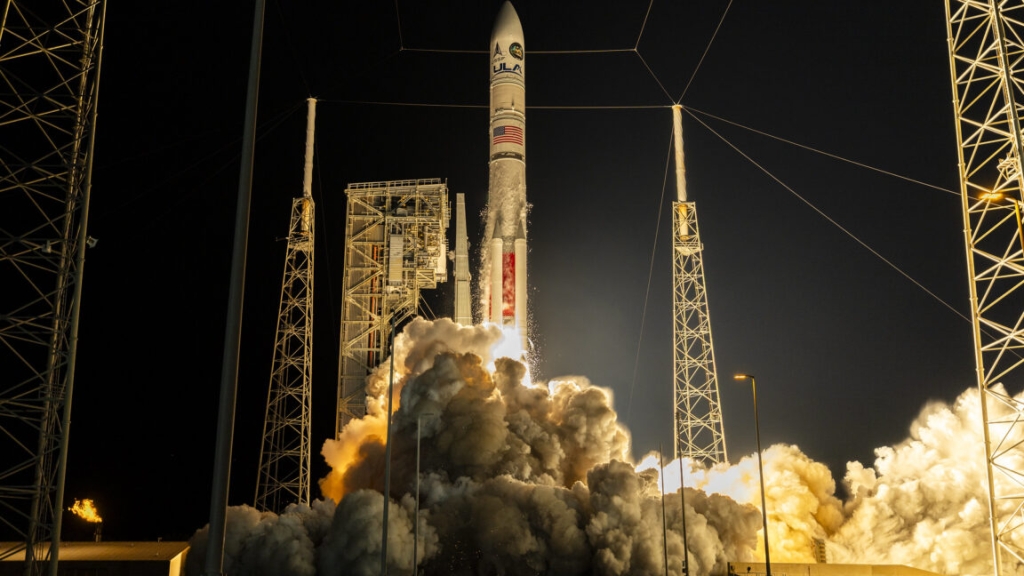
Rocket Launches Are Quietly Wreaking Havoc on Earth’s Ozone Layer, Scientists Warn
In a sobering revelation that could reshape the future of commercial spaceflight, atmospheric scientists are raising the alarm about the environmental cost of humanity’s accelerating push into orbit. At a recent international conference, researchers unveiled data suggesting that rocket exhaust—once thought to be a negligible atmospheric pollutant—may be undoing decades of progress in healing Earth’s protective ozone layer.
Leading the charge is Dr. Laura Revell, an atmospheric scientist at the University of Canterbury in New Zealand. Her groundbreaking research paints a troubling picture: in a high-growth scenario where the space industry scales to 2,000 launches per year, the cumulative effect of rocket emissions could trigger a 3 percent loss in global ozone. To put that in perspective, that’s the atmospheric equivalent of a catastrophic wildfire season—like the ones that ravaged Australia in recent years.
But what exactly is in rocket exhaust that’s so damaging? According to Revell, the culprits are twofold: chlorine-rich solid rocket fuels and black carbon particles spewed from rocket plumes. Chlorine, long known for its ozone-depleting properties, is a familiar villain. But black carbon—essentially soot—is emerging as an equally insidious threat. These microscopic particles don’t just linger in the stratosphere; they absorb sunlight, warming the surrounding air by as much as half a degree Celsius. That seemingly small shift can have outsized consequences, altering wind patterns that govern everything from storm tracks to precipitation zones.
“This is probably not a fuel type that we want to start using in massive quantities in the future,” Revell cautioned, underscoring the urgency of rethinking propulsion technologies as the space race heats up.
The problem, however, extends beyond the launchpad. Researchers at the same conference revealed that the mass of human-made material injected into the upper atmosphere by satellite re-entries has doubled in just five years, now reaching nearly a kiloton annually. For certain metals like lithium, the amount deposited by human activity already exceeds that from natural sources like meteors. This influx of exotic materials into the stratosphere is uncharted territory for climate science—and potentially catastrophic.
The emerging field of space sustainability science is beginning to treat orbital space and near-space as integral parts of the global environment. A 2022 Nature Astronomy article co-authored by Moriba Jah, a professor of aerospace engineering at the University of Texas at Austin, argues that the upper atmosphere is already under increasing pressure from human activities. The commercial exploitation of what appears to be a limitless resource, the paper warns, is effectively shifting its real costs onto society at large.
Leonard Schulz, a space pollution researcher at the Technical University of Braunschweig in Germany, put it bluntly at last year’s European Geosciences Union conference: “If you put large amounts of catalytic metals in the atmosphere, I immediately think about geoengineering.” The implication is clear—unintentional atmospheric manipulation could have consequences as profound as deliberate climate interventions.
Schulz’s warning is stark: “In 10 years, it might be too late to do anything about it.” The clock is ticking, and the space industry’s rapid expansion shows no signs of slowing.
As private companies like SpaceX, Blue Origin, and Rocket Lab ramp up launch frequencies to meet growing demand for satellite internet, Earth observation, and space tourism, the environmental stakes are higher than ever. The ozone layer, painstakingly rebuilt through global cooperation under the Montreal Protocol, now faces a new and unexpected threat from above.
The question is no longer whether rocket launches impact the atmosphere—it’s how much damage we’re willing to accept in our quest to conquer the cosmos. For now, the science is clear: the final frontier may be costing us the very planet we’re trying to leave behind.
Tags:
ozone layer depletion, rocket exhaust, space industry growth, black carbon, chlorine emissions, atmospheric warming, geoengineering, satellite re-entries, space sustainability, Moriba Jah, Laura Revell, Leonard Schulz, commercial spaceflight, environmental impact, stratosphere pollution, climate science, Montreal Protocol, SpaceX, Blue Origin, Rocket Lab, upper atmosphere, catalytic metals, global winds, precipitation patterns, kiloton of debris, lithium pollution, meteors vs. rockets, near-space environment, orbital sustainability, unintended consequences, climate intervention, Earth’s shield, atmospheric modeling, wildfire season comparison, propulsion technologies, space race, environmental cost, final frontier, planet Earth, scientific urgency, 3 percent ozone loss, half-degree warming, stratospheric shifts, atmospheric science, Inside Climate News, Bob Berwyn.
,


Leave a Reply
Want to join the discussion?Feel free to contribute!