
Sui executives say institutional demand has never been higher
Institutional Crypto Adoption Hits New Heights: Sui Executives Reveal 2025 as a Landmark Year
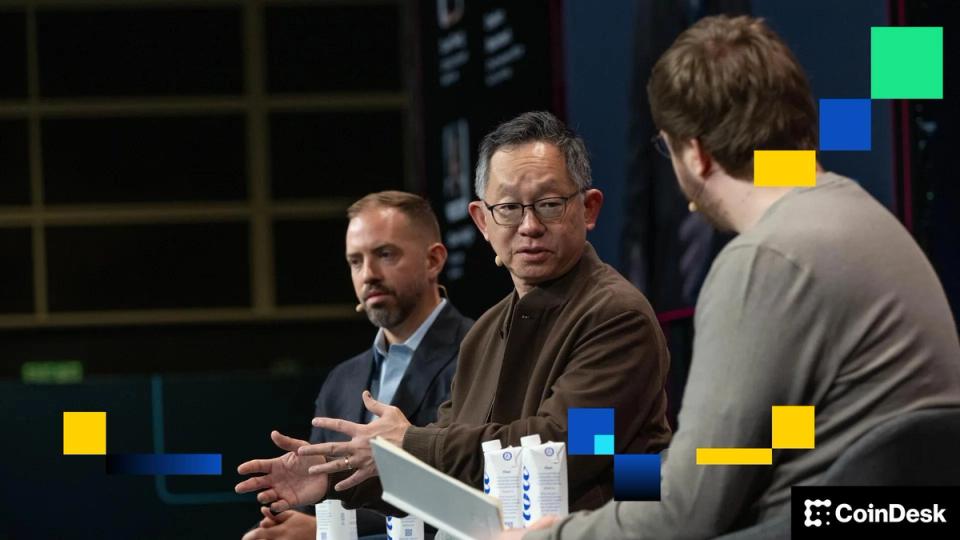
The cryptocurrency industry is witnessing an unprecedented surge in institutional adoption, with 2025 emerging as a watershed moment for traditional finance’s embrace of digital assets. This revelation comes directly from Sui executives who shared their insights at Consensus Hong Kong 2026, painting a picture of a sector experiencing structural transformation despite market volatility.
The Institutional Gold Rush: More Than Just Market Hype
Stephen Mackintosh, Chief Investment Officer of Sui Group Holdings, delivered a compelling narrative about the current state of institutional crypto adoption. His assessment is unequivocal: we’re witnessing a “landmark year for institutional adoption” that transcends typical market cycles and sentiment fluctuations.
Mackintosh’s analysis cuts through the noise of crypto market volatility to reveal a fundamental shift in how traditional financial institutions view digital assets. He points to the explosive growth of digital asset treasury (DAT) vehicles and the remarkable success of spot Bitcoin ETFs as concrete evidence of this transformation. These aren’t speculative investments by retail traders; these are strategic moves by sophisticated financial institutions deploying significant capital into crypto infrastructure.
The timing of this institutional influx is particularly noteworthy. Mackintosh specifically references the impact of the Genius Act, legislation that has catalyzed institutional demand and awareness around cryptocurrency’s potential. The Act appears to have provided the regulatory clarity and framework that institutional investors have long sought, unlocking pent-up demand for crypto exposure.
Beyond Sentiment: The Structural Reality of Institutional Crypto
Perhaps the most striking aspect of Mackintosh’s analysis is his assertion that “the market, despite all of the sentiment being low, has never been greater.” This counterintuitive observation speaks to a fundamental truth about institutional adoption: it’s driven by structural factors rather than short-term price movements or retail sentiment.
The data supports this perspective. Mackintosh highlights record options volumes as evidence of sophisticated institutional trading activity. More significantly, he points to the entrance of financial giants like Citadel and Jane Street into crypto markets. These aren’t peripheral players dabbling in digital assets; they’re market-making powerhouses with billions in capital and decades of trading expertise.
The strategic implications are profound. Mackintosh describes how “the biggest institutions in finance in the world” are not merely investing in crypto assets but are building infrastructure and hiring talent specifically to capture market share in this emerging sector. This represents a long-term commitment that goes far beyond opportunistic trading.
The Convergence: DeFi Meets TradFi
Evan Cheng, CEO of Mysten Labs, provides a complementary perspective on the evolution of institutional crypto adoption. His vision centers on convergence rather than competition between traditional finance (TradFi) and decentralized finance (DeFi).
Cheng’s analysis cuts to the heart of what makes DeFi compelling for institutional adoption: settlement speed. He contrasts the typical “T+1 or T+whatever” settlement times in traditional finance with DeFi’s “T+0” settlement capability. This isn’t a marginal improvement; it’s a “strictly better product” in terms of settlement terms.
The implications for institutional finance are transformative. Cheng envisions a future where tokenization enables immediate collateralization and borrowing against acquired assets. This creates opportunities for DeFi strategies layered on traditional exposure, effectively bridging the gap between conventional financial products and decentralized protocols.
ETFs vs. DeFi: Evolution, Not Competition
One of the most intriguing aspects of Cheng’s analysis addresses the relationship between traditional financial products like ETFs and emerging DeFi protocols. Rather than viewing them as competing paradigms, he sees them as complementary components of an evolving financial ecosystem.
Cheng suggests that institutional on-ramps may begin conservatively, with traditional products like ETFs serving as familiar entry points for risk-averse institutions. However, these products could incorporate yield or other on-chain mechanics over time, gradually introducing institutions to DeFi capabilities while maintaining the regulatory and operational frameworks they’re accustomed to.
This evolutionary approach makes strategic sense. It allows institutions to participate in crypto markets through familiar structures while building the expertise and infrastructure needed for more sophisticated DeFi interactions. The result is a gradual convergence that leverages the strengths of both paradigms.
Infrastructure as the Ultimate Differentiator
Both executives emphasized infrastructure as Sui’s key differentiator in the competitive blockchain landscape. Mackintosh described Sui as “a differentiated proposition” built by former Facebook engineers who worked on the Libra project. This pedigree brings significant credibility and technical expertise to the platform.
The technical specifications are impressive. Sui offers low latency and high throughput, positioning it as an ideal platform for emerging use cases that demand rapid transaction processing. Mackintosh specifically highlighted “agentic commerce” as a key application area—the intersection of artificial intelligence and on-chain transactions.
This focus on infrastructure speaks to a mature understanding of institutional needs. Large financial institutions don’t just need a place to trade crypto; they need robust, scalable infrastructure that can handle institutional-grade transaction volumes with the reliability and security standards they require.
The Long Game: Building for the Future
What emerges from these insights is a picture of institutional crypto adoption as a long-term strategic shift rather than a speculative fad. The involvement of firms like Citadel and Jane Street, the development of sophisticated infrastructure by platforms like Sui, and the gradual convergence of TradFi and DeFi all point to a fundamental restructuring of global finance.
The market fluctuations and sentiment swings that dominate crypto headlines are increasingly irrelevant to this institutional narrative. As Mackintosh suggests, the structural shift is clear regardless of short-term price action. Institutions are building for a future where digital assets and blockchain technology play central roles in global finance.
This transformation represents one of the most significant developments in financial markets in decades. It’s not just about new investment opportunities; it’s about reimagining how value moves through the global economy. The convergence of AI, tokenization, and institutional capital could create entirely new financial paradigms that we’re only beginning to understand.
Tags:
Institutional crypto adoption, Sui blockchain, Consensus Hong Kong 2026, digital asset treasury vehicles, spot Bitcoin ETFs, Genius Act impact, Citadel crypto trading, Jane Street crypto markets, DeFi convergence, tokenization benefits, agentic commerce, blockchain infrastructure, institutional finance transformation, Mysten Labs CEO insights, Stephen Mackintosh analysis, crypto market evolution, TradFi DeFi convergence, blockchain scalability, AI onchain transactions, institutional crypto strategy
Viral Sentences:
2025 marks the year institutions finally understood crypto’s true potential. The biggest financial institutions are building crypto infrastructure right now. DeFi’s T+0 settlement is strictly better than TradFi’s T+1 delays. Former Facebook engineers are creating the next generation of blockchain infrastructure. Institutional adoption continues despite market sentiment being at all-time lows. Record options volumes prove institutions are here to stay. Citadel and Jane Street entering crypto signals the real institutional shift. Tokenization enables immediate collateralization and borrowing against assets. The convergence of TradFi and DeFi is happening right now. Agentic commerce represents the future intersection of AI and blockchain. Infrastructure is the ultimate differentiator in institutional crypto adoption. Digital asset treasury vehicles are exploding in popularity among institutions. The Genius Act catalyzed institutional demand for crypto exposure. Blockchain platforms built by tech giants’ alumni are gaining institutional trust. This isn’t speculation—it’s the structural transformation of global finance.
Viral Words:
Landmark adoption, structural shift, institutional gold rush, convergence revolution, settlement speed, tokenization explosion, infrastructure dominance, AI commerce, market transformation, strategic commitment, regulatory clarity, financial evolution, blockchain scalability, institutional strategy, digital asset treasury, ETF revolution, DeFi integration, market making giants, long-term vision, technical pedigree, transaction throughput, collateralization power, financial paradigm shift, global finance restructuring, emerging use cases, technical expertise, market share capture, regulatory framework, investment infrastructure, talent acquisition, strategic positioning, market volume records, institutional on-ramps, conservative evolution, familiar structures, robust infrastructure, institutional-grade, reliability standards, speculative fad, financial reimagining, value movement, new paradigms, headline irrelevance, price action independence, strategic shift, market cycles, sophisticated activity, trading expertise, familiar entry points, gradual convergence, scalable infrastructure, institutional needs, fundamental restructuring, transformative implications, complementary components, evolutionary approach, mature understanding, significant development, financial markets, decades transformation, new financial paradigms, beginning understanding, significant development, financial markets, decades transformation, new financial paradigms, beginning understanding.
,

Leave a Reply
Want to join the discussion?Feel free to contribute!