
Sun Fires Off 4 Powerful Flares as More ‘Exciting Activity’ Is Forecast : ScienceAlert
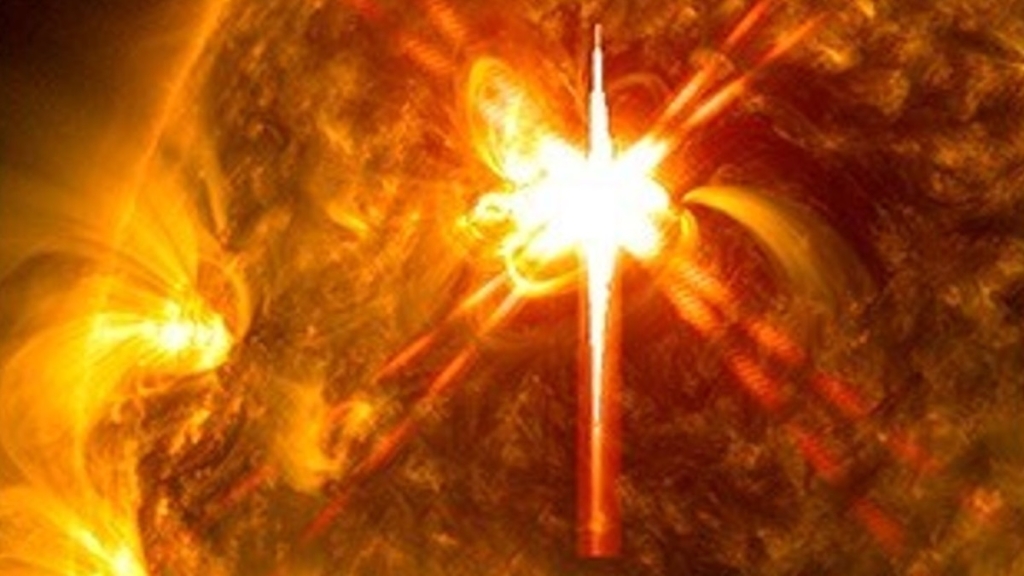
The Sun Unleashes a Quadruple Threat: Four Massive Solar Flares Light Up Space Weather Watchers
In a spectacular display of stellar power, our Sun has erupted with four powerful solar flares within a 20-hour period, sending space weather experts scrambling to assess potential impacts on Earth’s technological infrastructure and sky watchers eagerly anticipating possible aurora displays.
The solar fireworks began at 12:33 UTC on February 1, when the Sun fired off an X1.0 flare—already a significant event by itself. But the real showstopper came approximately 11 hours later, at 23:37 UTC, when a massive X8.1 flare erupted from the same region. This eruption marked the most powerful solar flare since October 2024 and ranks as the 19th-strongest on record since scientists began systematic observations.
The solar tantrum wasn’t over yet. Just after midnight on February 2, at 00:36 UTC, another X2.8 flare exploded from the active region, followed by an X1.6 flare at 08:14 UTC. All four flares originated from a cluster of sunspots designated RGN 4366, which has only recently begun its journey across the Earth-facing side of the Sun.
“These flares erupted from a cluster of sunspots designated RGN 4366, which has only just started its Earth-facing journey,” noted the NOAA Space Weather Prediction Center in their analysis. “If this spot group continues to evolve, remains complex, and erupts with any powerful solar flares, there could be increased chances of energetic particle events and possible even coronal mass ejections (CMEs) to watch for.”
X-class flares represent the most intense category of solar eruptions, capable of producing radiation storms that can affect everything from GPS navigation to power grid operations. The X8.1 event in particular has drawn significant attention from the scientific community due to its strength and timing.
The Solar Dynamics Observatory, NASA’s premier solar monitoring spacecraft, captured stunning images of these eruptions. The observatory’s instruments recorded the flares across multiple wavelengths, providing scientists with detailed data about the magnetic reconnection processes that power these explosive events.
While solar flares and coronal mass ejections often occur together, it’s important to note that flares are primarily electromagnetic radiation events, while CMEs involve the actual ejection of solar material. Both can have significant impacts on Earth, but through different mechanisms.
The timing of this solar activity is particularly noteworthy. Our Sun operates on an approximately 11-year cycle of activity, and we’ve recently passed the peak of Solar Cycle 25. Traditionally, solar activity begins to decline after reaching maximum, but these recent events suggest that we may still experience significant space weather events as we move through the declining phase of the current cycle.
“This is a reminder that even as we move past solar maximum, the Sun can still surprise us with powerful eruptions,” explained a solar physicist at the Space Weather Prediction Center. “The declining phase of the solar cycle can still produce some of the most intense space weather events we see.”
The potential impacts of such powerful solar activity are varied. On the positive side, these eruptions could produce spectacular aurora displays at lower latitudes than usual, potentially visible across much of the northern United States and Europe. Sky watchers are particularly excited about the possibility of seeing the Northern Lights in regions that rarely experience them.
However, the same solar activity that creates beautiful auroras can also pose risks to our increasingly technology-dependent society. Strong solar flares can disrupt radio communications, affect satellite operations, and even impact power grids if accompanied by significant CMEs. Airlines may need to reroute flights to avoid increased radiation exposure at high altitudes, and GPS accuracy can be temporarily degraded.
Space agencies and power companies worldwide are monitoring the situation closely. While no significant geomagnetic storms have been predicted yet, the potential for CMEs associated with these flares means that conditions could change rapidly.
The scientific community is particularly interested in studying these events because they provide valuable data about solar dynamics during the declining phase of the solar cycle. Understanding how active regions evolve and produce flares helps improve space weather forecasting models, which are crucial for protecting our technological infrastructure.
As we move through 2026, space weather forecasters expect continued vigilance. “Forecasters expect more exciting activity,” the Space Weather Prediction Center noted in their latest update. Whether this means more spectacular auroras or potential technological disruptions remains to be seen, but one thing is certain: our dynamic Sun continues to remind us of its awesome power.
#SolarFlare #SpaceWeather #XClassFlare #Aurora #SunActivity #SolarCycle #SpaceWeatherWatch #SolarStorm #NorthernLights #SolarDynamics #SpaceScience #SolarPhysics #GeomagneticStorm #Sunspots #SpaceWeatherAlert,


Leave a Reply
Want to join the discussion?Feel free to contribute!