
Supreme Court Rules Most of Donald Trump’s Tariffs Are Illegal
Supreme Court Strikes Down Trump’s Global Tariffs in Landmark Ruling
In a seismic legal decision that has sent shockwaves through the global economy, the US Supreme Court has overturned the vast majority of President Donald Trump’s controversial tariffs, potentially triggering more than $175 billion in refunds to American businesses. The 6-3 ruling represents a dramatic judicial rebuke of the administration’s trade policies and raises fundamental questions about executive power in international commerce.
The justices determined that the International Emergency Economic Powers Act (IEEPA)—the 1977 law the Trump administration relied upon to justify its sweeping tariff regime—does not grant presidents the authority to impose taxes on imports. Chief Justice John Roberts, writing for the majority, emphasized that while IEEPA provides broad emergency powers, it does not extend to taxation, which the Court classified tariffs as being.
“It is also telling that in IEEPA’s half century of existence, no President has invoked the statute to impose any tariffs, let alone tariffs of this magnitude and scope,” Roberts wrote in his opinion. “The president ‘must identify clear congressional authorization to exercise it.'”
The decision effectively dismantles the administration’s approach to trade policy, which relied heavily on executive action rather than legislative approval. Since returning to office, Trump had implemented a dizzying array of tariffs targeting virtually every trading partner, from economic giants like China and the European Union to tiny territories populated primarily by penguins.
The ruling’s scope is extensive but not absolute. While the Court struck down tariffs imposed under IEEPA authority, certain sector-specific measures remain intact. The steel, aluminum, and copper tariffs—imposed under different statutory authorities—continue to stand, preserving some of the administration’s protectionist measures.
The administration’s response was swift and defiant. During a White House breakfast with governors Friday morning, President Trump reportedly called the ruling “a disgrace” and claimed to have a backup plan. The president’s frustration reflects the magnitude of the setback for his trade agenda, which had positioned tariffs as a cornerstone of his economic policy.
Legal experts had long questioned the administration’s interpretation of IEEPA. The law, originally designed to address national emergencies, was stretched to cover trade disputes ranging from intellectual property theft to immigration concerns. The Court’s decision effectively draws a bright line: emergency economic powers do not include the power to tax.
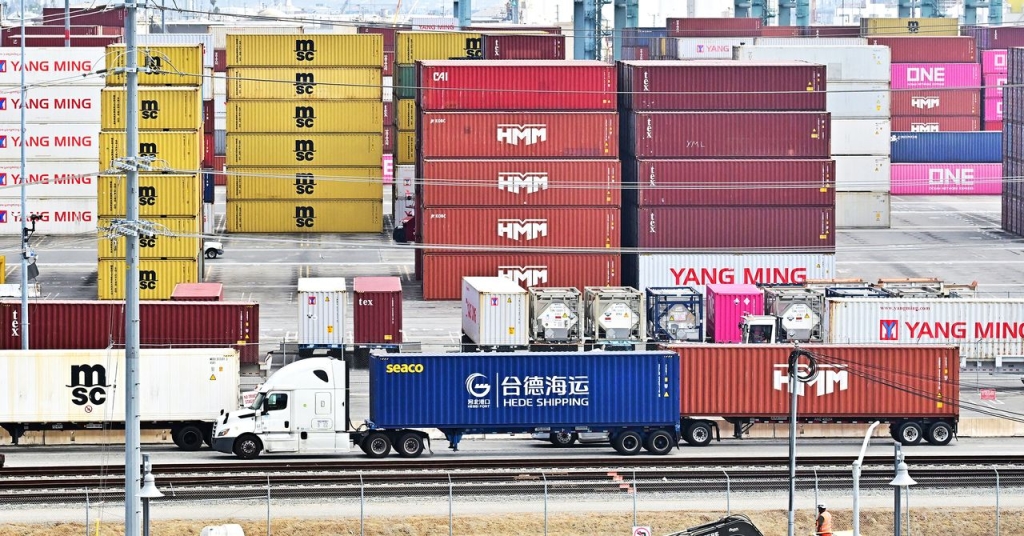
The practical implications are enormous. Economists estimate that over $175 billion in tariff revenue has been collected since February 2025 under the now-overturned policies. This creates an unprecedented situation where the government must now process refunds for businesses that paid these import duties.
Small business advocates expressed cautious optimism mixed with concern. “Small businesses are rightfully worried that the administration will respond to this legal defeat by simply reimposing the same tariff policy through other means,” said Dan Anthony, executive director of the small business coalition We Pay the Tariffs. “Tariffs reimposed under different statutory approaches would have the same destructive effect.”
The administration faces significant procedural hurdles in attempting to replace the invalidated tariffs. Other presidential authorities that could potentially support new tariffs often require lengthy trade investigations and notice periods before implementation. This means any attempt to resurrect similar policies would face both legal and practical delays.
The refund process itself presents enormous logistical challenges. In January, anticipating this very possibility, Trump posted on Truth Social that tariff refunds “would be a complete mess, and almost impossible for our country to pay.” The scale of the operation—tracking billions in payments across thousands of importers and products—will test the capacity of federal agencies.
Major corporations have already positioned themselves to benefit from potential refunds. Retail giant Costco, luxury brand Prada, electric vehicle manufacturer BYD, and tire maker Goodyear have all filed lawsuits demanding tariff refunds. Perhaps most notably, Cantor Fitzgerald, a financial services firm run by the sons of Commerce Secretary Howard Lutnick, created investment vehicles allowing clients to bet on the tariffs’ eventual invalidation—a prescient move that WIRED first reported in July 2025.
The ruling represents more than just a legal victory for tariff opponents; it fundamentally reshapes the balance of power between the executive branch and Congress on trade policy. By requiring clear congressional authorization for such sweeping economic measures, the Court has effectively returned trade policy to its traditional legislative domain.
International markets responded positively to the news, with major stock indices climbing as uncertainty about the trade war diminished. Trading partners who had been targeted by the tariffs expressed cautious optimism about renewed negotiations, though many remained skeptical about the administration’s willingness to abandon its protectionist agenda entirely.
The dissenting justices—Clarence Thomas, Samuel Alito, and Brett Kavanaugh—argued that the majority’s interpretation unduly constrained presidential authority in matters of national security and economic emergency. Their dissent highlights the ongoing debate about the proper scope of executive power in an increasingly interconnected global economy.
As businesses begin the complex process of seeking refunds and recalibrating their supply chains, the full economic impact of this ruling will unfold over months and years. What remains clear is that the Supreme Court has fundamentally altered the landscape of American trade policy, potentially ushering in a new era where executive power faces meaningful judicial and legislative constraints.
Tags: Supreme Court, Trump tariffs, IEEPA, trade policy, import taxes, tariff refunds, international trade, executive power, constitutional law, economic policy, global markets, supply chains, small business, corporate litigation, trade war, judicial review, congressional authority, emergency powers, import duties, economic sanctions
Viral phrases: Supreme Court delivers major blow to Trump’s trade agenda, $175 billion in tariff refunds on the table, Court rules tariffs are taxes requiring congressional approval, Trump calls ruling “a disgrace,” Small businesses worry about tariff resurrection, Major corporations file for massive refunds, Cantor Fitzgerald bets against Trump tariffs, International markets celebrate Supreme Court decision, Trade policy returns to congressional control, Penguins caught in tariff crossfire, Emergency powers don’t include taxation, Businesses brace for refund logistics nightmare, Judicial check on executive trade authority, Sector-specific tariffs remain despite ruling, Legal scholars question IEEPA interpretation, Refund process deemed “almost impossible,” Dissenting justices defend presidential authority, Supply chains face new uncertainty, Global trading partners eye renewed negotiations, Constitutional showdown over trade powers
,


Leave a Reply
Want to join the discussion?Feel free to contribute!