
Surgeons Kept a Man Alive With No Lungs For 48 Hours. Here’s How. : ScienceAlert
Groundbreaking Medical Milestone: Man Survives 48 Hours Without Lungs in Pioneering Artificial Lung Transplant
In a breathtaking medical first, surgeons at Northwestern University have achieved what was once thought impossible—keeping a critically ill patient alive for nearly two full days without lungs while awaiting a life-saving double lung transplant. This extraordinary feat represents not just a triumph of human ingenuity, but a potential paradigm shift in how we approach severe respiratory failure.
The Race Against Time
The patient, a 33-year-old man, arrived at Northwestern Memorial Hospital in spring 2023 with what appeared to be a severe influenza infection. What began as a seemingly routine respiratory illness rapidly spiraled into a medical nightmare. Within days, he developed pneumonia, sepsis, and acute respiratory distress syndrome (ARDS)—a condition where fluid builds up in the lungs, preventing oxygen from reaching the bloodstream.
“His lungs had essentially turned to liquid,” explained Dr. Ankit Bharat, the thoracic surgeon who led the groundbreaking procedure. “He had developed an infection that was resistant to every antibiotic we tried. The infection caused his lungs to liquify and then continued to progress to the rest of his body.”
The situation was dire. Standard life support measures would have been futile because the lungs themselves were the primary source of the infection. Removing them presented an equally terrifying prospect—without lungs, the heart would fail within minutes due to disrupted blood flow.
Engineering a Miracle
Faced with what appeared to be an impossible situation, Dr. Bharat and his team made the unprecedented decision to construct a total artificial lung (TAL) system capable of performing every function that human lungs normally handle. This wasn’t simply a matter of oxygenating blood; the artificial system needed to manage blood flow, maintain pressure, and protect the heart from the catastrophic effects of sudden bilateral pneumonectomy.
The engineering challenge was immense. Previous attempts at similar procedures had failed because they couldn’t adequately manage the complex hemodynamics involved in removing both lungs simultaneously. Blood flow through the heart would become chaotic, leading to immediate cardiac failure.
The Northwestern team’s innovation lay in their incorporation of dual blood flow channels and a flow-adaptive shunt. This sophisticated system could detect variations in blood flow and automatically adjust to maintain stable circulation. It was essentially a miniature, external cardiopulmonary bypass system that could keep the patient alive indefinitely while waiting for donor lungs to become available.
The 48-Hour Window
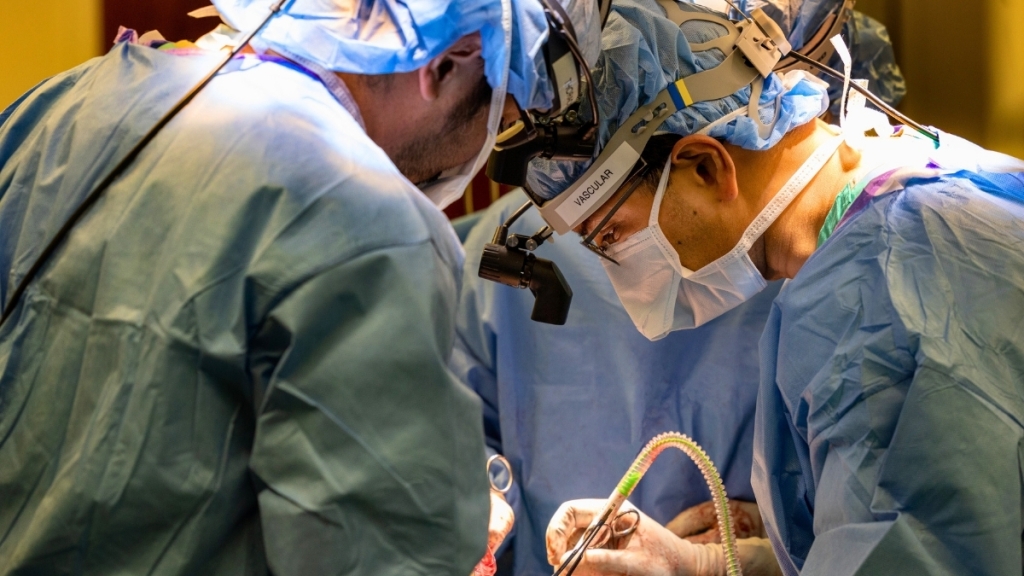
With the artificial lung system ready, the surgical team proceeded with the radical operation. Both diseased lungs were carefully removed, revealing the full extent of the damage. Molecular analysis of the extracted tissue confirmed what the surgeons had suspected—the lungs were beyond any possibility of recovery. The scarring and immune damage were so extensive that no amount of antibiotics or supportive care could have saved them.
For the next 48 hours, the patient existed in a state that medical science had never before achieved—alive, conscious, and functioning without lungs. The artificial system oxygenated his blood, removed carbon dioxide, and maintained the delicate balance required to keep his heart beating normally.
During this critical period, something remarkable happened. As the source of infection was eliminated, the patient’s body began to recover. His immune system, no longer overwhelmed by the constant assault from the diseased lungs, started to fight back against the sepsis. By the time suitable donor lungs became available, the patient was in a condition that made transplantation viable.
A New Future for Lung Transplantation
The successful transplant and the patient’s subsequent recovery—now more than two years later with fully functioning lungs—represents more than just an individual medical victory. It opens up entirely new possibilities for treating severe respiratory failure.
“Conventionally, lung transplant is reserved for patients who have chronic conditions like interstitial lung disease or cystic fibrosis,” Dr. Bharat noted. “Currently, people think if you get severe ARDS, you keep supporting them and ultimately the lungs will get better.”
This case demonstrates that for certain patients with severe lung damage, immediate transplantation might be the better option. Rather than spending weeks or months on life support hoping for recovery that may never come, doctors might now consider more aggressive intervention earlier in the disease process.
The implications extend beyond just ARDS. Patients with severe complications from vaping-related lung injuries, cystic fibrosis patients who develop resistant infections, or those with rare lung diseases that don’t respond to conventional treatment might all benefit from this approach.
The Technology of Tomorrow
While constructing a total artificial lung system remains a complex procedure requiring specialized expertise and equipment, Dr. Bharat hopes that the innovations developed during this case can be incorporated into standard medical devices. The flow-adaptive technology and dual-channel design could potentially be miniaturized and integrated into existing ECMO (extracorporeal membrane oxygenation) machines, making this life-saving approach more widely available.
The success also highlights the critical importance of organ donation. Without timely access to donor lungs, even the most advanced artificial support systems have limitations. This case serves as a powerful reminder of why organ donation programs remain essential to modern medicine.
A Doctor’s Perspective
“In my practice, young patients die almost every week because no one realized that transplantation was an option,” Dr. Bharat reflected. “For severe lung damage caused by respiratory infections, even in acute settings, a lung transplant can be lifesaving.”
This statement underscores a crucial point: medical innovation often requires not just technological advancement, but also a willingness to challenge conventional thinking. The decision to remove both lungs and rely entirely on artificial support was a calculated risk that paid off, but it required the surgical team to think beyond traditional treatment paradigms.
Published Research
The complete details of this groundbreaking procedure have been published in the journal Med, providing a roadmap for other medical centers that might encounter similar cases. The publication includes detailed technical specifications of the artificial lung system, surgical techniques, and post-operative care protocols.
Looking Forward
As medical technology continues to advance, procedures that once seemed like science fiction are becoming reality. This case represents a significant step forward in our ability to support patients through the most critical moments of severe illness. It demonstrates that with sufficient innovation, determination, and expertise, medicine can sometimes achieve what was previously thought impossible.
The patient, now living a normal life with his new lungs, serves as living proof that medical miracles are still possible. His story will undoubtedly inspire other medical teams to push the boundaries of what’s achievable in critical care medicine.
Tags: medical breakthrough, artificial lung, double lung transplant, ARDS treatment, life-saving surgery, medical innovation, organ transplantation, critical care medicine, Northwestern University, Dr. Ankit Bharat, medical technology, respiratory failure, sepsis treatment, organ donation
Viral Sentences:
- “Man survives 48 hours without lungs in medical first”
- “Surgeons keep patient alive without lungs using artificial system”
- “Groundbreaking artificial lung technology saves life”
- “Medical miracle: 33-year-old survives after lungs removed”
- “Revolutionary approach to severe respiratory failure”
- “Science fiction becomes reality in Chicago hospital”
- “Total artificial lung system changes transplant medicine forever”
- “Patient lives without lungs for two days, fully recovers”
- “Medical team achieves what was once thought impossible”
- “New hope for patients with severe lung infections”
,


Leave a Reply
Want to join the discussion?Feel free to contribute!