
TechCrunch Mobility: Is $16B enough to build a profitable robotaxi business?
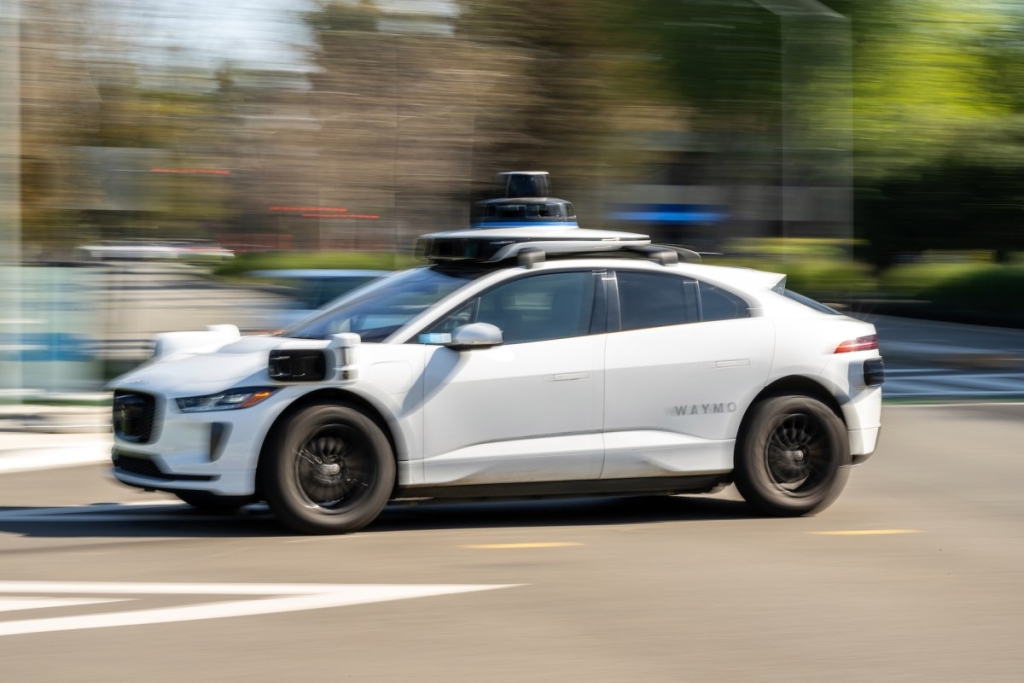
Waymo’s $16 Billion War Chest: Enough to Dominate the Robotaxi Wars?
Waymo’s meteoric rise over the past 18 months has been nothing short of extraordinary. The Alphabet-owned autonomous vehicle pioneer now operates commercial robotaxi services across six major markets—San Francisco Bay Area, Phoenix, Los Angeles, Austin, Atlanta, and Miami—and is preparing to expand into more than a dozen new international cities including London and Tokyo. With a fresh $16 billion funding round in its pocket, the question on everyone’s mind is: Is this enough to build a profitable robotaxi empire?
The Bull Case: Alphabet’s Deep Pockets and Explosive Growth
The argument for Waymo’s inevitable success starts with its most powerful asset: Alphabet itself. Unlike other autonomous vehicle startups that have seen their funding evaporate when parent companies got cold feet, Waymo enjoys the unwavering support of one of the world’s most valuable tech giants. This isn’t just financial backing—it’s a commitment to seeing the technology through to maturity.
The numbers are staggering. Waymo is now delivering 400,000 rides every single week across its six U.S. markets. In 2025 alone, the company more than tripled its annual ride volume to 15 million trips. These aren’t just test rides or promotional giveaways—these are paying customers choosing robotaxis over human-driven alternatives.
The company’s technological lead is equally impressive. With millions of autonomous miles under its belt and a safety record that regulators are beginning to recognize, Waymo has moved beyond the experimental phase into genuine commercial operations. The recent testimony of its chief safety officer before the Senate Commerce Committee signals that regulators are taking the company seriously, even as they scrutinize its safety practices.
The Bear Case: Profitability Remains Elusive
But here’s where the “sort of” and “it depends” answers start to creep in. While Waymo’s growth is undeniable, profitability remains a distant horizon. The company faces several critical challenges that $16 billion might not fully solve.
First, there’s the cost problem. Building and maintaining a fleet of autonomous vehicles is extraordinarily expensive. Each robotaxi represents a significant capital investment, and the ongoing costs of maintenance, software updates, and operations add up quickly. While Waymo has achieved impressive scale, achieving unit economics that work at a profit remains elusive.
Then there’s the regulatory landscape. Waymo’s chief safety officer just testified in a high-profile Senate Commerce hearing, highlighting the intense scrutiny the company faces. While Waymo has generally received favorable treatment from regulators, the political winds can shift quickly. Any significant regulatory setback could derail expansion plans and increase costs substantially.
Perhaps most critically, Waymo lacks the vertical integration that gives Tesla a massive advantage. Tesla designs and manufactures its own vehicles, giving it unprecedented control over costs and the ability to iterate rapidly. Waymo, by contrast, relies on automotive partners like Jaguar and Chrysler. While these partnerships provide valuable expertise and manufacturing capacity, they also mean Waymo pays premiums and has less control over the end product.
The Strategic Dilemma: Operator vs. Licensor
This leads to Waymo’s fundamental strategic challenge. If the company wants to simply license its autonomous driving technology to other manufacturers, it would need to pivot away from being a direct operator of robotaxi services. This would mean giving up the valuable data and customer relationships it’s building, not to mention the potential for higher margins as a service provider.
But staying the course as an operator means continuing to burn through capital at an alarming rate. The $16 billion gives Waymo breathing room, but it’s not infinite. The company needs to find a path to profitability within the next few years, or risk becoming another cautionary tale in the autonomous vehicle sector.
The Competitive Landscape
Waymo isn’t operating in a vacuum. Tesla continues to push its Full Self-Driving technology, backed by its massive vehicle fleet and manufacturing prowess. Traditional automakers like GM (with Cruise) and Ford are also making moves in the autonomous space. Meanwhile, new entrants with different approaches—like autonomous trucking or specialized industrial applications—are attracting significant investment.
The recent $270 million Series B for Bedrock Robotics, an autonomous vehicle technology startup developing self-driving systems for construction equipment, shows that investors are still hungry for autonomous technology, just perhaps in more practical applications than robotaxis. Bedrock’s impressive roster of investors, including CapitalG, Valor Atreides AI Fund, and Nvidia’s venture arm, suggests that the autonomous revolution is broader than just passenger vehicles.
The Manufacturing Question
One analyst I spoke with put it bluntly: “Waymo’s Achilles’ heel is manufacturing.” Without the ability to produce vehicles at scale and at competitive costs, the company will always be at a disadvantage compared to vertically integrated competitors. The automotive industry is brutally competitive on costs, and Waymo’s reliance on partners means it’s always paying a premium.
This isn’t an insurmountable problem—Waymo could potentially acquire a manufacturing partner or develop its own capabilities over time. But doing so would require even more capital and represent a significant strategic shift.
The Bottom Line
So is $16 billion enough? The answer, as with most things in the autonomous vehicle space, is complicated.
For the next three to five years, absolutely. Waymo has the capital to continue its expansion, invest in technology development, and weather regulatory challenges. The company can afford to be patient as it works toward profitability.
But beyond that timeline, much depends on execution. Can Waymo achieve the operational efficiencies needed to turn a profit? Can it navigate the complex regulatory landscape? Can it find a sustainable business model that doesn’t require endless capital infusions?
The $16 billion is a powerful weapon, but it’s not a guarantee of victory. In the high-stakes race to dominate autonomous transportation, having the biggest war chest matters—but so does having the right strategy, the best technology, and the ability to execute flawlessly.
Waymo has all of these elements to varying degrees. Whether that’s enough to build a profitable robotaxi business remains one of the most fascinating questions in technology today.
Tags: Waymo, Alphabet, Robotaxi, Autonomous Vehicles, Self-Driving Cars, $16 Billion Funding, Tesla, Uber, AV Technology, Transportation, Mobility, Silicon Valley, Innovation, Future of Transportation, TechCrunch
Viral Sentences: Waymo just raised $16 billion—is it enough to dominate the robotaxi wars? The Alphabet-backed AV pioneer is expanding to London and Tokyo. Can Waymo compete with Tesla’s vertical integration? Robotaxis are delivering 400,000 rides weekly—but are they profitable? The autonomous vehicle industry’s biggest funding round yet. Waymo’s safety chief testifies before Congress amid expansion plans. Is Waymo’s manufacturing disadvantage its Achilles’ heel? The race to build the everything app of transportation. Bedrock Robotics raises $270M for construction automation. China bans Tesla’s hidden door handles—Europe may follow. Uber promotes finance exec as AV plans accelerate. Elon Musk’s supercompany—will it be X, SpaceAI, or Galactic X? The $16B question: Can Waymo achieve profitability?
,


Leave a Reply
Want to join the discussion?Feel free to contribute!