
TechCrunch Mobility: Travis Kalanick’s return proves it really is 2016 again
Travis Kalanick’s Return: The Tech World’s Unexpected 2016 Flashback
In a move that sent shockwaves through the tech industry, Travis Kalanick, the controversial former CEO of Uber, has resurfaced with a bold new venture. Kalanick announced the launch of Atoms, a robotics company focused on industrial automation, and revealed his plans to acquire Pronto, an autonomous vehicle startup specializing in mining and industrial sites. This unexpected comeback has many industry insiders wondering: are we really back in 2016?
The Return of a Controversial Figure
Kalanick’s return to the spotlight is particularly noteworthy given his tumultuous departure from Uber in 2017. The former CEO resigned amid a series of scandals that rocked the ride-hailing giant, including allegations of sexual harassment, a toxic workplace culture, and a high-profile legal battle with Google’s Waymo over alleged trade secret theft. His new venture, Atoms, and the acquisition of Pronto, founded by his former Uber colleague Anthony Levandowski, suggest that Kalanick is doubling down on the autonomous vehicle and robotics space that he helped pioneer at Uber.
A Blast from the Past: The 2016 AV Hype
The timing of Kalanick’s announcement is particularly striking, as 2016 was a watershed year for autonomous vehicles (AVs). Uber’s acquisition of Otto, Levandowski’s self-driving truck startup, was one of the most high-profile deals in the nascent AV industry. However, the acquisition quickly turned sour, leading to Waymo’s lawsuit against Uber and a series of legal battles that would drag on for years. Kalanick’s return to this space, with a focus on industrial robotics and AVs, suggests that he sees untapped potential in these technologies, despite the setbacks of the past.
SXSW and Rivian’s R2: A New Era of EVs
While Kalanick’s announcement dominated headlines, the tech world was also buzzing with news from South by Southwest (SXSW) in Austin, Texas. Rivian, the electric vehicle (EV) maker, used the event to unveil its highly anticipated R2 SUV. The company’s decision to launch the R2 at SXSW, a festival known for its tech-forward audience, underscores Rivian’s strategy of targeting early adopters and tech enthusiasts.
The R2: A More Accessible EV
The R2, priced at $57,990 for the launch edition, represents a significant step forward for Rivian. The company is positioning the R2 as a more accessible alternative to its flagship R1 truck and SUV, which have been praised for their performance but criticized for their high price tags. The R2’s lower price point, combined with its innovative features, could help Rivian expand its customer base and compete more effectively with established automakers in the EV space.
Cutting-Edge Technology: Edge Computing and Haptic Feedback
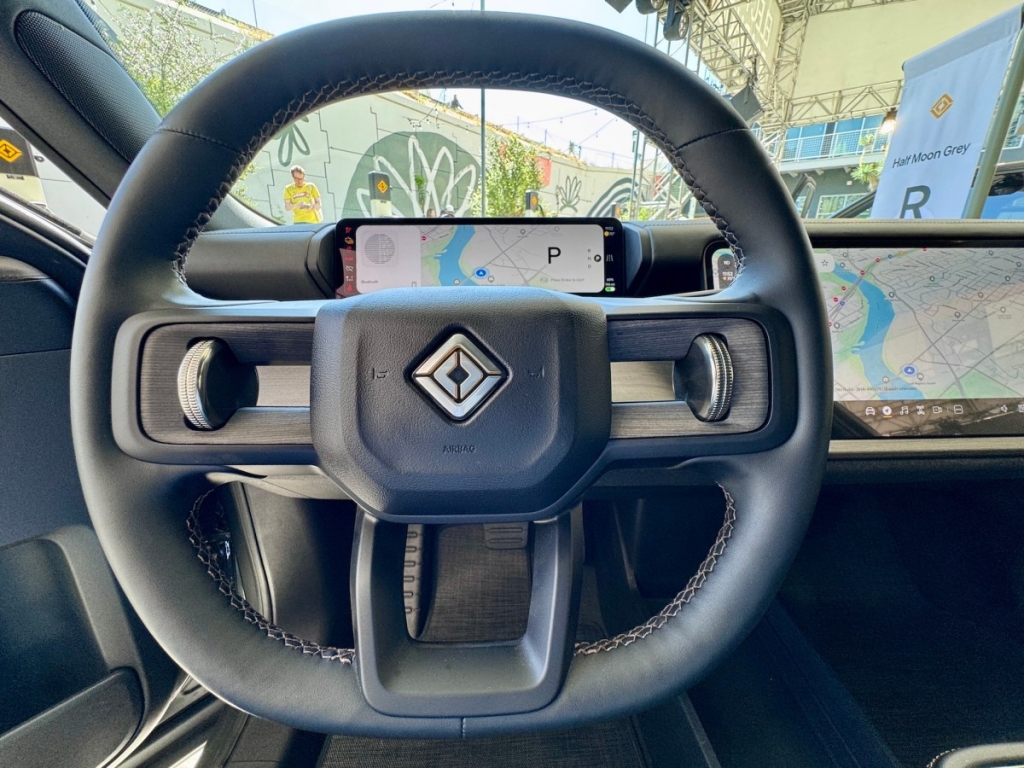
One of the most exciting aspects of the R2 is its advanced technology. The vehicle features a new operating system with a single system-on-chip (SoC) that handles both infotainment and edge computing, delivering 200 TOPS (tera operations per second) of processing power. This edge computing capability allows Rivian to run large language models locally, reducing latency and improving performance. Additionally, the R2 introduces “halo wheels” on the steering wheel, which provide haptic feedback and allow drivers to control temperature, fan speed, and speaker volume without taking their eyes off the road.
The Future of Industrial Robotics: Mind Robotics
Rivian’s ambitions extend beyond consumer EVs. The company recently spun out Mind Robotics, an industrial robotics lab, and raised $500 million in a Series A funding round co-led by Accel and Andreessen Horowitz. Mind Robotics is focused on developing AI-powered robots for industrial applications, a move that aligns with Kalanick’s vision for Atoms. Rivian CEO RJ Scaringe believes that the future of industrial robotics lies in creating systems that prioritize functionality over complexity, emphasizing the importance of “hands” in industrial settings.
Other Notable Developments in the Tech World
While Kalanick’s return and Rivian’s R2 launch dominated headlines, several other developments in the tech and transportation sectors are worth noting:
Lucid Motors’ Robotaxi Concept
Lucid Motors, the luxury EV maker, unveiled a robotaxi concept at its investor day. While the company clarified that the vehicle is still in the conceptual stage, the announcement signals Lucid’s interest in expanding beyond traditional EVs and into the autonomous mobility space.
Legal Battles in the Electric Air Sector
The electric air taxi industry is heating up, with Archer Aviation and Joby Aviation engaged in a legal battle over allegations of fraud and misrepresentation. These disputes highlight the intense competition and high stakes in the emerging electric air mobility sector.
Advancements in Battery Technology
Group14, a battery materials company, has begun production of silicon battery materials at its factory in South Korea. This development could lead to faster-charging EVs and improved energy storage solutions, addressing some of the key challenges facing the EV industry.
Autonomous Vehicle Testing and Expansion
Several companies, including Nuro, Zoox, and Wayve, are making strides in autonomous vehicle technology. Nuro is testing its self-driving vehicles in Japan, while Zoox is mapping streets in Dallas and Phoenix in preparation for robotaxi deployment. Wayve has partnered with Uber and Nissan to launch a robotaxi service in Tokyo later this year.
The Return of the Chevrolet Bolt EV
In a surprising move, General Motors has brought back the Chevrolet Bolt EV, a popular and affordable electric car that was discontinued in 2023. The return of the Bolt, dubbed the “McRib of the automotive world” by TechCrunch, underscores the ongoing demand for accessible EVs and GM’s commitment to the electric vehicle market.
Conclusion: A Year of Innovation and Controversy
As the tech and transportation industries continue to evolve, the return of Travis Kalanick and the launch of Rivian’s R2 SUV serve as reminders of the sector’s dynamic and often unpredictable nature. From autonomous vehicles and robotics to electric air taxis and advanced battery technology, the coming years promise to bring even more innovation and disruption. Whether Kalanick’s Atoms can succeed where Uber’s AV ambitions faltered remains to be seen, but one thing is certain: the future of transportation is being shaped by bold visionaries and groundbreaking technologies.
Tags: Travis Kalanick, Atoms, Pronto, Rivian, R2, SXSW, autonomous vehicles, robotics, industrial automation, electric vehicles, EV, Tesla, Waymo, Uber, Lucid Motors, Mind Robotics, battery technology, electric air taxis, Nuro, Zoox, Wayve, Chevrolet Bolt EV, GM
Viral Sentences:
- “Travis Kalanick is back, and he’s building a robotics empire.”
- “The Chevy Bolt is the McRib of the automotive world—unexpected, nostalgic, and in high demand.”
- “Rivian’s R2 SUV is here to challenge Tesla and redefine affordable EVs.”
- “Industrial robotics is the next frontier, and Rivian is leading the charge.”
- “The AV industry is heating up, and the battle for autonomy is just beginning.”
- “Lucid Motors’ robotaxi concept could be the future of urban mobility.”
- “Silicon battery materials are the key to faster-charging EVs and a sustainable future.”
- “The electric air taxi wars are getting litigious—and expensive.”
- “Zoox’s robotaxis are coming to Dallas, Phoenix, and Las Vegas—are you ready?”
- “The return of the Bolt EV proves that affordable EVs are here to stay.”
,

Leave a Reply
Want to join the discussion?Feel free to contribute!