
Tennessee advances felony bill targeting prediction market manipulation amid legal fights
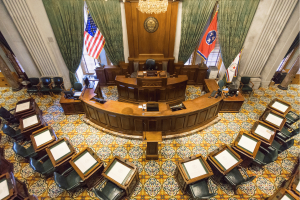
Tennessee Lawmakers Move to Criminalize Prediction Market Manipulation as Legal Battles Heat Up
In a dramatic escalation of the ongoing national debate over prediction markets, Tennessee’s state legislature has advanced a bill that would make it a felony to attempt to influence the outcome of events tied to prediction market contracts. The measure, Senate Bill 1992, passed the state Senate on April 9 with a decisive 28-1 vote, signaling strong legislative support for stricter oversight of this fast-growing sector of online trading.
The bill’s passage comes amid a broader wave of regulatory scrutiny, as at least a dozen states have introduced legislation this year to either restrict or outright ban prediction markets. Tennessee, however, is taking a uniquely aggressive approach by criminalizing individual behavior rather than simply targeting platforms.
A New Criminal Offense Targets Prediction Market Conduct
Under the proposed law, anyone who attempts to influence the outcome of an event while holding a financial stake in a related prediction market contract could face felony charges. The legislation is carefully worded to capture both direct and indirect financial benefits, stating that a violation occurs when someone acts “while the person or another is a party to a contract with a prediction market by which the person will benefit, directly or indirectly, from the occurrence of the outcome.”
If convicted, the offense would be classified as a Class E felony in Tennessee—a serious charge that could carry significant prison time and fines. The bill’s sponsors argue that this legal framework is necessary to protect the integrity of prediction markets, which have become increasingly popular for wagering on everything from political elections to sports results and even cultural events.
Tennessee’s War on Prediction Markets Intensifies
Tennessee’s latest legislative push is just the latest salvo in a broader campaign against prediction markets. Earlier this year, the state’s regulators sent cease-and-desist letters to major players in the industry, including Kalshi, Polymarket, and Crypto.com, accusing them of violating state law. These companies, which operate platforms allowing users to trade contracts based on future events, have pushed back hard, arguing that their activities are legal and protected under federal law.
The state’s aggressive stance has already led to significant legal setbacks. A federal judge recently blocked Tennessee from enforcing restrictions against Kalshi’s sports-related contracts, and the company secured a temporary restraining order against the state’s enforcement actions. These rulings have raised questions about how far Tennessee can go in regulating prediction markets, especially given the federal oversight provided by the Commodity Futures Trading Commission (CFTC).
A Novel Legal Strategy: Targeting Individuals, Not Platforms
What sets Tennessee’s new bill apart is its focus on individual behavior rather than the legality of the platforms themselves. By framing manipulation tied to financial gain as a form of economic wrongdoing under Title 39 (which covers property-related crimes), lawmakers are attempting to create a powerful deterrent against bad actors who might try to game the system.
This approach could have far-reaching implications for the prediction market industry. If other states follow Tennessee’s lead, it could create a patchwork of criminal laws that make it risky for individuals to participate in these markets, even if the platforms themselves remain legal.
The National Landscape: A Growing Push for Regulation
Tennessee is not alone in its concerns. Across the country, lawmakers are grappling with how to regulate prediction markets, which have exploded in popularity thanks to platforms like Polymarket and Kalshi. A recent Twitter thread by industry analyst Ryan Butler highlighted the growing list of states considering legislation to restrict or ban these markets, including California, Connecticut, Georgia, Hawaii, Illinois, Kentucky, Minnesota, New Jersey, New York, Virginia, and Vermont.
The debate reflects broader anxieties about the potential for manipulation and fraud in these markets, especially as they become more mainstream. Critics argue that prediction markets can be exploited by bad actors to influence real-world events, while supporters contend that they provide valuable insights and a legitimate form of speculation.
What’s Next for Tennessee’s Bill?
If the bill ultimately becomes law, it will take effect on July 1, 2026. However, its future is far from certain. Legal challenges are likely, especially given the recent court rulings against Tennessee’s enforcement actions. The bill’s sponsors will need to navigate a complex legal landscape, balancing the state’s desire to protect consumers with the realities of federal oversight and the rapidly evolving nature of the prediction market industry.
For now, all eyes are on Tennessee as it pushes forward with one of the most aggressive regulatory efforts yet aimed at this controversial sector. Whether other states will follow suit remains to be seen, but one thing is clear: the battle over prediction markets is far from over.
Tags & Viral Phrases:
- Tennessee felony bill
- Prediction market manipulation
- Kalshi legal battle
- Polymarket cease-and-desist
- Federal judge blocks Tennessee
- Prediction markets regulation
- Class E felony
- Economic wrongdoing
- Online trading platforms
- Future events contracts
- Tennessee State Capitol
- Volunteer State crackdown
- CFTC oversight
- Prediction market ban
- Manipulation deterrent
- State-by-state regulation
- Legal fights prediction markets
- Emerging trading platforms
- Financial benefit clause
- Economic crime prediction markets
- National regulatory push
- State legislative crackdown
- Prediction market integrity
- Legal uncertainty prediction markets
- Federal vs state law
- Prediction market legal battle
- Tennessee vs Kalshi
- Polymarket legal issues
- Crypto.com cease-and-desist
- Prediction market controversy
- Tennessee legislative action
- Prediction market felony
- State enforcement prediction markets
- Prediction market criminal law
- Tennessee prediction market bill
- Prediction market legal challenges
- State vs federal regulation
- Prediction market industry growth
- Tennessee legal strategy
- Prediction market bad actors
- Prediction market fraud prevention
- State legislative trends
- Prediction market platform legality
- Tennessee legal precedent
- Prediction market consumer protection
- State-level prediction market laws
- Prediction market legal framework
- Tennessee regulatory approach
- Prediction market legislative battle
,

Leave a Reply
Want to join the discussion?Feel free to contribute!