
TerraPower becomes first next-gen nuclear company to get U.S. green light for building reactors
Bill Gates-Backed TerraPower Secures Historic NRC Approval, Poised to Lead America’s Nuclear Renaissance
In a landmark decision that could reshape the future of American energy, the Nuclear Regulatory Commission (NRC) has unanimously approved TerraPower’s construction permit for its revolutionary Natrium reactor—cementing the Bellevue, Washington-based company’s position as the nation’s frontrunner in next-generation nuclear technology.
This pivotal moment arrives after more than four years of intensive collaboration between TerraPower and federal regulators, culminating in what CEO Chris Levesque describes as “a momentous accomplishment” for both the company and the broader clean energy landscape. The approval, granted in just 18 months—significantly faster than the initially projected 27-month review—signals a new era of efficiency in nuclear infrastructure development.
From Concept to Construction: The Natrium Journey
TerraPower’s Natrium design represents a radical departure from traditional nuclear architecture. Rather than constructing massive, custom-built facilities that historically took a decade to complete, the company has engineered a modular approach utilizing prefabricated components that can be assembled in approximately three years.
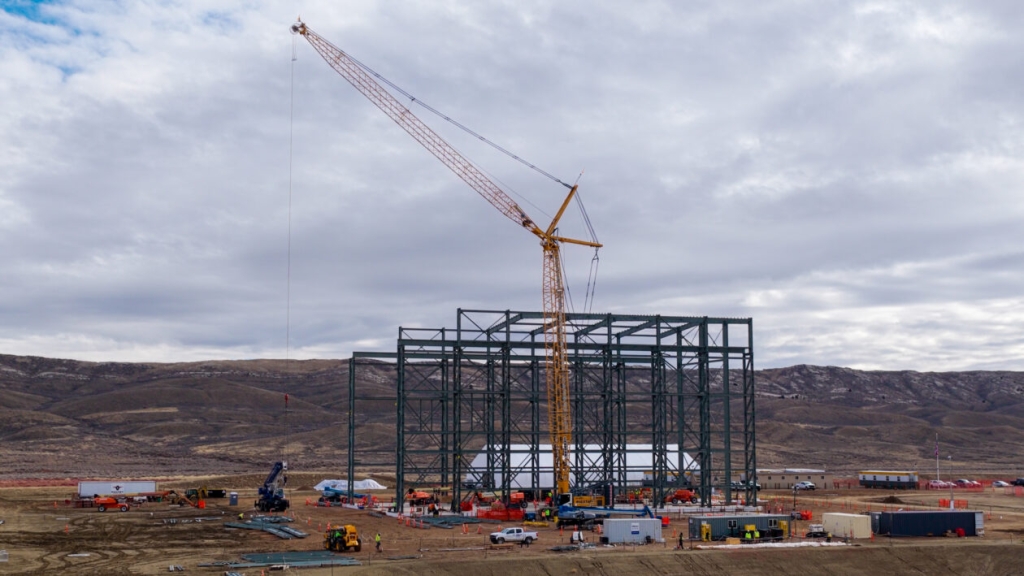
The demonstration facility in Kemmerer, Wyoming, broke ground in 2024, with initial construction focusing on non-nuclear infrastructure. The ambitious timeline targets the commencement of nuclear fission operations by the end of 2030—a schedule that, if achieved, would mark one of the fastest deployments of advanced nuclear technology in American history.
“Our team has worked relentlessly for over four years with the NRC staff to get to this moment,” Levesque emphasized in the company’s announcement. “We had extensive pre-application engagement with the NRC; and we submitted a robust and thorough construction permit application almost two years ago. We have spent thousands of manpower hours working to achieve this momentous accomplishment.”
The Perfect Storm: Why Now?
The timing couldn’t be more critical. America’s nuclear sector, largely dormant for decades following the Three Mile Island incident and subsequent public skepticism, has suddenly accelerated into overdrive. The catalyst? An unprecedented convergence of factors creating what industry insiders call a “perfect storm” for nuclear revival.
Tech giants are engaged in an all-out sprint to power massive data centers supporting artificial intelligence, cloud computing, and digital infrastructure. Simultaneously, commercial and industrial sectors face escalating energy demands, while residential consumption continues its upward trajectory. Traditional renewable sources, though valuable, cannot yet provide the consistent, baseload power required for these applications.
TerraPower’s approval effectively unlocks the floodgates for additional nuclear facilities across the nation, with construction timelines measured in years rather than decades.
Meta Partnership: Scaling to Meet Demand
Perhaps the most significant validation of TerraPower’s approach came in January when the company signed a groundbreaking agreement with Meta (formerly Facebook) to construct up to eight advanced reactors across the United States. This deal represents one of the largest commitments to nuclear energy by a technology company in history.
The timeline is aggressive: the first two reactors are targeted to come online by 2032, with all eight potentially operational by 2035 if the full order is fulfilled. This partnership alone could add approximately 4-5 gigawatts of clean, reliable power to America’s grid—enough to power millions of homes or support massive data center operations.
“The Meta deal validates our approach and demonstrates the real-world demand for advanced nuclear solutions,” noted Levesque. “We’re not just building reactors; we’re building the foundation for the next generation of digital infrastructure.”
Expanding the Nuclear Footprint
TerraPower’s ambitions extend well beyond its Wyoming demonstration plant and the Meta partnership. The company has established memorandums of understanding with government departments in Utah and Kansas to explore potential sites for additional Natrium reactors.
“We plan to build hundreds of Natrium reactors,” Levesque revealed to GeekWire, underscoring the company’s expansive vision. “We’re very focused on delivering the first one on time,” he added, “and then quickly begin scaling.”
This scaling strategy reflects a fundamental shift in nuclear economics. By standardizing designs and leveraging modular construction techniques, TerraPower aims to drive down costs while dramatically reducing deployment timelines—addressing two of the most significant barriers that have historically constrained nuclear expansion.
Federal Support Accelerates Innovation
The expedited approval process didn’t happen by accident. It represents the culmination of years of advocacy for regulatory reform and modernization of America’s nuclear oversight framework. Key legislative and executive actions have created a more favorable environment for advanced nuclear development.
The Atomic Energy Advancement Act, passed during the Biden administration, streamlined certain regulatory processes while maintaining rigorous safety standards. Subsequently, executive orders issued by President Trump further accelerated permitting timelines and provided additional federal support for next-generation nuclear technologies.
TerraPower specifically credits this federal support, combined with the company’s proactive engagement with NRC staff and responsiveness to regulatory questions, for achieving approval ahead of schedule. This collaborative approach between industry and regulators may serve as a model for future energy infrastructure projects.
The Technology Behind the Revolution
At the heart of TerraPower’s innovation is the Natrium design, which incorporates several groundbreaking features:
The reactor utilizes liquid sodium as a coolant instead of water, enabling operation at higher temperatures and improved efficiency. This design also includes integrated energy storage capabilities, allowing the system to ramp production up or down based on grid demands—a critical feature for complementing intermittent renewable sources.
The passive safety systems incorporated into the design represent a significant advancement over legacy reactors. These systems can maintain safe operating conditions even during complete power loss scenarios, addressing one of the primary safety concerns that have historically plagued nuclear power.
Additionally, the Natrium design produces less long-lived radioactive waste compared to traditional reactors, and the waste that is produced is more easily managed and stored.
Economic Implications
The economic impact of TerraPower’s success extends far beyond energy production. The Kemmerer facility alone is expected to create hundreds of high-paying jobs during construction and operation, providing an economic lifeline to a community that has historically relied on coal mining.
More broadly, the nuclear renaissance catalyzed by TerraPower’s approval could generate tens of thousands of jobs nationwide across manufacturing, construction, engineering, and operations sectors. The company’s commitment to domestic production of reactor components also supports American manufacturing and supply chain resilience.
Environmental Considerations
From an environmental perspective, advanced nuclear technology offers compelling advantages. Unlike fossil fuels, nuclear power generation produces no direct carbon emissions during operation. Unlike solar and wind, it provides consistent baseload power regardless of weather conditions or time of day.
TerraPower’s reactors are designed with sustainability in mind, featuring improved fuel efficiency and reduced waste production compared to legacy designs. The company has also emphasized the potential for these reactors to support industrial processes that require high-temperature heat—currently responsible for significant carbon emissions when generated using fossil fuels.
Challenges Ahead
Despite this significant milestone, TerraPower faces substantial challenges as it moves from regulatory approval to actual construction and operation. The company must execute its aggressive deployment timeline while maintaining the highest safety standards and managing complex supply chains for specialized components.
Public perception remains another hurdle. While support for nuclear power has grown in recent years, particularly among younger demographics concerned about climate change, the industry must continue to address safety concerns and demonstrate the reliability of advanced reactor designs.
Additionally, TerraPower will need to navigate the evolving landscape of energy policy, grid integration requirements, and potential competition from other advanced energy technologies as it scales its operations.
A New Chapter in American Energy Leadership
TerraPower’s NRC approval represents more than just a regulatory victory—it signals America’s re-emergence as a leader in nuclear innovation. For decades, the United States ceded leadership in nuclear technology to countries like France, Russia, and more recently, China. TerraPower’s success, backed by Bill Gates’ vision and substantial investment, positions the nation to reclaim its pioneering role in this critical energy technology.
As the world grapples with the dual challenges of increasing energy demand and climate change mitigation, advanced nuclear power offers a compelling solution. TerraPower’s journey from concept to construction approval demonstrates that with the right combination of technological innovation, regulatory modernization, and private-sector commitment, the nuclear renaissance is not just possible—it’s already underway.
The eyes of the energy industry, policymakers, and environmental advocates will now turn to Kemmerer, Wyoming, where construction crews are preparing to build what could become the blueprint for America’s clean energy future—one reactor at a time.
Tags & Viral Phrases:
- Bill Gates nuclear revolution
- TerraPower Natrium breakthrough
- America’s nuclear renaissance begins
- Next-gen reactors coming to your state
- Meta’s massive nuclear deal
- 3-year nuclear construction timeline
- Wyoming becomes nuclear capital
- Federal approval speeds clean energy
- Data centers powered by advanced nuclear
- Modular nuclear technology explained
- Sodium-cooled reactor innovation
- Energy storage integrated nuclear
- Hundreds of reactors planned nationwide
- Kemmerer Wyoming nuclear demonstration
- Tech giants embrace nuclear power
- 2030 operational target achieved
- Passive safety systems revolutionize nuclear
- Less waste advanced reactors
- Utah Kansas nuclear expansion
- Atomic Energy Advancement Act impact
- Trump executive orders accelerate nuclear
- Pre-fabricated nuclear components
- Billion-dollar clean energy investment
- High-paying nuclear construction jobs
- Climate change nuclear solution
- Baseload power reliability
- Supply chain manufacturing revival
- Public perception nuclear acceptance
- Grid integration advanced reactors
- American energy leadership restored
,

Leave a Reply
Want to join the discussion?Feel free to contribute!