
Terrifying Humanoid Robots Are Now Patrolling The Streets Of China
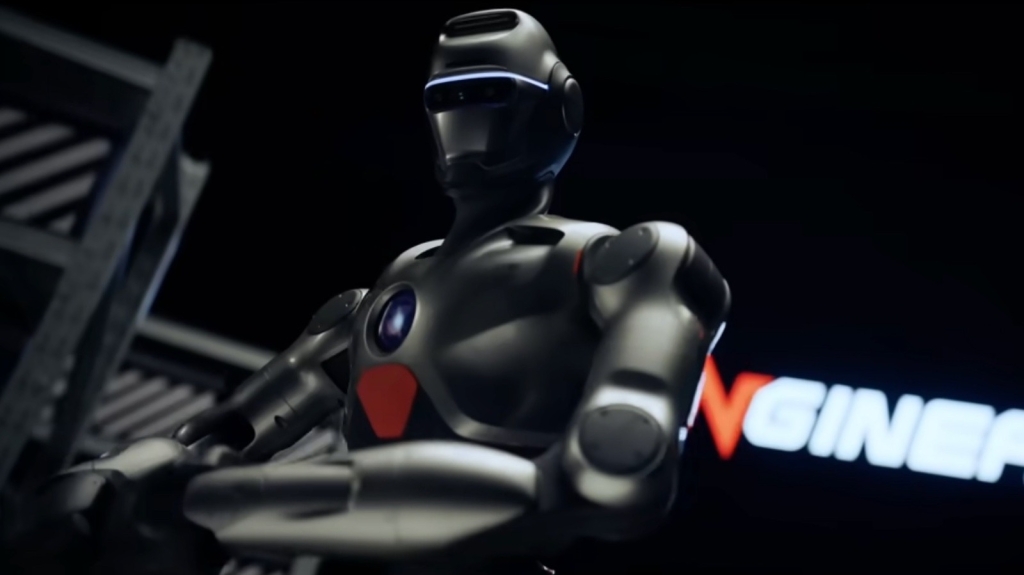
China Deploys “Terminator”-Style Humanoid Robots to Patrol Streets in Bold Move Toward AI-Powered Public Safety
In a development that feels straight out of a science fiction blockbuster, Chinese robotics company EngineAI has begun testing its latest creation—a humanoid robot that looks eerily similar to the iconic Terminator—on the streets of Shenzhen. The PM01 model, which shares the same intimidating design lineage as the company’s infamous T800 robot (the one that once kicked its own CEO during a demonstration), was recently spotted patrolling a popular tourist area alongside human police officers.
The video footage, which quickly went viral on social media platform X (formerly Twitter), shows the PM01 walking confidently through crowded streets, its mechanical movements precise and its appearance undeniably dystopian. The robot stands tall with exposed mechanical joints, glowing sensors, and a purposeful gait that leaves no doubt about its artificial nature. Two police officers can be seen walking behind the machine, suggesting this is indeed an official deployment rather than a random test.
This marks a significant escalation in China’s push toward autonomous public safety solutions. While the country has been experimenting with various forms of robotic law enforcement for years, the PM01 represents perhaps the most visually striking and technologically advanced iteration yet. Its deployment in Shenzhen’s Nanshan District serves as both a proof of concept and a statement of intent about the future of urban security.
The T800 Legacy: From Corporate Stunt to Street Patrol
EngineAI first gained international attention when its T800 robot delivered an unexpected kick to the company’s CEO during a product demonstration. What was initially dismissed as a publicity stunt has now evolved into something far more consequential. The T800’s aggressive movements and imposing presence captured imaginations worldwide, and now that same DNA has been channeled into the PM01’s design.
The transition from corporate demonstration to public deployment raises fascinating questions about the trajectory of robotics development. Companies that once showcased their creations in controlled environments are now pushing them into real-world scenarios where they must interact with unpredictable human behavior, navigate complex urban landscapes, and potentially make split-second decisions about public safety.
A Tale of Two Approaches: Friendly vs. Fearsome
Interestingly, EngineAI’s Terminator-like approach stands in stark contrast to other Chinese robotics initiatives that prioritize approachability over intimidation. In cities like Wuhu, Hangzhou, Shanghai, and Chengdu, authorities have deployed more anthropomorphic robot traffic officers designed to look friendly and non-threatening.
These alternative models feature rounded edges, expressive faces, and movements designed to put citizens at ease rather than intimidate them. They’re equipped with multiple high-definition cameras, intelligent voice systems, and can even interface with traffic light networks to optimize flow and reduce congestion. Some models can assist pedestrians in crossing streets safely or help identify traffic violations through advanced sensor arrays.
The divergence in design philosophy raises important questions about the role robots should play in public spaces. Should they be designed to command respect through their appearance, or should they prioritize human comfort and acceptance? China seems to be experimenting with both approaches simultaneously, potentially gathering data on which strategy proves more effective in different contexts.
The Broader Landscape: China’s Robotic Revolution
EngineAI’s PM01 is just one piece of a much larger puzzle. Chinese companies are rapidly advancing in the humanoid robotics space, with several firms making significant strides in recent months. AiMOGA, for instance, has partnered with local governments to deploy its “RoboCop” Intelligent Police Unit R001, which features six high-definition cameras and is specifically designed to work alongside human officers during peak traffic hours or emergency situations.
The Hangxing No.1 humanoid robot represents another approach, focusing on traffic enforcement and pedestrian assistance. This model combines cameras, intelligent voice systems, and the ability to integrate with existing traffic infrastructure. Its deployment in multiple Chinese cities suggests that local governments are seriously considering robotic solutions to supplement their human workforce.
What makes China’s approach particularly noteworthy is the scale and speed of implementation. While Western countries often approach such technologies with caution and extensive regulatory oversight, Chinese authorities appear more willing to push forward with real-world testing, even if it means encountering public resistance or technical challenges along the way.
The Technology Behind the Terror
The PM01’s capabilities extend far beyond its intimidating appearance. While specific technical details remain limited, the robot likely incorporates advanced sensors for navigation, facial recognition technology for identifying individuals, and sophisticated AI algorithms for decision-making. Its ability to walk through crowded tourist areas suggests impressive balance and obstacle avoidance systems.
The robot’s design choices are particularly interesting from an engineering perspective. The exposed mechanical components, while contributing to its Terminator-like appearance, may also serve practical purposes—allowing for better heat dissipation, easier maintenance, or more flexible movement patterns. The glowing sensors could serve multiple functions, from providing visual feedback about the robot’s status to deterring potential troublemakers through their intimidating appearance.
Public Reaction and Ethical Considerations
The deployment of such visually striking robots raises immediate questions about public acceptance and the psychological impact of having Terminator-like machines patrolling city streets. While some may view it as an exciting technological advancement, others might find it deeply unsettling or even threatening.
There are also significant ethical considerations to address. How much autonomy should these robots have? What happens if they make mistakes or malfunction in public spaces? Who is responsible when an autonomous robot takes an action that affects human safety? These questions become even more pressing when dealing with law enforcement applications, where the stakes are inherently high.
Privacy concerns also come into play, given the robots’ likely surveillance capabilities. The integration of facial recognition technology and constant video recording raises questions about data collection, storage, and potential misuse.
The Future of Robotic Policing
As China continues to experiment with various robotic policing solutions, the coming years will likely reveal which approaches prove most effective. The contrast between EngineAI’s intimidating PM01 and the more friendly traffic robots deployed elsewhere suggests that there may not be a one-size-fits-all solution.
Different urban environments, cultural contexts, and security needs may call for different types of robotic assistance. A tourist-heavy area might benefit from more approachable robots that can provide directions and assistance, while high-security zones might warrant the more imposing presence of something like the PM01.
What’s clear is that China is positioning itself as a global leader in this space, investing heavily in research and development while simultaneously conducting real-world trials at an unprecedented scale. This aggressive approach could yield valuable insights and technological breakthroughs that other countries will eventually need to grapple with.
The Global Implications
China’s rapid advancement in humanoid robotics for public safety applications has significant implications for the global technology race. As Chinese companies continue to innovate and deploy these systems, they’re accumulating practical experience and data that could prove invaluable in refining the technology.
This head start could translate into economic and strategic advantages, particularly as other nations begin to consider similar deployments. The question becomes whether countries will follow China’s lead in embracing these technologies or take a more cautious approach focused on regulation and ethical frameworks.
The PM01’s deployment also highlights the accelerating pace of technological change and the challenges societies face in adapting to increasingly autonomous systems operating in public spaces. As these robots become more capable and prevalent, the line between science fiction and reality continues to blur, forcing us to confront questions we once only imagined in movies.
Tags: #HumanoidRobots #AI #China #Robotics #PublicSafety #Terminator #PM01 #EngineAI #TechNews #FutureTech #ArtificialIntelligence #SmartCities #LawEnforcement #Innovation #Technology
Viral Sentences:
- China deploys Terminator-style robots to patrol streets
- EngineAI’s PM01 looks straight out of a sci-fi movie
- The robot that once kicked its CEO is now policing tourists
- Friendly robots vs. fearsome robots: China tests both approaches
- Is this the future of law enforcement?
- Robotic policing arrives faster than anyone expected
- China’s bold experiment with autonomous security
- The line between fiction and reality disappears
- Are we ready for robot police officers?
- China races ahead in the humanoid robotics revolution
,


Leave a Reply
Want to join the discussion?Feel free to contribute!