
The 2026 Mazda CX-5, driven: It got bigger; plus, radical tech upgrade

Mazda’s 2026 CX-5: A Tech-Infused Evolution of the Beloved Crossover
ENCINITAS, Calif.—While Mazda’s recent sales surge has been powered by the impressive CX-90 and CX-70 SUVs, the brand’s bread-and-butter remains the CX-5. This compact crossover, which has long been Mazda’s volume leader, now enters its next generation with a comprehensive redesign that positions it as the company’s technology flagship. Unlike its CX-50 sibling designed exclusively for North America, the new CX-5 is a true global vehicle, embodying Mazda’s vision for the future of software-defined mobility.
The 2026 Mazda CX-5 arrives with a starting price of $29,990, positioning it competitively in the fiercely contested compact crossover segment. However, this isn’t just a modest refresh—it’s a fundamental reimagining of what Mazda’s most important model represents.
Dramatic Dimensional Growth
The new CX-5 has grown substantially, stretching 4.5 inches (114.5 mm) longer and expanding half an inch (13 mm) wider than its predecessor. The overall dimensions now measure 184.6 inches (4,689 mm) in length, 73.2 inches (1,859 mm) in width, and 66.7 inches (1,694 mm) in height. This growth isn’t merely cosmetic—much of the additional space has been allocated between the axles, with the wheelbase now measuring 110 inches (2,794 mm).
This expanded wheelbase translates directly into meaningful interior improvements. Rear-seat passengers will notice significantly more legroom, while cargo capacity has also increased. Mazda’s engineers have managed this growth while maintaining the vehicle’s athletic proportions and signature driving dynamics that have made the CX-5 a favorite among driving enthusiasts.
Design Language: Range Rover Inspiration?
From certain angles, the new CX-5’s design language evokes comparisons to luxury SUVs, particularly the Range Rover. The way the bodywork curves around the front fascia and cascades down the fenders creates a sophisticated visual flow that elevates the vehicle’s presence. The new light signature, featuring Mazda’s evolved Kodo design philosophy, gives the CX-5 a more premium and distinctive appearance.
Mazda’s signature Soul Red Crystal metallic paint—a $595 option—continues to demonstrate the brand’s mastery of color and finish. Even under overcast conditions, the paint exhibits a remarkable depth and sparkle that many competitors struggle to match at any price point.
Interior Revolution: The Google Infotainment Experience
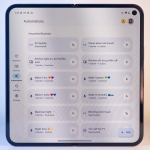
Perhaps the most significant change for returning CX-5 customers will be found inside the cabin. Mazda has abandoned its long-standing, albeit basic but effective, infotainment system in favor of a comprehensive Google-based architecture. This represents a pivotal moment in Mazda’s technological evolution as the brand begins its transition toward software-defined vehicles.
The new system features a larger, higher-resolution display that integrates seamlessly with the dashboard design. The interface is more responsive and features over-the-air update capability, ensuring the system can evolve throughout the vehicle’s lifecycle. Voice commands have been enhanced through Google’s voice recognition technology, offering more natural language processing and expanded functionality.
However, this transition hasn’t been without trade-offs. Some long-time Mazda owners may find the new system less intuitive than the previous generation, particularly those who appreciated the rotary controller’s tactile feedback. The learning curve is real, but the potential for future enhancements through software updates may ultimately prove more valuable.
The Hybrid Question
Mazda has confirmed plans to introduce an in-house developed hybrid powertrain for the CX-5, though not until the 2027 model year. This strategic delay suggests Mazda is taking a methodical approach to hybridization, likely learning from its experiences with the CX-90 and CX-70 PHEV models before applying those lessons to its volume product.
The current CX-5 lineup continues with Mazda’s proven Skyactiv-G gasoline engines, including the base 2.5-liter naturally aspirated four-cylinder and the available turbocharged variant. Both engines have been refined for improved efficiency and reduced emissions, though specific fuel economy figures were not available at the time of writing.
Trim Strategy and Pricing
Mazda has structured the CX-5 lineup across five distinct trim levels, each separated by approximately $2,000 price increments. This graduated approach allows customers to select the feature content that best matches their needs and budget while maintaining clear differentiation between models.
The base model, starting at $29,990, includes essential safety features, a respectable level of standard equipment, and Mazda’s signature driving dynamics. Moving up the ladder, each subsequent trim adds meaningful content, from upgraded materials and enhanced technology to more sophisticated driver assistance features.
Driving Dynamics: The Mazda Promise
Despite the technological advancements and dimensional growth, Mazda insists the new CX-5 maintains the driving characteristics that have defined the model. The company’s engineers have worked to preserve the vehicle’s responsive handling and communicative steering while accommodating the additional weight and complexity of new technologies.
The suspension has been retuned to balance comfort with the brand’s signature athleticism. Mazda’s approach remains focused on delivering a driving experience that feels more engaging than typical crossover offerings, a philosophy that continues to resonate with enthusiasts who might otherwise consider premium European alternatives.
Market Positioning and Competition
The compact crossover segment represents one of the most competitive battlegrounds in the automotive industry, with established players like the Toyota RAV4, Honda CR-V, and Nissan Rogue facing new challenges from revitalized models like the Hyundai Tucson and Kia Sportage.
Mazda’s strategy with the new CX-5 appears to be differentiation through design, driving dynamics, and now technology. While competitors often compete on price or feature checklists, Mazda continues to emphasize the holistic ownership experience—a vehicle that satisfies both the emotional and practical needs of its owners.
Looking Forward
The 2026 Mazda CX-5 represents more than just an incremental update; it’s a statement of intent from a brand that has successfully positioned itself as a premium alternative in the mainstream market. The integration of Google-based technology, the promise of future hybrid powertrains, and the continued refinement of Mazda’s design and engineering philosophies suggest a company that is thoughtfully evolving rather than chasing trends.
For current CX-5 owners, the transition to the new model will require some adjustment, particularly regarding the infotainment system. However, the expanded interior space, enhanced technology, and evolutionary design improvements provide compelling reasons to consider upgrading.
The CX-5’s global platform strategy also positions Mazda to leverage economies of scale and technological investments across multiple markets, potentially strengthening the brand’s competitive position in an increasingly challenging automotive landscape.
As Mazda continues its journey toward software-defined vehicles and electrification, the CX-5 serves as an important bridge—maintaining the brand’s core values while embracing the technological transformation reshaping the entire industry.
Tags: Mazda CX-5 2026, compact crossover, Google infotainment, software-defined vehicle, automotive technology, Mazda redesign, hybrid powertrain, driving dynamics, Kodo design, premium compact SUV
Viral Phrases: “Range Rover vibes at mainstream prices,” “Mazda’s technological evolution begins,” “The CX-5 gets a serious glow-up,” “Google inside your Mazda,” “Software-defined driving experience,” “Mazda’s global strategy vehicle,” “The tech upgrade you didn’t know you needed,” “Driving dynamics meet digital innovation”
,

Leave a Reply
Want to join the discussion?Feel free to contribute!