
The Apple Watch missed my hypertension – but this blood pressure wearable caught it instantly
Aquí está la noticia reescrita con un tono más informativo y viral, detallada y con al menos 1200 palabras:
The Silent Killer Lurking in Your Wrist: Hilo Wearable Blood Pressure Monitor Review
When I was a kid, I was convinced my demise would come from either nuclear war, the Bermuda Triangle (only 4,000 miles away), quicksand, or some bizarre combination of all three. Now, while none of these have gotten me yet (fingers crossed), it turns out the real silent killer was hiding in plain sight all along: high blood pressure. Ah, the joys of aging.
Nearly half of adults in the US suffer from hypertension, and it’s a contributing factor in over 1,000 deaths every single day. Last year, Apple rolled out hypertension notifications for Apple Watch users, joining features like AFib detection and heart rate alerts. Apple Watch Series 9 or later and Apple Watch Ultra 2 or later use optical heart sensors to scan for hypertension patterns over 30 days, then suggest getting a blood pressure cuff for seven days of tracking.
I wore my Apple Watch daily and never received any such notification. I’ve always hated cuff-style blood pressure monitors, so I didn’t pay much attention. Then a friend mentioned they’d bought a wearable blood pressure monitor for their father, who refused to wear it. They wondered if I wanted to try it instead.
It told me almost immediately that I had hypertension. Great.
A Legitimate Medical Device
Before I go further, Apple makes it clear that their hypertension notifications feature “is not intended to diagnose, treat, or aid in the management of hypertension,” and that “not all people with hypertension will receive a notification.”
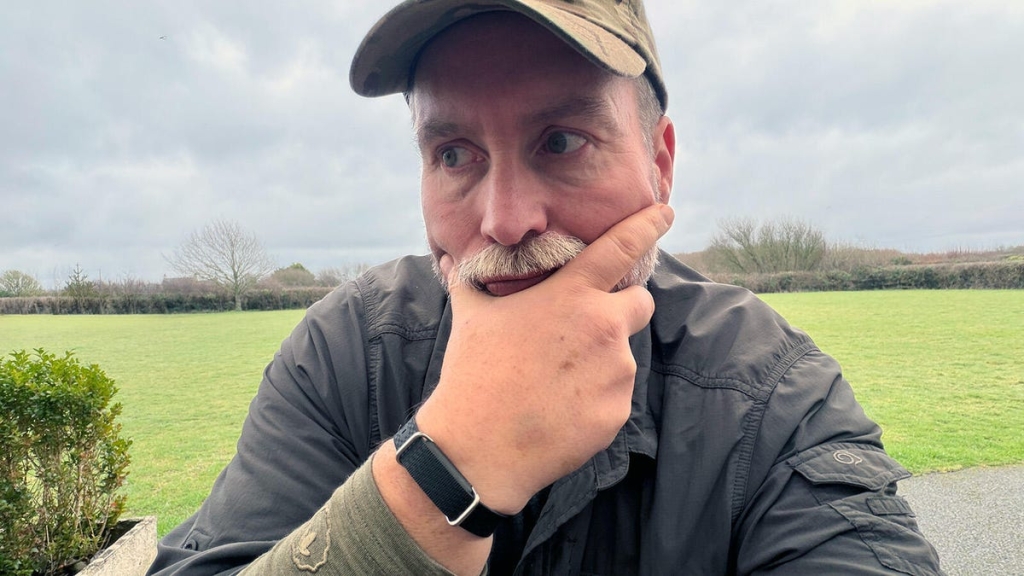
The wearable in question is called Hilo, and it’s yet another device competing for space on our bodies. This one fits on your wrist and looks like a Fitbit without a display. It’s a Class IIa medical device that’s gone through the testing needed to be FDA cleared, and it’s also ISO 81060-2 certified, a standard that covers the accuracy of sphygmomanometers (blood pressure monitors).
So, it’s definitely a legitimate piece of equipment and not snake oil. It takes blood pressure readings throughout the day and charts them on graphs in an app.
The Design and Features
Hilo is built using tough polycarbonate with stainless steel fittings and attaches to the wrist using a hypoallergenic silicone band. It’s IP68 rated, so it’s 100% dustproof and has no problem handling showering, bathing, and swimming. Akita, the maker, also claims that the battery is good for 15 days on a single charge.
And it does all this without that cuff squeezing your arm like a starving boa constrictor and without the racket of that air pump, both of which can trigger an alarm reaction in some people and cause their blood pressure to spike (a phenomenon called white coat hypertension).
The Calibration Catch
Imagine my surprise when I found out the first thing I had to do was take a standard blood pressure reading using the included cuff. Yes, the Hilo band comes with a Bluetooth cuff that’s used to calibrate the readings. And you have to use this cuff at least monthly to make sure that your data is accurate. As someone who hated those cuffs, it was something I had to get used to.
The Charging Nightmare
The next thing I noticed, which I’m sure caused my blood pressure to spike, was how I was supposed to charge the bits and pieces. The band has a cable with a proprietary two-pin connector, while the cuff charges using micro USB.
Both of these charging cables need to plug into USB-A sockets. USB-A and micro USB are now pretty outdated, mostly replaced by USB-C, and I tend to look at anything that needs a proprietary charging cable as a bit cursed because I know it’s only a matter of time before I lose the cable (and I’ve not had any success finding any third-party offerings).
The Subscription Trap
The next thing that undoubtedly caused my blood pressure to rise even further was finding out that after a year, I’d have to pay a membership to get full access to the app at a cost of around $80. Without this, I’d lose features like access to a detailed timeline of my readings, my time in the target range (showing how long I spend in the ideal range), and — and this really boiled my blood — I’d only be able to access seven days of data, and the sync with the Apple Health app would go from daily to monthly.
I get the corporate thinking. Why sell a piece of hardware once when you can sell the hardware and then artificially bond it to a subscription? But this level of artificially limiting access to my own data just doesn’t sit well with me. Doubly so when I just don’t feel like the app is as good as the free apps that companies such as Withings and Hume are shipping with their fitness and medical hardware.
The Blood Pressure Monitoring Performance
But, all this said, once the calibrations are done, the Hilo band does work very well when it comes to monitoring blood pressure. It seems to be very accurate and matches the supplied cuff and other third-party cuffs I’ve tried (yes, I’m slowly getting used to the cuffs). It’s also good as a step tracker and is only ever a few steps off from what my Apple Watch measures.
One place where it falls down badly is sleep tracking. I sleep around 6 to 7 hours a day, but the band thinks I live on much less. Every morning when I sync my data, the app asks me if the time I went to sleep and the time I woke up were correct, and every day it’s wrong (I’ve stopped bothering with correcting it). My Apple Watch is infinitely more accurate when it comes to sleep tracking than the Hilo.
The Real-World Use Case
I’m not a doctor (and I don’t play one on TV or the internet), so I decided to have a look and ask around as to when these cuffless continuous-monitoring blood pressure devices come in useful. The consensus seems to be that they’re handy for those with white coat hypertension and for people who feel dizzy at random points in the day.
Apart from this, the case for continuous monitoring isn’t clear. Yes, it gathers a lot of data, but whether this data is useful or not is not yet known. When I mentioned this to my healthcare professional, they didn’t see any benefit in having an ocean of readings.
ZDNET’s Buying Advice
For me, paying $240 for a monitor that then needs me to pay $80 a year pushes this device into the realm of too much money for not enough return. Yes, it picked up on my hypertension (which is now under control), but so would a $36 iHealth cuff (this has Bluetooth and an app that’s free, and it has a very high customer rating), or the $68 WellVu cuff, again with a free app, or the $130 Withings BPM Connect, which has an excellent app.
Or go old school and pick up an aneroid sphygmomanometer for only $15.
Yes, these do all use a cuff, so if you hate the cuff, I sympathize. It sucks. But one of the recommended workarounds to white coat hypertension is to take readings at home using your own device so you become desensitized to it. Again, this is a discussion for you to have with your healthcare professional, because there may be other options, and white coat hypertension itself may be something that needs treatment.
Thanks to losing weight, eating better, and the miracles of modern medicine, I’ve kicked heart disease down the road a bit, giving the atom bombs, Bermuda Triangle, or that quicksand more time to take me out.
Tags: blood pressure monitor, hypertension, wearable tech, health tech, Hilo, medical device, FDA cleared, ISO certified, subscription model, white coat hypertension, continuous monitoring, fitness tracker, sleep tracking, proprietary charging, micro USB, USB-A, blood pressure cuff, Apple Watch, Withings, iHealth, WellVu, aneroid sphygmomanometer
Viral Sentences:
- “The real silent killer was hiding in plain sight all along: high blood pressure.”
- “It told me almost immediately that I had hypertension. Great.”
- “Why sell a piece of hardware once when you can sell the hardware and then artificially bond it to a subscription?”
- “This level of artificially limiting access to my own data just doesn’t sit well with me.”
- “It’s definitely a legitimate piece of equipment and not snake oil.”
- “I tend to look at anything that needs a proprietary charging cable as a bit cursed.”
- “I’m slowly getting used to the cuffs.”
- “My Apple Watch is infinitely more accurate when it comes to sleep tracking than the Hilo.”
- “The case for continuous monitoring isn’t clear.”
- “For me, paying $240 for a monitor that then needs me to pay $80 a year pushes this device into the realm of too much money for not enough return.”
,


Leave a Reply
Want to join the discussion?Feel free to contribute!