
The average tax scam victim loses $1,020 – and they’re younger than you’d think
Tax Scams on the Rise: Over 40% of Young Adults Targeted in AI-Powered Fraud Schemes
In a shocking revelation that’s sending ripples through the cybersecurity community, a new report from McAfee reveals that tax scams have reached unprecedented levels, with more than 40% of 18-24 year-olds falling victim to sophisticated AI-powered fraud schemes this tax season. As Americans scramble to file their returns, cybercriminals are capitalizing on the chaos with increasingly convincing tactics that are fooling even tech-savvy young adults.
The Numbers Tell a Disturbing Story
According to McAfee’s 2026 Tax Season Survey, a staggering 82% of Americans express concern about tax fraud this year, with many reporting they’ve received more scam communications than ever before. The report found that 40% of respondents believe scam messages are more sophisticated this year compared to last, with artificial intelligence playing a significant role in making these fraudulent attempts more realistic and convincing.
Perhaps most alarming is the demographic breakdown of victims. While tax scams affect people across all age groups, the 18-24 age bracket shows particularly disturbing vulnerability, with 42% reporting they’ve fallen for a tax scam. This represents a significant increase from previous years and highlights how younger generations, despite their digital nativity, are being disproportionately targeted.
The financial impact is equally concerning. Nearly 20% of survey respondents reported losing money to tax scams, with the average loss reaching $1,020 per victim. When extrapolated across the millions of Americans filing taxes, the total economic damage from these scams runs into hundreds of millions of dollars.
The Evolution of Tax Scam Tactics
What makes this year’s tax scams particularly dangerous is the sophisticated use of artificial intelligence to create hyper-realistic communications. Scammers are now leveraging AI to generate convincing emails, text messages, and even voice calls that mimic official IRS communications with startling accuracy.
McAfee’s investigation uncovered 1,468 malicious or suspicious tax-themed unique domains between September 2025 and February 2026, averaging 43 new fake tax websites created every single day. The early November period saw this number nearly double in just over a week, indicating a concentrated effort by cybercriminals to maximize their impact during the busiest tax filing period.
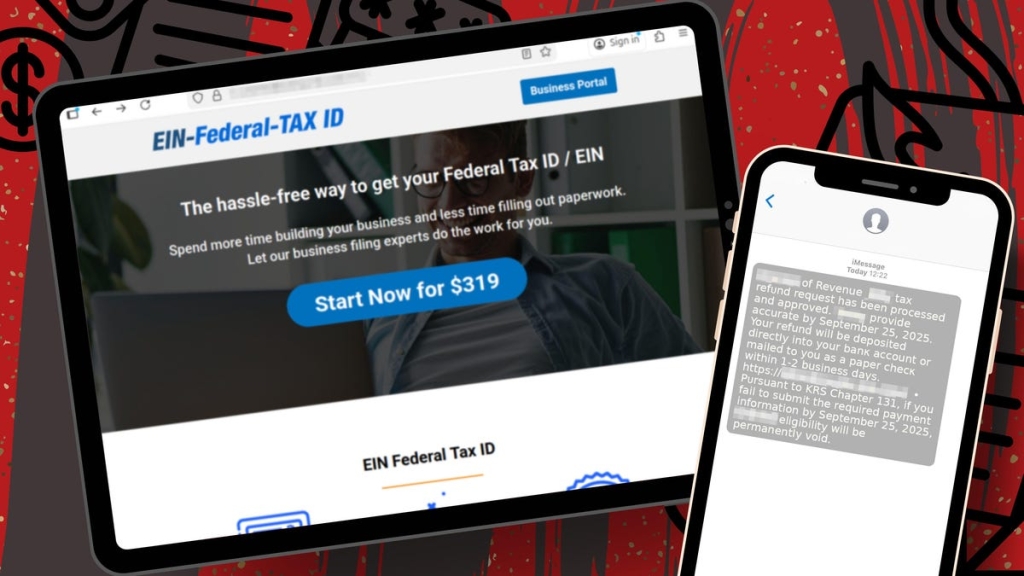
These malicious websites are designed with meticulous attention to detail, often featuring misleading subdomains or additional text around URLs to create an illusion of legitimacy. Some scammers have gone so far as to charge victims $319 for filing Employer Identification Numbers (EINs), a service that the IRS provides completely free of charge.
The typical scam follows a well-orchestrated pattern. It begins with a hook – perhaps a message about a refund problem, underpayment, or verification issue. The scammer then asserts authority by claiming to be from the IRS or a state tax agency, often providing personal details harvested from social media or data breaches to build credibility.
Next comes the pressure tactic: victims are directed to a “secure portal” or “refund page” that requests sensitive information including login credentials, Social Security numbers, bank details, or information from previous tax returns. The scammer then applies urgency by threatening penalties or legal action if immediate payment isn’t made, often demanding payment through gift cards or cryptocurrency to avoid detection.
The Psychology Behind the Success
What makes these scams so effective, particularly among younger victims? Cybersecurity experts point to several factors. First, the AI-generated content eliminates many of the grammatical errors and awkward phrasing that once served as red flags for suspicious communications. The messages now read as professionally as legitimate IRS correspondence.
Second, younger adults often have less experience with formal government communications and may be less familiar with the IRS’s actual procedures and communication methods. They’re also more likely to conduct financial transactions entirely online, making them comfortable with digital interactions that older generations might approach with more skepticism.
Third, the pressure tactics employed by scammers – particularly threats of legal action or immediate financial penalties – create a sense of urgency that can override rational decision-making. When someone believes they’re facing potential legal trouble or significant financial loss, they’re more likely to act quickly without proper verification.
The Role of Data Breaches
Many successful tax scams leverage information obtained through previous data breaches. Cybercriminals can purchase stolen personal information on the dark web and use it to create convincing scenarios. For instance, knowing someone’s previous tax refund amount, employment details, or even recent address changes allows scammers to craft highly personalized messages that feel authentic.
This is particularly concerning given the numerous high-profile data breaches that have occurred in recent years, affecting millions of Americans. Once personal information is compromised, it can be used in multiple scam attempts over several years, making data breaches a gift that keeps on giving for cybercriminals.
Protecting Yourself: Essential Steps
Cybersecurity experts emphasize that education and vigilance are the best defenses against tax scams. The fundamental rule is simple: the IRS will never initiate contact via phone, email, or text message about a tax issue. Any such communication should be treated as suspicious.
If you receive a questionable message claiming to be from the IRS, don’t respond or click any links. Instead, go directly to IRS.gov or your state’s tax agency website and log in through official channels. Legitimate tax agencies will have secure portals where you can verify any potential issues with your account.
Be particularly wary of any communication that creates a sense of urgency or demands immediate action. The IRS operates on established timelines and procedures that don’t require instant responses. Any message suggesting otherwise is almost certainly fraudulent.
When in doubt, ask for written documentation. Legitimate tax agencies will provide official correspondence through postal mail, not through electronic communications that can be easily spoofed.
What to Do If You’ve Been Scammed
If you suspect you’ve fallen victim to a tax scam, immediate action is crucial. First, stop all communication with the scammer. Don’t reply to messages, click on links, or send any additional information or money.
Document everything by taking screenshots of phone numbers, email addresses, message content, links, and any payment receipts or transaction IDs. This documentation will be valuable when reporting the crime and potentially recovering lost funds.
Secure your accounts immediately, especially your email. Since email accounts often serve as recovery options for other accounts, a compromised email can lead to a cascade of security issues. Change passwords for all sensitive accounts, including banking and tax-related services, and enable two-factor authentication wherever possible.
Report the scam to the Federal Trade Commission through ReportFraud.ftc.gov. Contact your bank or credit card company to alert them to the theft and potentially stop fraudulent transactions. Forward phishing emails to the IRS at [email protected].
Consider using a data removal service to identify where your personal information has been leaked and take steps to remove it from public databases. This can help prevent future targeting by scammers who often purchase lists of potential victims.
Finally, ensure you have proper security software installed on all your devices. Look for solutions that include web protection features that can warn you about malicious websites before you enter any personal information. McAfee offers a free tool called McAfee WebAdvisor that provides this type of protection.
The Path Forward
As AI technology continues to advance, tax scams are likely to become even more sophisticated and difficult to detect. This makes ongoing education and awareness crucial for all taxpayers, regardless of age or technical expertise.
Financial institutions, tax preparation services, and government agencies must also step up their efforts to educate the public about these scams and provide clear, accessible information about how legitimate communications will be handled.
For young adults who have been disproportionately affected by these scams, this serves as a valuable lesson in digital literacy and the importance of healthy skepticism when dealing with financial matters online. While technology has made many aspects of life more convenient, it has also created new vulnerabilities that require constant vigilance to navigate safely.
The good news is that awareness is growing, and more people are learning to recognize and avoid these scams. By staying informed, maintaining healthy skepticism, and following best practices for online security, taxpayers can protect themselves from becoming the next victim of AI-powered tax fraud.
Tags: tax scams, AI fraud, IRS impersonation, cybersecurity, identity theft, phishing, tax season, financial fraud, online scams, data breaches, digital security, McAfee, 2026 tax season, young adults, cryptocurrency scams, malicious websites, social engineering, fraud prevention, FTC reports, two-factor authentication
Viral Phrases: “40% of young adults targeted,” “AI-powered tax scams,” “IRS impersonation fraud,” “tax season cybersecurity crisis,” “malicious tax websites,” “cryptocurrency payment demands,” “data breach exploitation,” “digital identity theft,” “scam sophistication increase,” “financial loss average $1,020,” “young adults most vulnerable,” “pressure tactics and urgency,” “written documentation requests,” “two-factor authentication essential,” “FTC fraud reporting,” “McAfee WebAdvisor protection,” “dark web information sales,” “social media exploitation,” “government impersonation scams,” “cybersecurity education needed”,

Leave a Reply
Want to join the discussion?Feel free to contribute!