
The best thing about Fallout New Vegas was right there in Bethesda’s initial pitch to Obsidian
Fallout: New Vegas – The Game That Redefined Choice in Post-Apocalyptic RPGs
When discussing the most influential role-playing games of the past two decades, Fallout: New Vegas consistently emerges as a title that fundamentally transformed how players interact with game worlds. Released in 2010 as a spin-off from Bethesda’s mainline Fallout series, Obsidian Entertainment’s masterpiece has maintained an enduring legacy precisely because it elevated player agency to unprecedented heights.
The genius of New Vegas lies in its intricate faction system—a feature that has kept players returning to the Mojave Wasteland for over a decade. Unlike its predecessor, Fallout 3, which offered a relatively linear narrative experience, New Vegas presented players with a sprawling web of political alliances, moral dilemmas, and consequences that genuinely mattered.
The Birth of Faction-Based Gameplay
According to Emil Pagliarulo, lead designer on Fallout 3, the Bethesda team recognized a critical gap in their approach to the franchise. “There are no factions,” Pagliarulo noted in Game Informer’s oral history. “You join the Brotherhood of Steel, but that’s the main quest.” This limitation became apparent during development, with lead animator Hugh Riley famously describing their situation as having “feature seep” rather than feature creep—meaning they were actively cutting content rather than adding it.
With Bethesda preparing to shift focus to Skyrim and knowing another Fallout entry would be years away, the studio approached Obsidian Entertainment with a specific directive: create something that Bethesda couldn’t accomplish with their resources and time constraints. Todd Howard, game director at Bethesda, explained their approach: “We went to [Obsidian Entertainment] and said, ‘Hey, would you like to do something?’ And all we gave them was, like, ‘We want you to do something and use factions.’ We didn’t do a lot of faction gameplay [in Fallout 3].”
A Desert of Possibilities
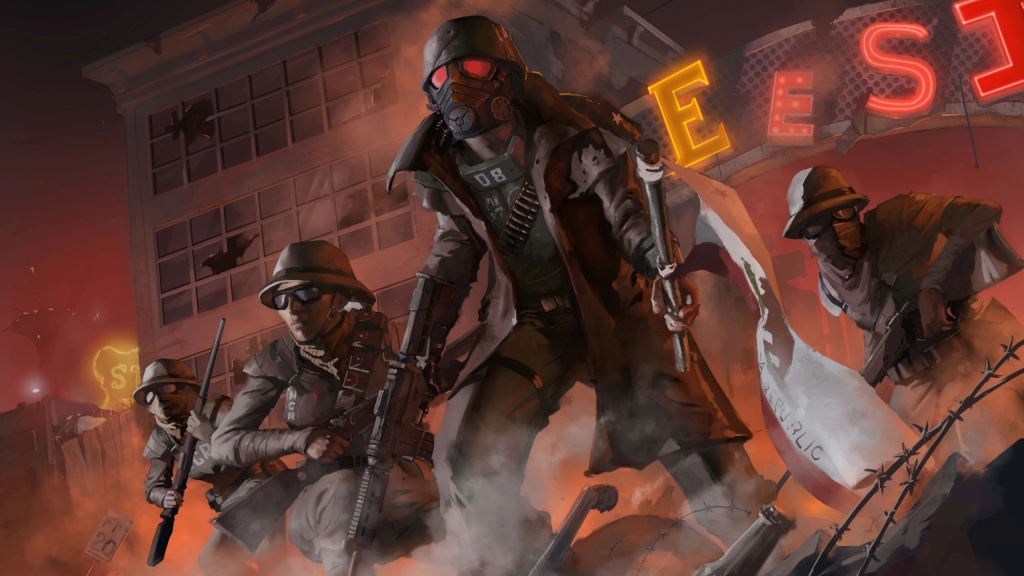
Obsidian’s response to this challenge was nothing short of revolutionary. New Vegas transformed the Mojave Wasteland into a living, breathing ecosystem of competing interests and ideologies. The game’s central conflict revolves around four major faction paths: supporting the New California Republic (NCR), aligning with Caesar’s Legion, working for the enigmatic Mr. House, or pursuing complete independence for the Mojave.
However, the true brilliance of New Vegas lies not just in these major choices but in the countless smaller decisions that accumulate throughout the journey. Each settlement, each faction, each individual character represents an opportunity for the player to shape the world according to their vision.
The Ripple Effect of Player Choice
Consider the Boomers, a faction you encounter as part of the main storyline. While helping them eliminate their giant ant infestation or repair their solar panel array isn’t mandatory, choosing to invest time in their community creates lasting consequences. These aren’t mere side quests—they’re opportunities to fundamentally alter the power dynamics of the Mojave.
The Kings in Freeside, the Great Khans in the mountains, the Three Families in the casinos—each group maintains its own reputation system that tracks your actions and adjusts how they interact with you. By the game’s conclusion, the Mojave serves as a testament to your decisions, with some communities flourishing while others crumble, all directly attributable to your choices.
A Legacy That Endures
What makes New Vegas’s faction system so remarkable is its organic nature. Unlike many games where faction allegiance feels predetermined or superficial, New Vegas allows for genuine nuance. You might find yourself sympathizing with the NCR’s democratic ideals while simultaneously working to undermine their authority. The game doesn’t punish this complexity—it embraces it.
This approach to faction gameplay has influenced countless subsequent titles. Games like The Outer Worlds, Disco Elysium, and even elements of later Bethesda titles owe a debt to New Vegas’s sophisticated handling of player choice and consequence.
Why It Still Matters in 2024
As we look at modern gaming trends, New Vegas’s faction system feels more relevant than ever. In an era where players increasingly demand meaningful choices and branching narratives, the game stands as a masterclass in how to implement these features without sacrificing coherence or narrative impact.
The game’s continued popularity has led to numerous mods, community patches, and even rumors of potential remasters or sequels. Its influence extends beyond gaming into discussions about narrative design, player agency, and the nature of choice in interactive media.
The Anatomy of a Perfect RPG
New Vegas succeeds because it understands that player choice isn’t just about offering different endings—it’s about creating a world that responds to your actions in meaningful ways. Every decision, no matter how small, contributes to a larger tapestry of consequences that makes each playthrough unique.
Whether you’re a first-time visitor to the Mojave or a veteran courier on your twentieth journey, New Vegas continues to offer new experiences and perspectives. Its faction system remains the gold standard for how to implement meaningful player choice in open-world RPGs.
Viral Tags and Gaming Buzz:
FalloutNewVegas #ObsidianEntertainment #FactionGameplay #PlayerChoice #RPGMasterpiece #MojaveWasteland #NCRvsLegion #MrHouse #GamingHistory #ChoiceMatters #OpenWorldExcellence #RetroGaming #GamingCommunity #ModdingScene #GameDesign #InteractiveStorytelling #PlayerAgency #GamingLegacy #PostApocalyptic #RPGInnovation
Gaming Buzzwords and Phrases:
“Choice and consequence system”
“Living, breathing game world”
“Organic faction allegiances”
“Meaningful player agency”
“Narrative branching excellence”
“Community reputation mechanics”
“Post-apocalyptic political intrigue”
“Replay value through choice”
“Player-driven world transformation”
“Complex moral decision-making”
“Faction reputation systems”
“Player choice evolution”
“Interactive narrative design”
“Player agency in gaming”
“Choice-driven storytelling”
“Dynamic world responses”
“Player decision impact”
“Narrative consequence systems”
“Choice architecture in games”
“Player-driven narrative”
“Consequential gameplay mechanics”
“Choice and consequence design”
“Player agency implementation”
“Narrative choice systems”
“Dynamic faction relationships”
,


Leave a Reply
Want to join the discussion?Feel free to contribute!