
The Buyer’s Guide to AI Usage Control
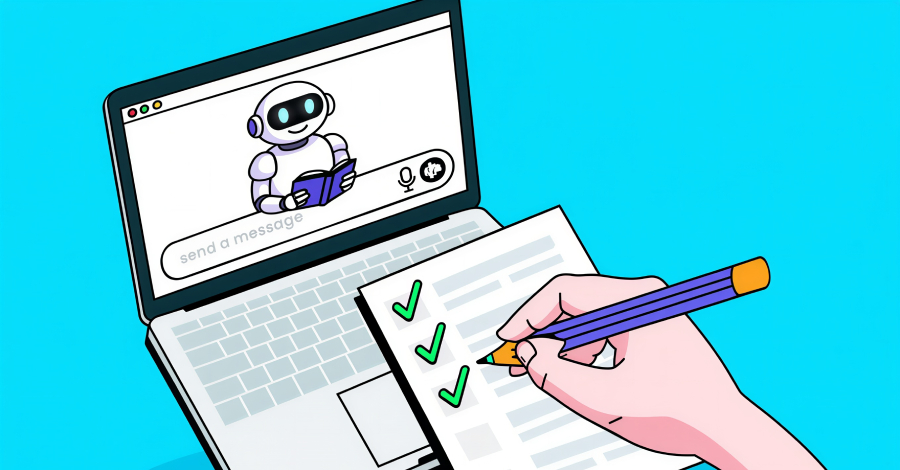
The Silent AI Security Crisis: Why Your Enterprise Is Losing Control of Its Own Intelligence
In today’s hyper-connected digital landscape, artificial intelligence has become as ubiquitous as electricity—powering everything from your morning email draft to your company’s strategic decision-making. But beneath this technological revolution lies a dangerous truth that most enterprise security leaders are only beginning to grasp: while AI adoption has exploded across organizations, traditional security controls haven’t just lagged behind—they’ve become completely irrelevant to the actual points of risk.
The uncomfortable reality? Most enterprises have no idea how many AI tools their employees are using right now. Not a clue. And that’s not just a visibility problem—it’s a governance catastrophe waiting to happen.
The Great AI Visibility Gap
Picture this: You’re a CISO at a Fortune 500 company. Your board asks you how many AI tools your workforce uses daily. You confidently rattle off the sanctioned platforms—Microsoft Copilot, Salesforce Einstein, maybe a couple of approved research tools. But then comes the follow-up question that changes everything: “How do you know that’s the complete picture?”
The silence that follows speaks volumes.
Today’s “AI everywhere” reality is woven into everyday workflows across the enterprise, embedded in SaaS platforms, browsers, copilots, extensions, and a rapidly expanding universe of shadow tools that appear faster than security teams can track. Yet most organizations still rely on legacy controls that operate far away from where AI interactions actually occur. The result is a widening governance gap where AI usage grows exponentially, but visibility and control do not.
With AI becoming central to productivity, enterprises face a new challenge: enabling the business to innovate while maintaining governance, compliance, and security. This isn’t just about protecting data anymore—it’s about governing intelligence itself.
The Interaction Problem Nobody Saw Coming
A new Buyer’s Guide for AI Usage Control argues that enterprises have fundamentally misunderstood where AI risk lives. The surprising truth is that AI security isn’t a data problem or an app problem. It’s an interaction problem. And legacy tools aren’t built for it.
Think about how your employees actually use AI. They’re not just logging into a single platform and uploading files. They’re jumping between corporate and personal AI identities in the same session. They’re using browser extensions that summarize documents without IT’s knowledge. They’re chaining together agentic workflows across multiple tools without clear attribution. They’re experimenting with side projects that could contain sensitive company information.
Traditional security controls were designed for a world where applications were monolithic, identities were corporate-managed, and data flowed through predictable channels. None of that applies to AI usage today.
Why Legacy Controls Are Obsolete
Security teams consistently fall into the same traps when trying to secure AI usage. They treat AI Usage Control as a checkbox feature inside their existing CASB or SSE solutions. They rely purely on network visibility, which misses most AI interactions because they happen directly in browsers or desktop applications. They over-index on detection without enforcement, creating alerts that nobody has time to investigate. They ignore browser extensions and AI-native apps entirely. They assume data loss prevention alone is enough.
Each of these creates a dangerously incomplete security posture. The industry has been trying to retrofit old controls onto an entirely new interaction model, and it simply doesn’t work. AI Usage Control exists because no legacy tool was built for this new reality.
The Four Stages of AI Security Maturity
Most security leaders move through four distinct stages as they grapple with AI governance, and understanding where you are is crucial for knowing what you need next.
Discovery is where most organizations start—identifying all AI touchpoints: sanctioned apps, desktop apps, copilots, browser-based interactions, AI extensions, agents, and shadow AI tools. Many assume discovery defines the full scope of risk. In reality, visibility without interaction context often leads to inflated risk perceptions and crude responses like broad AI bans that kill productivity without actually improving security.
Interaction Awareness is the critical next step. AI risk occurs in real-time while a prompt is being typed, a file is being auto-summarized, or an agent runs an automated workflow. It’s necessary to move beyond “which tools are being used” to “what users are actually doing.” Not every AI interaction is risky, and most are benign. Understanding prompts, actions, uploads, and outputs in real-time is what separates harmless usage from true exposure.
Identity & Context represents the third stage. AI interactions often bypass traditional identity frameworks, happening through personal AI accounts, unauthenticated browser sessions, or unmanaged extensions. Since legacy tools assume identity equals control, they miss most of this activity. Modern AI Usage Control must tie interactions to real identities (corporate or personal), evaluate session context (device posture, location, risk), and enforce adaptive, risk-based policies. This enables nuanced controls such as: “Allow marketing summaries from non-SSO accounts, but block financial model uploads from non-corporate identities.”
Real-Time Control is where traditional models break down completely. AI interactions don’t fit allow/block thinking. The strongest AI Usage Control solutions operate in the nuance: redaction, real-time user warnings, bypass, and guardrails that protect data without shutting down workflows.
The Architecture That Actually Works
The most underestimated but decisive factor in AI security success is architectural fit. Many solutions require agents, proxies, traffic rerouting, or changes to the SaaS stack. These deployments often stall or get bypassed entirely. Security teams discover that the winning architecture is the one that fits seamlessly into existing workflows and enforces policy at the actual point of AI interaction—not somewhere upstream or downstream.
This means controls that work in the browser where most AI interactions happen, that don’t require endpoint agents that users will disable, that don’t break existing workflows, and that can adapt as quickly as the AI landscape changes.
Beyond the Technical: What Really Drives Adoption
While technical fit is paramount, non-technical factors often decide whether an AI security solution succeeds or fails. Operational overhead matters tremendously—can it be deployed in hours, or does it require weeks of endpoint configuration that will never get completed? User experience is crucial—are controls transparent and minimally disruptive, or do they generate workarounds that defeat the entire purpose?
Futureproofing is perhaps the most important consideration of all. Does the vendor have a roadmap for adapting to emerging AI tools, agentic AI, autonomous workflows, and evolving compliance regimes, or are you buying a static product in a dynamic field? These considerations are less about “checklists” and more about sustainability, ensuring the solution can scale with both organizational adoption and the broader AI landscape.
The New Security Frontier
AI isn’t going away, and security teams need to evolve from perimeter control to interaction-centric governance. The Buyer’s Guide for AI Usage Control offers a practical, vendor-agnostic framework for evaluating this emerging category. For CISOs, security architects, and technical practitioners, it lays out what capabilities truly matter, how to distinguish marketing from substance, and why real-time, contextual control is the only scalable path forward.
AI Usage Control isn’t just a new category; it’s the next phase of secure AI adoption. It reframes the problem from data loss prevention to usage governance, aligning security with business productivity and enterprise risk frameworks. Enterprises that master AI usage governance will unlock the full potential of AI with confidence while those that don’t will find themselves constantly fighting fires they can’t see coming.
The question isn’t whether your organization needs AI Usage Control anymore—it’s whether you’ll implement it before the next shadow AI tool exposes your crown jewels, or after.
Download the Buyer’s Guide for AI Usage Control to explore the criteria, capabilities, and evaluation frameworks that will define secure AI adoption in 2026 and beyond. Join the virtual lunch and learn: Discovering AI Usage and Eliminating ‘Shadow’ AI.
Found this article interesting? This article is a contributed piece from one of our valued partners. Follow us on Google News, Twitter and LinkedIn to read more exclusive content we post.
tags #AIsecurity #ShadowAI #EnterpriseSecurity #AIgovernance #CISO #CyberSecurity #AITools #DataProtection #Compliance #RiskManagement #Innovation #DigitalTransformation #TechLeadership #FutureOfWork
sentences The silent AI security crisis is here #Your enterprise has no idea how many AI tools employees are using #Legacy security controls are obsolete for AI #Shadow AI is growing faster than security teams can track #Interaction-centric governance is the new security frontier #Real-time AI control beats detection alone #Browser extensions are the hidden AI risk vector #Personal AI accounts bypass corporate security #Agentic workflows create attribution nightmares #AUC is not a feature—it’s an entirely new category #CISOs are flying blind on AI usage #The governance gap is widening daily #Productivity vs security is the new enterprise dilemma #Futureproofing AI security is non-negotiable #Download the Buyer’s Guide to stay ahead #Join the virtual lunch and learn to eliminate shadow AI
,
Leave a Reply
Want to join the discussion?Feel free to contribute!