
The curious case of Michael Selig and his predictions about markets
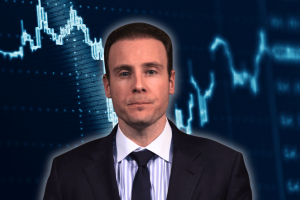
The Curious Case of Michael Selig and His Predictions About Markets
In the high-stakes arena of financial regulation, few figures have been as polarizing—or as pivotal—as Michael S. Selig, the chairman of the U.S. Commodity Futures Trading Commission (CFTC). Recently, Selig has taken center stage in a heated battle over prediction markets, positioning himself as both a defender of federal authority and a champion of innovation. But as his rhetoric intensifies, so do the contradictions in his stance. Is he a steadfast guardian of economic progress, or is he caught in a web of his own making? Let’s dive into the curious case of Michael Selig and his predictions about markets.
The Federal vs. State Showdown
In a recent Wall Street Journal op-ed, Selig sounded the alarm over what he calls a “state-level siege” on federally regulated event contracts. He argues that states are encroaching on the CFTC’s exclusive jurisdiction, undermining decades of precedent that have allowed prediction markets to thrive. “The Commodity Futures Trading Commission for decades has overseen regulation of prediction markets—or event contracts, as we refer to them—that help market participants hedge risk, aggregate information, and test hypotheses about future outcomes,” Selig wrote. His message is clear: the CFTC will no longer sit idly by while states attempt to rewrite federal law through litigation.
But here’s where it gets interesting. During his Senate confirmation hearing, Selig was far less definitive about the line between event contracts and gambling. When pressed by lawmakers on whether sports-based prediction markets should be considered gambling, he demurred, stating, “These are complex issues as to interpretation of what it means to constitute gaming.” He emphasized that he would defer to judicial decisions rather than make a categorical determination himself. This cautious approach stands in stark contrast to his current posture as chairman, where he now asserts that the CFTC’s authority is settled and non-negotiable.
The Crypto.com Connection
The stakes in this battle have escalated with the CFTC’s recent filing of a “friend of the court” brief in support of Crypto.com. The case, which is playing out in the Ninth U.S. Circuit Court of Appeals, could set a precedent for how prediction markets are regulated across the country. In a video posted on February 17, Selig explained that the CFTC’s intervention is a direct response to state-level challenges to event contracts. “We’re stepping in to defend the agency’s exclusive jurisdiction,” he said, framing the dispute as one of federal supremacy rather than regulatory overlap.
But the Crypto.com case is just one front in a broader war. In Massachusetts, a court refused to pause an injunction blocking Kalshi from offering sports-related event contracts. In Nevada, courts allowed state gaming regulators to proceed against similar offerings after rejecting efforts to shield them under federal derivatives law. In Connecticut, regulators ordered Kalshi, Robinhood, and Crypto.com to halt what the state described as unlicensed sports wagering. Each case underscores the unsettled nature of the distinction between event contracts and wagers at the state level.
A History of Innovation
Selig’s argument relies heavily on history, pointing to the Iowa Electronic Markets in the early 1990s and to Nadex’s binary contracts as evidence that event-driven derivatives have long existed under federal oversight. He contends that these products did not originate with crypto platforms and that the Commodity Exchange Act was intentionally written broadly enough to accommodate financial innovation. From Selig’s perspective, state attempts to classify event contracts as gambling amount to rewriting federal law through litigation rather than legislation.
Yet, the tension remains unresolved. During Selig’s confirmation process, senators warned that some prediction markets appear to be “trying to have it both ways,” marketed as financial instruments while functioning like traditional sports betting that states regulate. They suggested the distinction might be semantic rather than substantive. Selig did not dispute that characterization at the time.
The Big Question
Now, his written advocacy assumes a cleaner boundary between federal derivatives regulation and state gambling law than his earlier testimony suggested existed. The change draws attention to the central question facing regulators and courts alike: When does an event contract become a wager, and who gets to decide?
For platforms such as Kalshi, Polymarket, Coinbase, and Crypto.com, the answer could determine whether prediction markets expand or fragment in the United States. More broadly, the fight may redefine the limits of federal preemption, the role of states in policing market behavior, and how financial innovation is supervised when it closely resembles regulated gaming.
The Verdict
In prediction markets, credibility and clarity are essential. Regulators are no exception. As Michael Selig continues to navigate this complex landscape, his ability to reconcile his past caution with his current assertiveness will be critical. The outcome of this battle could shape the future of financial innovation in America—and the world.
Tags & Viral Phrases:
- Federal vs. State Showdown
- Prediction Markets Under Fire
- Michael Selig’s Bold Move
- Crypto.com’s Legal Battle
- The Future of Financial Innovation
- Event Contracts vs. Gambling
- CFTC’s Supreme Authority
- States vs. Federal Regulation
- The Iowa Electronic Markets Legacy
- Nadex’s Binary Contracts
- Kalshi’s Legal Woes
- Polymarket’s Uncertain Future
- Coinbase’s Regulatory Challenges
- The Commodity Exchange Act
- Federal Preemption Debate
- Gaming vs. Derivatives
- Michael Selig’s Senate Hearing
- The Ninth U.S. Circuit Court of Appeals
- Massachusetts Injunction
- Nevada’s Gaming Regulators
- Connecticut’s Unlicensed Wagering
- The Big Question: Wager or Contract?
- The Future of Prediction Markets
- Credibility and Clarity in Regulation
- The Curious Case of Michael Selig
,


Leave a Reply
Want to join the discussion?Feel free to contribute!