
The curious case of the disappearing Lamborghinis
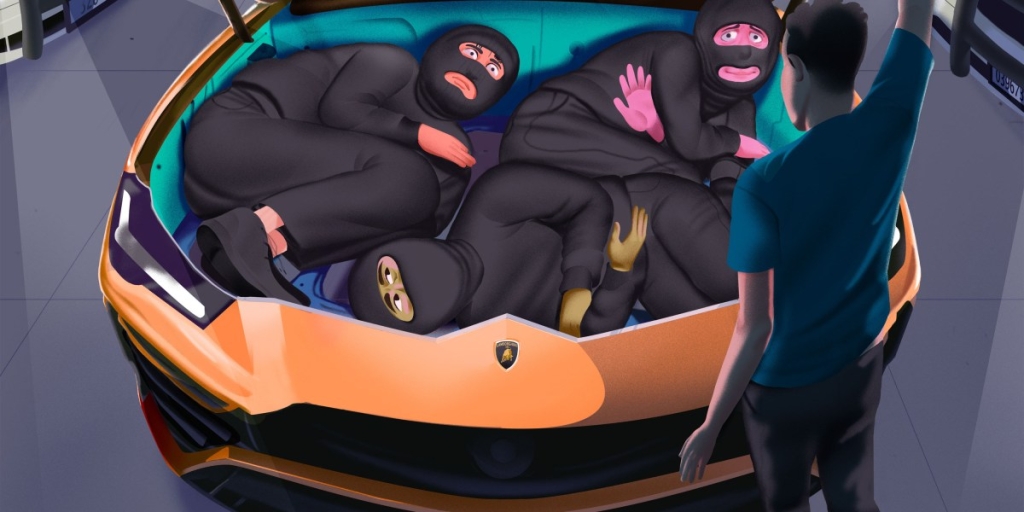
The $10 Billion Car Heist: How Organized Crime Is Hijacking America’s Auto Transport Industry
In the high-stakes world of vehicle logistics, where luxury cars and commercial fleets crisscross the nation daily, a sophisticated criminal enterprise has emerged that’s costing the industry billions while operating with shocking impunity.
At the heart of this crisis are online “load boards”—digital marketplaces where car owners, dealerships, and manufacturers post vehicles needing transport between destinations. Central Dispatch, the industry’s dominant platform and a subsidiary of Cox Automotive (which also owns Autotrader, Kelley Blue Book, and major vehicle auction houses), processes thousands of vehicle listings daily. But what was once a reliable system has become ground zero for an escalating fraud epidemic that’s been building for nearly two years.
The mechanics of the theft are as sophisticated as they are disturbing. Criminal syndicates begin with classic phishing operations—emails that mimic legitimate load board communications. When brokers or carriers click seemingly authentic login links, they unwittingly surrender their credentials to waiting criminals. Within minutes, the thieves hijack accounts, redirecting all communications by changing email addresses and phone numbers, then systematically claim high-value vehicle loads worth hundreds of thousands of dollars.
“The load board system still works well,” Cox Automotive stated in a prepared response, claiming that “fraud impacts a very small portion” of listings. Industry veterans, however, paint a radically different picture.
Bill Woolf, regional director at the National Insurance Crime Bureau, captures the escalating arms race: “Every time we come up with a security measure to prevent the fraudster, they come up with a countermeasure.” This perpetual cycle has left legitimate businesses playing perpetual catch-up against increasingly sophisticated criminal networks.
The regulatory framework, designed for a different era, has become a criminal’s playground. While the US Department of Transportation registration is technically required to access these marketplaces, obtaining a USDOT number from the Federal Motor Carrier Safety Administration has proven remarkably easy for bad actors. Criminals establish sham transport companies, secure legitimate-appearing USDOT numbers, and operate with apparent authority.
The exploitation goes deeper. In numerous cases, fraudsters have compromised the FMCSA accounts of legitimate companies, altering contact information to impersonate established businesses and steal loads directly. The Federal Motor Carrier Safety Administration did not respond to requests for comment on these vulnerabilities.
Bek Abdullayev, founder of Super Dispatch—one of Central Dispatch’s primary competitors—laid bare the systemic failures during an appearance on the Auto Transport Co-Pilot podcast. “FMCSA is authorizing people that are fraudulent companies—people that are not who they say they are,” he explained. The registration process, he noted, can be gamed to obtain paperwork that presents criminals as legitimate operators. Temporary vehicle carrier insurance, for instance, can be secured quickly using fraudulent payment credentials, providing just enough coverage to appear credible.
The criminal playbook extends beyond simple identity theft. Once fraudsters secure legitimate-appearing credentials and gain access to load boards, they employ a technique called “double-brokering.” After booking legitimate vehicle transport jobs, they repost the same vehicles under different fraudulent or compromised accounts, effectively subcontracting the work to unwitting accomplices. These secondary carriers, believing they’re working for legitimate brokers, deliver stolen vehicles to locations chosen by the criminals.
Yariv, a West Palm Beach transport broker who requested anonymity, described the pattern: “They’re booking cars and then they’re just reposting them and dispatching them out to different routes.” This creates a complex web of transactions that obscures the original theft and complicates recovery efforts.
Law enforcement officials paint an even more troubling picture. Decker from the Nevada DMV, who also serves on a vehicle fraud committee for the International Association of Chiefs of Police, asserts that much of this activity is “cartel operated.” The profit margins rival those of drug trafficking, creating powerful incentives for organized crime to invest in sophisticated fraud operations. “There’s so much money in it that it rivals selling drugs,” he states flatly.
Despite growing awareness within the industry, the thefts continue largely unabated. Brokers, auto industry veterans, and law enforcement sources interviewed by MIT Technology Review describe load boards and USDOT as moving too slowly to identify and ban bad actors. Cox Automotive claims to be “dedicated to continually enhancing our processes, technology, and education efforts across the industry to fight fraud,” but industry insiders report that these measures have failed to stem the tide.
The economic impact extends far beyond individual thefts. Legitimate carriers face increased insurance costs, brokers struggle with eroded trust, and the entire ecosystem grapples with the reputational damage of a system that appears increasingly vulnerable to exploitation. Some industry estimates suggest the annual losses could exceed $10 billion when accounting for stolen vehicles, increased operational costs, and lost business opportunities.
As criminal syndicates continue refining their techniques and expanding their operations, the question remains whether the regulatory framework and industry safeguards can evolve quickly enough to protect what has become an essential component of America’s automotive economy. The answer, thus far, has been a resounding no—leaving the industry to wonder how many more billions will vanish before meaningful reform arrives.
Tags: vehicle theft, auto transport fraud, load board security, organized crime, double brokering, USDOT fraud, Central Dispatch, Cox Automotive, phishing scams, FMCSA vulnerabilities, cartel operations, automotive logistics, vehicle hijacking, insurance fraud, transportation security
Viral Phrases: “Every time we come up with a security measure to prevent the fraudster, they come up with a countermeasure,” “There’s so much money in it that it rivals selling drugs,” “FMCSA is authorizing people that are fraudulent companies,” “They’re booking cars and then they’re just reposting them,” “The load board system still works well” (said no victim ever), “$10 billion car heist,” “phishing your way to a Ferrari,” “When the regulators become the gateway for criminals,” “The perfect crime in the digital age,” “Your next car might be someone else’s yesterday problem”
,

Leave a Reply
Want to join the discussion?Feel free to contribute!