
The difficulty of driving an EV in the “most beautiful race in the world”
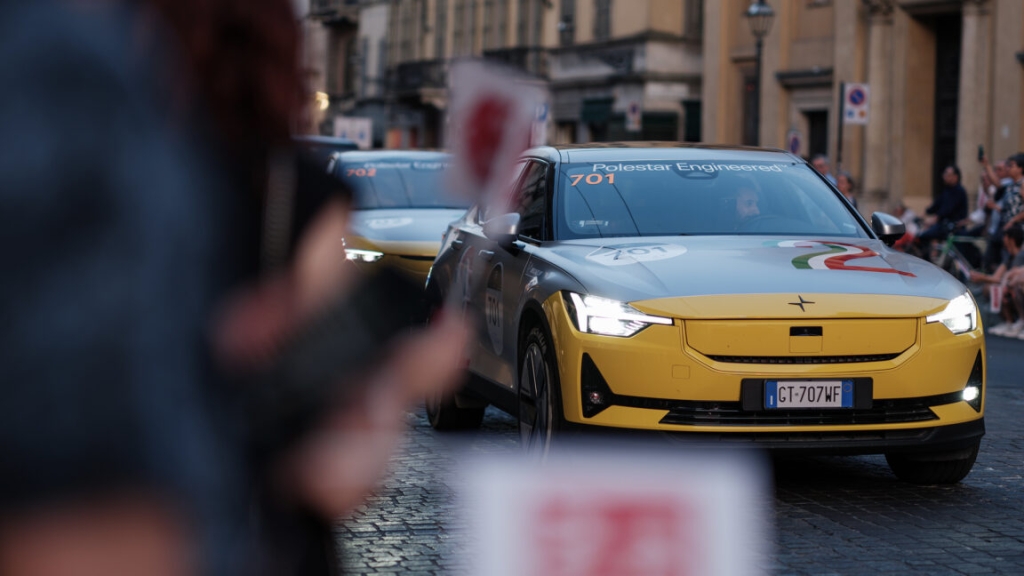
Polestar Takes on the Mille Miglia: A Modern Electric Car Tackles Italy’s Legendary Classic Car Rally
In a stunning fusion of past and future, a Polestar 3 electric SUV recently completed the grueling 1,000-mile Mille Miglia rally through the Italian countryside, proving that cutting-edge electric vehicles can handle one of the world’s most challenging classic car events.
The Mille Miglia, which translates to “Thousand Miles,” is not your typical car rally. This legendary endurance race, first held in 1927 and revived in 1977 as a regularity race, winds through some of Italy’s most breathtaking landscapes, from the canals of Brescia to the shores of Rome and back. Traditionally dominated by vintage Ferraris, Alfa Romeos, and Bugattis, the event has become a bucket-list item for automotive enthusiasts worldwide.
The Challenge of Competing in a Modern Electric Vehicle
When Polestar decided to enter the 2026 Mille Miglia with their flagship electric SUV, eyebrows were raised throughout the classic car community. Could a modern electric vehicle, designed for comfort and efficiency rather than raw performance, handle the punishing Italian roads that have challenged drivers for nearly a century?
The answer, as it turns out, was a resounding yes—with some caveats.
The Polestar 3, equipped with dual electric motors producing 517 horsepower and 671 lb-ft of torque, proved more than capable of keeping pace with the vintage machinery. Its instant torque delivery was particularly advantageous on the numerous mountain passes and tight village streets that characterize the Mille Miglia route.
The Human Element: Coffee, Calculations, and Classic Cars
What makes the Mille Miglia truly special isn’t just the cars or the route—it’s the Italian passion that permeates every aspect of the event. Our Polestar team quickly learned this firsthand when they stopped for coffee and pastries alongside other competitors. The espresso doppio they enjoyed was described as “the best in years,” perfectly capturing the essence of quintessential Italian life.
However, the romantic interlude proved costly. In an overcaffeinated, sleep-deprived state, a simple math error during the next average speed trial cost the team precious seconds. This incident highlights one of the Mille Miglia’s most challenging aspects: it’s not just about speed, but precision, timing, and mental acuity.
The Strategy Behind the Scenes
After the first sector, the Polestar team regrouped with other “Green” category vehicles (modern cars allowed in the event). They found themselves caught behind Ferraris driving slowly on a gravel section during a critical time trial. This situation revealed an interesting strategic element of the race: sometimes, patience is more valuable than aggression.
The team later learned about a fascinating rule quirk from last year’s Green winner, Mirco Magni. He had sacrificed an entire stage to create a gap between himself and competitors, knowing that the penalty for missing the time by five seconds is identical to missing it by five minutes. This strategic insight, unfortunately, wasn’t clearly outlined in the English rulebook translation.
The Night Before: Sleep, Strategy, and Second-Guessing
That night, the team managed a miraculous five hours of sleep—a luxury in endurance rallying. However, concerns about their rankings kept them restless. Upon waking, they discovered they had performed well in scoring but had incurred two “TC” penalties (likely time correction penalties for missing target times).
Despite the setbacks, the team adapted their strategy. Learning from their previous day’s experience, they decided to stop for espresso early in the morning, embracing the Italian rhythm rather than fighting against it. This time, their coffee break coincided with vintage cars catching up to them, creating a picturesque scene of automotive history unfolding over morning caffeine.
The Mountain Road Epiphany
The highlight of their journey came during an ascent up one of Italy’s most incredible mountain roads. Rather than using the Polestar’s considerable power to sprint ahead, the team chose to remain transfixed by the spectacle unfolding around them. A veritable fleet of open-wheel Bugattis and Alfa Romeos from the 1920s and 1930s filled the road ahead, their tall tires squealing, engines roaring and belching smoke, with drivers and passengers leaning into turns with abandon.
The contrast was striking: these century-old machines, designed in an era before safety regulations and electronic aids, were being driven harder than many of the support vehicles. Eventually, the tight roads west of Cervia caused the vintage cars to bunch up into clumps, creating a rolling museum of automotive history.
What This Means for Electric Vehicles
The Polestar 3’s successful completion of the Mille Miglia represents more than just a marketing victory for the Swedish automaker. It demonstrates that electric vehicles have matured to the point where they can participate in and excel at events traditionally reserved for internal combustion vehicles.
The instant torque, predictable power delivery, and all-wheel-drive capabilities of the Polestar 3 actually proved advantageous on many of the Mille Miglia’s challenging sections. While vintage cars required careful throttle modulation and precise gear changes, the electric SUV could simply point and shoot, its sophisticated traction control systems managing power delivery to maximize grip on loose surfaces.
The Future of Classic Events
As electric vehicles become increasingly prevalent, events like the Mille Miglia face an interesting challenge: how to maintain their historical character while embracing technological progress. The inclusion of modern vehicles in separate categories allows for this evolution without compromising the integrity of the vintage competition.
For Polestar and other electric vehicle manufacturers, events like the Mille Miglia offer invaluable real-world testing opportunities. The combination of high-speed highway sections, technical mountain passes, and stop-and-go city driving provides a comprehensive assessment of an EV’s capabilities.
Conclusion: When Past Meets Future
The Polestar 3’s journey through the Mille Miglia represents a beautiful convergence of automotive history and future technology. While the vintage cars captured hearts with their mechanical drama and historical significance, the electric SUV proved that modern engineering can honor tradition while pushing boundaries.
As one team member reflected while watching a support crew swap fouled spark plugs on a Bugatti Type 37 during their morning espresso break: “These cars, separated by nearly a century of technology, share the same passion, the same challenges, and the same love for the road. That’s what the Mille Miglia is really about.”
The future of automotive enthusiasm isn’t about choosing between electric and combustion—it’s about appreciating all forms of automotive expression, from the mechanical poetry of a 1920s Bugatti to the silent efficiency of a modern electric SUV conquering the same legendary roads.
Tags
Mille Miglia, Polestar 3, electric vehicle rally, Italian classic car race, EV endurance testing, vintage vs modern cars, automotive history, electric SUV performance, Brescia to Rome rally, sustainable motorsports
Viral Sentences
“Electric cars just conquered Italy’s most legendary classic car rally!”
“Watch a 2026 Polestar 3 outrun 1920s Bugattis through the Italian mountains!”
“The future of racing isn’t about replacing the past—it’s about embracing it.”
“Who needs gasoline when you’ve got Italian espresso and instant torque?”
“This electric SUV just proved that EVs can handle anything Italy can throw at them.”
“Five hours of sleep, two TC penalties, and one unforgettable espresso break.”
“Century-old cars being driven harder than modern support vehicles? Only in Italy!”
“The Polestar 3 didn’t just complete the Mille Miglia—it redefined what’s possible.”
“When vintage meets voltage: The electric revolution hits Italy’s most famous race.”
“Math errors, coffee breaks, and mountain roads: The real story behind EV endurance racing.”
,

Leave a Reply
Want to join the discussion?Feel free to contribute!