
The Economics of 3D Printed Homes Are Surprisingly Horrible
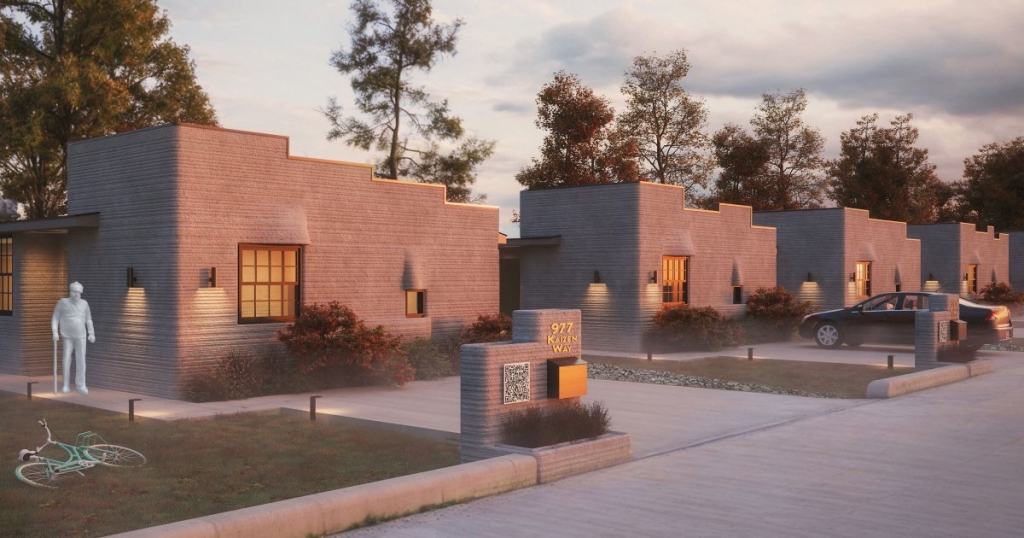
America’s First 3D-Printed Neighborhood Opens in California—But Is It Really Affordable?
In a groundbreaking move for sustainable housing, a new neighborhood in Yuba County, California, has been unveiled as the nation’s first community built entirely with 3D-printed homes. Developed by the innovative company 4Dify, the project aims to revolutionize the housing industry by leveraging cutting-edge technology to create faster, more efficient, and potentially more affordable homes. However, the reality of the project’s affordability has sparked debate among experts and potential buyers alike.
The neighborhood consists of five 1,000-square-foot homes, each meticulously crafted by a massive concrete 3D printer valued at approximately $1.5 million. The first home in the development took about 24 days to print, with 4Dify projecting that future builds could be completed in as little as 10 days. This dramatic reduction in construction time is a testament to the potential of 3D printing technology to streamline the building process and reduce labor costs.
Despite these advancements, the price tag of the first home has raised eyebrows. Listed at $375,000, the home is priced lower than the median home value in Yuba County, which stands at $450,000. At first glance, this seems like a significant saving. However, a closer look at the numbers reveals a different story. The home’s price per square foot comes out to $375, which is notably higher than the county’s median price per square foot of $268, according to RedFin data.
To put this into perspective, the cost of a 4Dify home is comparable to that of a 2,500-square-foot custom-built home in Chicago’s northwest suburbs. This raises questions about whether 3D-printed homes are truly more affordable than traditional construction methods, especially when considering the potential risks and uncertainties associated with maintaining and insuring a new type of dwelling.
The promise of 3D-printed housing has always been rooted in its ability to reduce costs through faster construction, less waste, and fewer labor requirements. While the Yuba County project demonstrates the technology’s potential to achieve these goals, it also highlights the challenges of scaling up production to make these homes accessible to a broader audience. Until companies like 4Dify can significantly reduce costs through mass production, 3D-printed homes may remain an intriguing but expensive experiment in the housing market.
As the industry continues to evolve, the success of projects like this will depend on their ability to balance innovation with affordability. For now, the Yuba County neighborhood stands as a bold step forward in the quest for sustainable and efficient housing, even if it hasn’t yet delivered on the promise of affordability.
Tags:
3D-printed homes, affordable housing, sustainable construction, Yuba County, 4Dify, concrete printing, housing innovation, construction technology, cost per square foot, housing market trends.
Viral Phrases:
“Revolutionizing housing with 3D printing,” “The future of affordable homes?,” “Is 3D printing the answer to the housing crisis?,” “Breaking barriers in construction,” “From blueprint to reality in 10 days,” “The price of innovation: Are 3D homes worth it?”
,

Leave a Reply
Want to join the discussion?Feel free to contribute!