
The end of the line for Amazon’s grocery stores brings a final irony: a 30-minute wait to get in
Amazon Fresh’s Final Chapter: The Rise and Fall of a Grocery Revolution
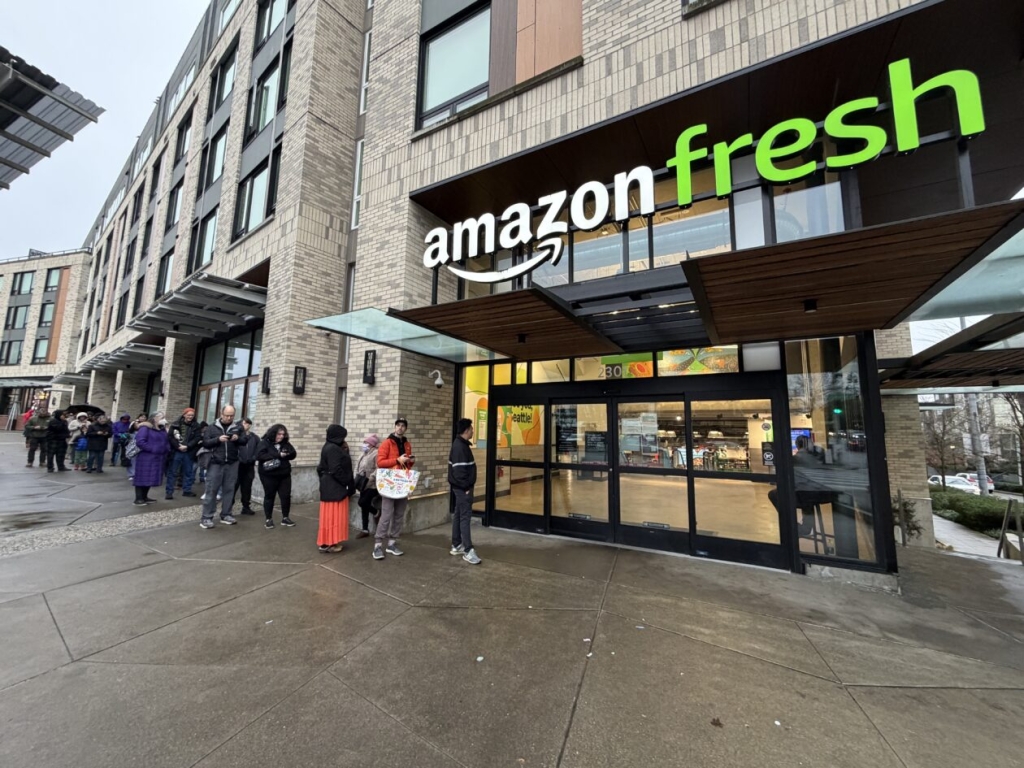
On a chilly Thursday afternoon in Seattle’s Central District, what was supposed to be a revolutionary shopping experience ended in lines and disappointment. The Amazon Fresh store at 23rd and Jackson—once touted as the future of grocery shopping—became the scene of its own farewell party, as bargain hunters and concerned locals alike waited 30 minutes or more just to walk through the doors.
The irony wasn’t lost on anyone: Amazon built its grocery empire on the promise that you could “just walk out,” but on its final days, customers couldn’t even walk right in.
The Great Amazon Grocery Experiment Comes to an End
Amazon’s announcement earlier this week sent shockwaves through the retail world and bargain hunters scrambling to stores nationwide. The tech giant confirmed it’s closing all Amazon Fresh grocery stores and Amazon Go convenience stores, with many locations shutting their doors as early as Sunday.
The news spread like wildfire across social media platforms, particularly TikTok and Instagram, where videos of 50% off clearance sales drove customers to flock to stores in a retail frenzy that would make Black Friday blush.
“This is the end of an era,” said one shopper, pushing a cart filled with discounted organic produce. “I never thought I’d see the day when Amazon couldn’t make something work.”
The Numbers Behind the Closure
When Amazon acquired Whole Foods for $13.7 billion in 2017, it signaled the company’s serious intentions in the grocery space. The Fresh stores were meant to be Amazon’s answer to traditional supermarkets, combining the convenience of online shopping with the immediacy of brick-and-mortar retail.
But the economics never quite added up. Amazon admitted it couldn’t create “a truly distinctive customer experience with the right economic model needed for large-scale expansion.” Translation: the math just didn’t work.
The company is pivoting hard toward same-day Amazon Fresh delivery, which now operates in 2,300 U.S. cities and towns. According to Amazon, perishable grocery sales through this service have grown 40-fold since January 2025, with fresh items now dominating nine of the top 10 most-ordered products in areas where it’s available.
A Community Left Behind
For the Central District neighborhood, the closure represents more than just the end of another tech experiment. Stacey Beaver, who grew up just down the street, remembers when a Red Apple grocery store occupied the same site. That store was demolished to make way for the Jackson Apartments development, where Amazon Fresh opened its doors in 2021 with great fanfare.
“Now you have nothing,” Beaver said, surveying the half-empty shelves. “This was more than just a grocery store for many of us. It was walkable access to fresh food.”
The reality is stark: the closure leaves residents with a 10-minute bus ride or a 30-minute walk to reach the nearest major grocery store in either direction. For a neighborhood where many residents don’t drive, this represents a significant barrier to accessing fresh, affordable food.
“It’s not just inconvenient,” said another local resident. “It’s a real problem for elderly people, for families with young kids, for anyone who relies on being able to walk to get their groceries.”
The Technology That Couldn’t Save It
Amazon Fresh stores were packed with innovative technology designed to revolutionize the shopping experience. The Dash Cart, a high-tech shopping cart that scanned items and tracked your total as you shopped, was supposed to eliminate checkout lines forever.
“Sometimes you have a whole cart and you’re like, ‘Oh, shit, I didn’t mean to spend $200,'” said Marco Vertucci, a regular customer who lived just a few blocks away. “This way you could actually track what you get in real-time.”
The “Just Walk Out” technology, which used overhead cameras and sensors to let customers skip traditional checkout entirely, was another crown jewel of Amazon’s grocery ambitions. Despite being phased out of Fresh stores in 2024 in favor of Dash Carts, it remained a core feature in Amazon Go stores until their final days.
Even Amazon’s palm recognition system, Amazon One, which let customers enter stores and pay by scanning their hand, couldn’t gain enough traction to survive. The company cited limited customer adoption and announced it would discontinue the service entirely by June 3, 2026.
The Human Cost of Corporate Strategy
The timing of these closures, coming alongside Amazon’s announcement of an additional 16,000 corporate job cuts this week, has raised eyebrows. CEO Andy Jassy is working to streamline operations, but some in the community see a different story.
“They’re throwing money away,” one frustrated shopper said. “I don’t understand it. They just remodeled some of these stores a few years ago.”
The disconnect between Amazon’s grand technological visions and the practical needs of local communities became painfully apparent in the final days of the 23rd and Jackson store. While tech enthusiasts marveled at the Dash Carts and automated systems, neighbors worried about how they’d access basic necessities.
What’s Next for Amazon Grocery?
Despite the closure of its Fresh and Go stores, Amazon isn’t abandoning the grocery business entirely. The company plans to open more than 100 new Whole Foods stores over the next several years, expanding the premium grocery chain it acquired in 2017.
Some Fresh stores will be converted into Whole Foods locations, though Amazon hasn’t specified whether the Central District store will be among them. The technology developed for Fresh and Go stores isn’t going to waste either—a redesigned version of the Dash Cart is rolling out to Whole Foods locations across the country.
The “Just Walk Out” system, despite its struggles in traditional retail environments, continues to operate in more than 360 third-party locations, including hospitals and sports arenas where the technology makes more sense.
The Final Days: A Store in Transition
Walking through the Amazon Fresh store on its final Thursday was like witnessing the end of an era. Shelves stood about half empty, with bare spots where popular items had already been cleared out by eager bargain hunters. Aisles were packed with shoppers filling their carts with discounted goods, creating a chaotic atmosphere that stood in stark contrast to the streamlined experience Amazon had originally envisioned.
Lines stretched six people deep at checkout counters, a sight that would have been unthinkable during the store’s regular operations. A sign on the freezer case read, “Low prices, here to stay,” but the shelves behind it told a different story—completely bare, stripped clean by customers taking advantage of the final sales.
The Amazon returns counter, once a convenient feature that drew customers who appreciated being able to drop off packages and get store credit, stood quiet and empty. It was a reminder of the ecosystem Amazon had tried to create, where every aspect of shopping and returns would be seamlessly integrated.
The Broader Implications
Amazon’s retreat from physical grocery stores raises important questions about the future of retail and the limits of technology in solving fundamental business challenges. The company’s failure here isn’t just about one retail format—it’s about the difficulty of disrupting an industry where margins are notoriously thin and consumer habits are deeply entrenched.
The grocery business is brutally competitive, with established players who understand local markets and have built customer loyalty over decades. Amazon’s technological advantages, while impressive, couldn’t overcome the basic challenges of operating profitable grocery stores at scale.
For Seattle’s Central District, the closure represents a loss of convenient access to fresh food and a reminder of how quickly tech-driven development can reshape neighborhoods. The Jackson Apartments development that houses the former Amazon Fresh store was part of a broader wave of development that has transformed the area, bringing new residents and businesses but also raising concerns about affordability and community preservation.
Tags and Viral Phrases
Amazon Fresh closure
Just Walk Out technology failure
Amazon grocery store shutdown
Seattle Central District grocery access
Amazon pivots to delivery
Whole Foods expansion
Dash Cart shopping experience
Amazon Go store closure
Tech giant grocery experiment fails
Amazon job cuts 2026
Grocery delivery growth
Amazon One palm recognition discontinued
Retail technology revolution
Community impact of store closures
Amazon business strategy shift
Grocery industry disruption
Amazon Fresh clearance sale
Seattle neighborhood grocery access
Tech retail experiment ends
Amazon Fresh final days
Grocery store technology
Amazon corporate restructuring
Local food access issues
Amazon Fresh legacy
Grocery shopping innovation
Amazon business model challenges
Community-centered retail
Technology versus tradition
Amazon grocery pivot
Seattle retail landscape
Grocery industry transformation
Amazon Fresh impact
Neighborhood grocery access
Retail technology limitations
Amazon strategic retreat
Community grocery needs
Amazon Fresh closure impact
Grocery delivery dominance
Amazon Fresh final chapter
Seattle grocery landscape
Tech retail failure
Amazon Fresh shutdown
Grocery industry evolution
Amazon business adaptation
Community retail access
Amazon Fresh end of era
Grocery technology challenges
Amazon Fresh closure story
Seattle grocery future
Tech retail experiment
Amazon Fresh community impact
,


Leave a Reply
Want to join the discussion?Feel free to contribute!