
The first cars bold enough to drive themselves
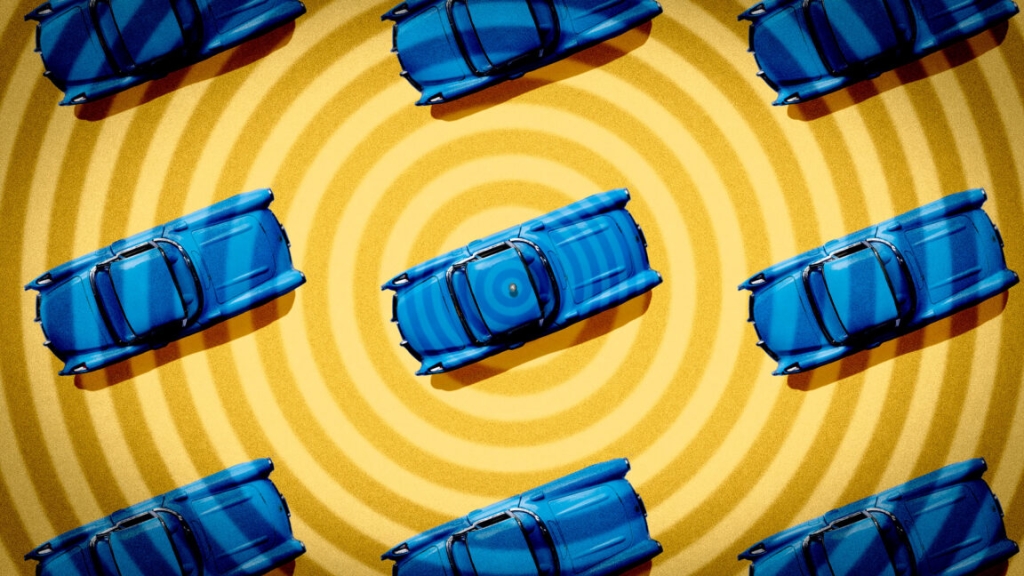
From Highway Wires to Self-Driving Sedans: The Long, Winding Road of Autonomous Vehicles
The dream of cars that drive themselves isn’t some Silicon Valley fever dream cooked up in the last decade—it’s a vision that stretches back more than half a century, rooted in the optimistic futurism of the mid-20th century. Long before Tesla’s Autopilot or Waymo’s robotaxis, engineers and futurists were already sketching out highways that could think, cars that could steer themselves, and commutes where drivers could sit back, relax, and—yes—sip orange juice while the road did the work.
The earliest seeds of this idea can be traced to the 1950s, when General Motors unveiled the Firebird II concept car. It wasn’t just a sleek, jet-age design meant to dazzle crowds at auto shows—it was a rolling manifesto for the future of transportation. Beneath certain stretches of highway, GM proposed laying an electronic strip. When the car traveled over it, sensors would lock onto the signal, guiding the vehicle automatically along its lane. The driver would simply lean back, hands free from the wheel, and watch the miles roll by. Onboard amenities inexplicably included an orange juice dispenser—because in the world of 1950s futurism, even automated driving deserved a refreshing beverage.
By 1958, the idea moved from concept to concrete—literally. On a plain stretch of highway outside Lincoln, Nebraska, it was put to the test. The state’s Department of Roads embedded a 400-foot (121 m) length of the roadway with electric circuits, while engineers from RCA and General Motors brought specially fitted Chevrolets to test it. Observers watched as the driverless cars steered themselves, responding to the buried signal beneath the pavement. It was a moment of quiet astonishment: machines navigating the open road without human hands on the controls.
Across the Atlantic, the United Kingdom’s Transport and Road Research Laboratory undertook its own experiments. Using a Citroën DS, they laid magnetic cables beneath a test track and sent the car down it at speeds of up to 80 mph (129 km/h). Wind and weather made no difference; the DS held its line faithfully, proving that the concept wasn’t just a one-off gimmick—it was a viable path forward.
But as the decades rolled on, the focus shifted. The dream of smart highways gave way to the dream of smart cars. In 1986, German scientist Ernst Dickmanns, as part of his position with the German armed forces, began testing an autonomously driving Mercedes-Benz using computers, cameras, and sensors, not unlike modern-day cars. Within a year, it was traveling down the Autobahn at nearly 55 mph (89 km/h). That was enough to capture the attention of Daimler-Benz, which helped fund further research.
Several years later, in October 1994, Dickmanns gathered his research team at Charles de Gaulle Airport outside Paris, where they met a delegation of high-ranking officials. Parked at the curb were two sedans. They appeared ordinary but were fitted with cameras, sensors, and onboard computers. The guests climbed in, and the cars made their way toward the nearby thoroughfare. Then, with the traffic flowing steadily around them, the engineers switched the vehicles into self-driving mode and took their hands off the wheel. The cars held their lanes, adjusted their speed, and followed the road’s gentle curves without driver intervention. It was a watershed moment—proof that autonomous driving wasn’t just a laboratory curiosity, but a technology ready for the real world.
From orange juice dispensers to Parisian boulevards, the journey of self-driving cars has been long, strange, and full of surprises. What began as a vision of highways that could think has evolved into a race to build cars that can see, learn, and navigate on their own. And while the technology has changed—from buried wires to neural networks—the dream remains the same: a future where the road drives itself, and we’re free to enjoy the ride.
Tags: autonomous vehicles, self-driving cars, automotive history, GM Firebird II, Ernst Dickmanns, driverless technology, smart highways, automotive innovation, vintage concept cars, future of transportation
Viral Sentences:
- “The future of driving was once a highway that could think.”
- “Before Tesla, there was a car with an orange juice dispenser.”
- “In 1994, cars drove themselves through Paris—no human hands on the wheel.”
- “The dream of self-driving cars is older than you think.”
- “From buried wires to neural networks: the evolution of autonomy.”
- “The road to self-driving cars was paved with orange juice and optimism.”
- “In the 1950s, the future of driving came with a built-in beverage dispenser.”
- “The first self-driving cars didn’t need GPS—they followed the road’s heartbeat.”
- “Autonomous vehicles: a century-old dream finally coming true.”
- “The future of transportation was once a 400-foot stretch of Nebraska highway.”
,


Leave a Reply
Want to join the discussion?Feel free to contribute!