
The Future Of Computer Chips Is Doing More Than Replacing Electricity
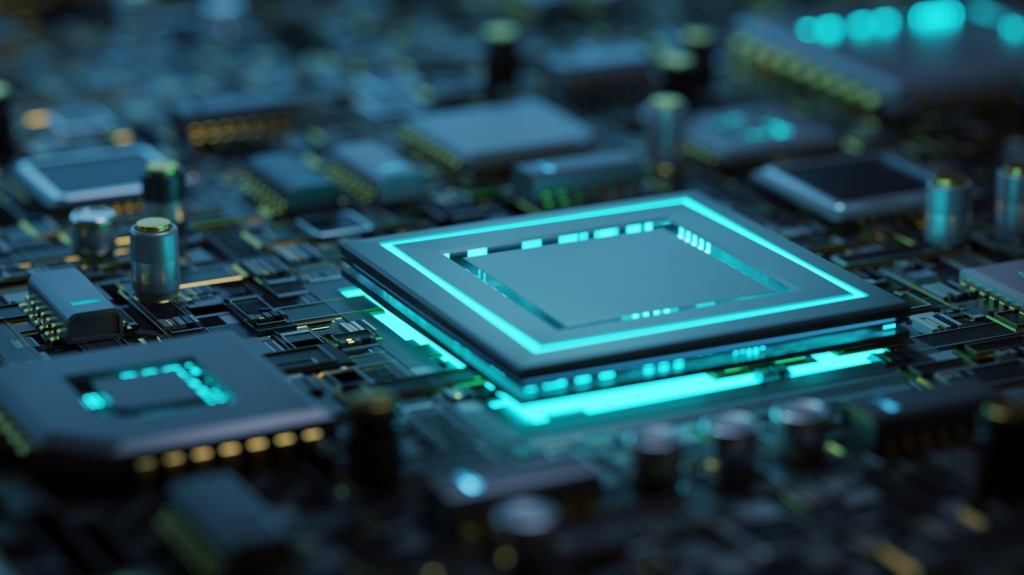
The Dawn of Light: How Photonic Chips Are Reshaping the Future of Computing
In an era where artificial intelligence has become as ubiquitous as the air we breathe, a quiet revolution is taking place in the heart of our devices. The future of computing isn’t just about making things faster or smaller—it’s about fundamentally changing how we process information. Enter photonic chips, the groundbreaking technology that’s poised to transform everything we know about computing, and perhaps save our planet in the process.
The AI Boom: A Double-Edged Sword
Artificial intelligence has infiltrated every corner of our digital lives, from the smartphones in our pockets to the recommendation algorithms that seem to read our minds. But this technological marvel comes at a steep price. The AI revolution has triggered a global chip shortage that continues to drive up the cost of everything from gaming consoles to electric vehicles. More alarmingly, it’s creating an environmental crisis of unprecedented proportions.
Data centers—the massive facilities that power our AI-driven world—are guzzling electricity and water at an alarming rate. These facilities require enormous amounts of energy to process the complex calculations that AI demands, and even more water to cool the systems that prevent them from melting down. In a particularly ironic twist, OpenAI CEO Sam Altman revealed that simply being polite to ChatGPT—adding “please” and “thank you” to prompts—costs the company tens of millions of dollars in additional processing power.
Enter the Photon: Computing with Light
But what if we could break free from this energy-intensive paradigm? What if, instead of pushing electrons through circuits, we could harness the power of light itself? This isn’t science fiction—it’s the promise of photonic chips.
Unlike traditional silicon chips that rely on electrical currents, photonic chips use photons—particles of light—to perform calculations. Think of it as replacing a congested highway of electrons with a superhighway of light. This fundamental shift in how we process information could be the key to unlocking a more sustainable and powerful computing future.
How Photonic Chips Work: A Deep Dive
To understand why photonic chips are such a game-changer, we need to look at how traditional chips operate. Inside every microchip are billions of tiny transistors that act as microscopic switches, turning electrical currents on and off to perform calculations. This process generates friction, which in turn creates heat. That’s why your laptop gets warm during intensive tasks and why data centers need massive cooling systems that consume enormous amounts of water.
Photonic chips take a radically different approach. Instead of transistors, they use what scientists call “photonic neurons” to guide light through the chip. While they still operate within electronic devices and require some electricity to function, the key difference is in how they process information. They convert electrical signals into light, perform the necessary calculations using that light, and then convert the results back into electrical signals for the computer to use.
The magic happens because light behaves fundamentally differently from electricity. A single path of light can carry multiple channels of information simultaneously—something electrical currents simply cannot do. This means photonic chips can process multiple values at once, dramatically reducing the energy needed for complex calculations. Plus, light doesn’t face the same resistance issues that electricity does, so these chips can perform the same tasks without generating the massive amounts of heat that traditional chips produce.
The Environmental Impact: More Than Just Efficiency
The environmental benefits of photonic chips extend far beyond simple energy savings. By dramatically reducing the heat generated during processing, these chips could significantly decrease the water consumption of data centers. Current cooling systems often require millions of gallons of water per day to keep servers from overheating. Photonic chips could slash that number dramatically, helping to address one of the most pressing environmental concerns in the tech industry.
But the benefits don’t stop there. The reduced energy consumption means less strain on power grids and fewer carbon emissions from electricity generation. In a world where tech companies are under increasing pressure to reduce their environmental footprint, photonic chips could be the breakthrough that allows AI to continue advancing without devastating our planet.
Speed and Intelligence: The Performance Revolution
If the environmental benefits weren’t enough, photonic chips also deliver unprecedented performance improvements. Scientists working on LightGen, a pioneering photonic chip project, reported in the journal Science that their prototype achieved “more than two orders of magnitude greater” computing speed and energy efficiency compared to state-of-the-art electronic chips.
German company Q.ANT claims their NPU Gen 2 photonic chip is up to 30 times more energy efficient and 50 times faster than current data center technology. These aren’t incremental improvements—they’re revolutionary leaps that could redefine what’s possible in computing.
The University of Sydney has developed a photonic chip prototype that correctly identifies images 90-99% of the time, demonstrating that this technology isn’t just faster and more efficient—it’s also incredibly accurate. This combination of speed, efficiency, and precision could accelerate AI development while simultaneously reducing its environmental impact.
The Road Ahead: Challenges and Opportunities
Despite their promise, photonic chips face significant hurdles before they can replace traditional silicon chips entirely. Manufacturing these chips requires specialized facilities and processes that are still being developed. Integrating them with existing electronic systems presents engineering challenges. And perhaps most importantly, the tech industry will need to invest billions in retooling their infrastructure to accommodate this new technology.
However, the momentum is building. Major tech companies, research institutions, and governments around the world are pouring resources into photonic chip development. The potential rewards—both environmental and economic—are simply too great to ignore.
The Bottom Line: A Brighter Future
Love it or hate it, artificial intelligence is here to stay. The question isn’t whether we’ll continue to develop and deploy AI systems, but how we’ll do so responsibly. Photonic chips represent a crucial step toward making AI more sustainable and powerful simultaneously.
As we stand on the brink of this technological revolution, one thing is clear: the future of computing isn’t just about doing things faster or cheaper. It’s about reimagining the fundamental physics of how we process information. By harnessing the power of light, we’re not just improving technology—we’re potentially saving our planet while doing it.
The age of photonic computing is dawning, and it promises to be brighter than anything we’ve seen before.
Tags: photonic chips, AI revolution, sustainable technology, light computing, data center efficiency, environmental technology, future of AI, chip shortage solution, energy-efficient computing, quantum leap in processing, light-powered chips, silicon chip alternative, green technology breakthrough, computing paradigm shift, photonic neurons, sustainable AI development, revolutionary chip technology, light-based computing, next-generation processors, environmental impact reduction
Viral Phrases: “The future is light,” “Computing with photons,” “AI that doesn’t cost the Earth,” “The chip shortage solution,” “Light-speed processing,” “Green computing revolution,” “Photons over electrons,” “The sustainable AI breakthrough,” “Computing’s quantum leap,” “Light-powered intelligence,” “The end of chip overheating,” “AI’s environmental savior,” “The photon revolution,” “Light computing for a brighter future,” “The chip that could save the planet”
,


Leave a Reply
Want to join the discussion?Feel free to contribute!