
The gig workers who are training humanoid robots at home
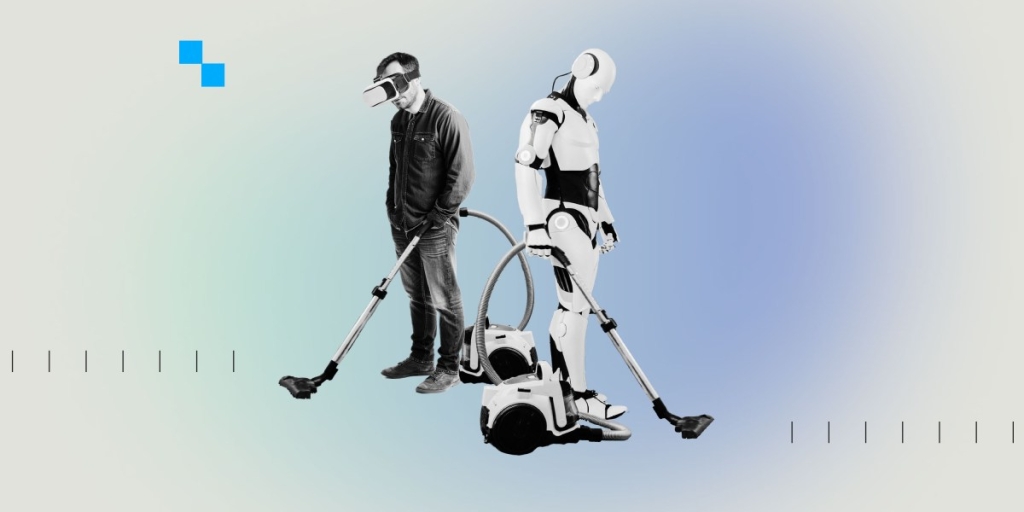
Billions Pour Into Humanoid Robot Training as Gig Workers Become Data Factories
The race to build humanoid robots capable of navigating the messy, unpredictable real world is fueling an unprecedented gold rush in artificial intelligence training data. In 2025 alone, investors have already committed over $6 billion to humanoid robotics startups, with companies like Apptronik, Figure, and Tesla competing to create machines that can fold laundry, load dishwashers, and perform the countless other tasks humans take for granted.
But these robots aren’t learning from textbooks or simulations alone. They’re learning from you—or at least, from people who look a lot like you, doing everyday chores in their living rooms and kitchens. Welcome to the booming gig economy of robot training data, where workers around the globe are becoming human motion capture studios, filming themselves cooking, cleaning, and organizing for as little as $15 per hour.
The data gold rush spans continents and industries. Scale AI and Encord have built armies of crowdsourced data labelers, while DoorDash recently began paying delivery drivers to film themselves performing household tasks. In China, state-owned enterprises have established dozens of robot training centers where workers don virtual reality headsets and exoskeletons, teaching humanoid robots to open microwaves and wipe down tables through physically guided demonstrations.
“There is a lot of demand, and it’s increasing really fast,” says Ali Ansari, CEO of Micro1, a company that connects robotics firms with data providers. He estimates the robotics industry is now spending more than $100 million annually to purchase real-world training data from his company and competitors.
A Day in the Life of a Robot Trainer
The process begins with an AI interview. Micro1 uses an artificial intelligence agent named Zara to screen potential workers, conducting initial interviews and reviewing sample chore videos before anyone gets hired. Once approved, workers receive weekly assignments: film yourself doing household tasks while following specific guidelines about hand visibility, natural movement speed, and task variety.
Every week, these gig workers become both performers and data subjects, submitting videos of themselves cooking, cleaning, and organizing their homes. The footage undergoes a rigorous review process involving both AI systems and human evaluators who either accept or reject the submissions based on quality standards. Accepted videos then enter a second phase of processing where AI algorithms and teams of human annotators meticulously label each action frame by frame.
The approach represents a fundamental shift in how robots learn. Rather than programming specific instructions, companies are feeding their AI systems vast libraries of human demonstrations, hoping the robots will extract generalizable patterns about how to interact with the physical world.
“You need to give lots and lots of variations for the robot to generalize well for basic navigation and manipulation of the world,” explains Ansari. The theory is that exposure to diverse human movements, different home layouts, and various approaches to the same task will help robots adapt to the chaos of real environments rather than just following rigid scripts.
The Content Creation Challenge
But there’s a fundamental problem with the “record your life” approach to robot training: most people’s lives aren’t that interesting, at least from a robotics perspective. Workers report struggling to generate fresh, varied content within the confined spaces of their homes.
Zeus, a student living in a cramped studio apartment, says he’s limited to recording himself ironing clothes day after day. “It’s the same thing over and over,” he admits. “How many ways can you iron a shirt?”
Arjun, a tutor based in Delhi, India, says he spends nearly an hour preparing for every 15-minute video recording. “I have to think really hard about what new chore I can show,” he explains. “How much content can be made in the home? How much content?”
The challenge highlights a critical tension in the robot training industry. Companies need vast amounts of diverse data to create adaptable AI systems, but workers are constrained by their physical environments, daily routines, and the practical limitations of filming themselves doing household tasks.
Some workers have gotten creative, staging elaborate scenarios or combining multiple tasks into single recordings. Others simply repeat the same few activities, hoping the AI systems can extract useful patterns from limited variation. The result is a data ecosystem where quality and quantity often exist in tension.
Privacy in the Age of Chore Surveillance
The intimate nature of this work raises significant privacy concerns. Micro1 instructs workers to avoid showing their faces and to redact personal information like names, phone numbers, and birth dates. The company employs both AI screening and human reviewers to catch anything that slips through these filters.
But even without facial recognition, these videos capture deeply personal information. The interiors of people’s homes reveal socioeconomic status, cultural background, and personal tastes. The objects people own and how they arrange their spaces tell stories about their lives. The routines they film—when they cook, how they clean, what they prioritize—create detailed behavioral profiles.
Understanding what constitutes sensitive information in this context proves surprisingly complex. While obvious identifiers like driver’s licenses or prescription bottles can be filtered out, the cumulative effect of dozens of videos creates a comprehensive picture of someone’s life that goes far beyond what traditional privacy protections contemplate.
Workers in different countries face different privacy landscapes. In the United States, data collection operates under relatively permissive regulations, while European workers benefit from stricter GDPR protections. Chinese workers, meanwhile, operate within a system where state-owned enterprises control much of the robot training infrastructure, raising questions about data sovereignty and government access.
The privacy paradox is particularly acute because workers are often unaware of how their data might be used beyond the immediate training purposes. Could these recordings be repurposed for surveillance systems? Could the behavioral patterns extracted from chore videos inform targeted advertising or insurance pricing? The long-term implications of this massive data collection effort remain unclear.
The Economic Reality
For many workers, the appeal is straightforward: flexible hours and relatively easy work. Unlike traditional gig economy jobs that require specific skills or physical exertion, recording yourself doing chores can be done at your own pace, in your own space.
But the economics are challenging. At $15 per hour, robot training work pays less than many other gig economy options, and the inconsistent nature of the work—submitting videos weekly rather than earning steady hourly wages—makes financial planning difficult. Workers must invest in better cameras, lighting, and sometimes even home organization to meet quality standards, eating into their already modest earnings.
The global nature of the work creates a race to the bottom, with workers in lower-cost countries competing against those in wealthier nations. A worker in India might accept $8 per hour while someone in California expects $25, creating pressure that depresses wages across the board.
Yet for some, the work represents a gateway into the tech industry. “I’m learning about AI and robotics just by doing this,” says one worker who hopes the experience will lead to better opportunities. Others appreciate the intellectual stimulation of figuring out new ways to demonstrate household tasks, even if the pay is modest.
The Future of Robot Learning
As the industry matures, questions are emerging about the sustainability and ethics of the current approach. Some researchers argue that the focus on real-world data collection is creating a two-tier system where wealthy tech companies extract value from workers’ daily lives while offering minimal compensation in return.
Alternative approaches are being explored. Some companies are investing in more sophisticated simulations that could reduce reliance on human demonstrators. Others are experimenting with collaborative learning, where robots learn from each other’s experiences rather than requiring constant human input.
The most ambitious vision involves creating “foundation models” for robotics—AI systems trained on such vast and diverse datasets that they can adapt to new tasks with minimal additional training, much like large language models can generate novel text. But achieving this vision requires solving the data diversity problem that currently plagues the industry.
Meanwhile, the workers who form the backbone of the current system continue filming their lives, one chore at a time. They’re not just earning money; they’re helping to build the future of automation, teaching machines to navigate the physical world through the intimate details of their daily routines.
As humanoid robots edge closer to commercial deployment, the question remains: who benefits from this massive data collection effort, and at what cost to the humans providing the training material? The answer may determine whether the robot revolution empowers workers or simply creates new forms of digital exploitation.
tags
HumanoidRobots #RobotTraining #AIethics #GigEconomy #DataPrivacy #RoboticsRevolution #FutureOfWork #TechInvestment #ArtificialIntelligence #MachineLearning #DataCollection #Automation #TechTrends #RoboticsIndustry #AIWorkforce
viral_sentences
Billions poured into humanoid robots as workers worldwide film their chores for AI training
Robot companies spending $100M+ annually on real-world data from gig workers
DoorDash now pays drivers to film themselves doing household tasks
Chinese state-owned centers use VR headsets and exoskeletons to train robots
Workers struggle to create diverse “chore content” in tiny apartments
Privacy concerns as intimate home videos become robot training data
$15/hour gig work teaching machines to fold laundry and load dishwashers
AI agent named Zara interviews and screens robot training data providers
The booming economy of humans teaching robots to open microwaves
Robotics companies need endless variations of everyday tasks
Workers spend hours brainstorming new chores to record
Virtual reality and exoskeletons in China’s robot training centers
Scale AI and Encord building armies of data labelers
The ethical dilemma of extracting value from workers’ daily lives
Foundation models for robotics could reduce human data dependency
Global race to the bottom in robot training wages
Workers learning about AI while teaching machines basic tasks
The future of automation built on intimate recordings of human routines
Who benefits from the massive data collection powering robot learning?
The sustainability question in the current robot training approach
,


Leave a Reply
Want to join the discussion?Feel free to contribute!