
The lithium boom: could a disused quarry bring riches to Cornwall? | Mining
Cornwall’s Lithium Rush: The White Gold That Could Revive a Mining Legacy
Nestled in the heart of Cornwall’s scarred landscape lies a geological treasure that could reshape Britain’s energy future. The vast chasm of Trelavour, a former china clay pit near St Austell, represents more than just a hole in the ground—it’s the potential birthplace of a lithium revolution that could transform this economically depressed region into the UK’s answer to the global battery materials race.
The story begins millions of years ago, when tectonic forces collided to create Cornwall’s unique granite formations. Professor Frances Wall from the University of Exeter explains that during a continental collision approximately 275-280 million years ago, the Earth’s crust melted and formed granite rich in minerals. Within these ancient rocks, specific mica minerals contain lithium—the critical element now dubbed “white gold” for its role in powering the electric vehicle revolution.
Cornwall’s lithium story isn’t new. Victorian miners documented finding lithium in groundwater, but the metal had little commercial value in the 19th century. Today, that narrative has dramatically shifted. Lithium’s high electrochemical potential makes it ideal for rechargeable batteries, powering everything from smartphones to electric vehicles and large-scale energy storage systems. As the world races toward net-zero emissions, demand for lithium has skyrocketed, creating what some call a modern gold rush.
The UK currently imports nearly all its lithium, leaving it vulnerable to global supply chain disruptions and Chinese market dominance. Cornwall’s deposits represent a potential game-changer. According to experts, the region contains “probably the largest lithium deposit in Europe,” though it pales in comparison to Australia’s massive reserves or South America’s lithium triangle.
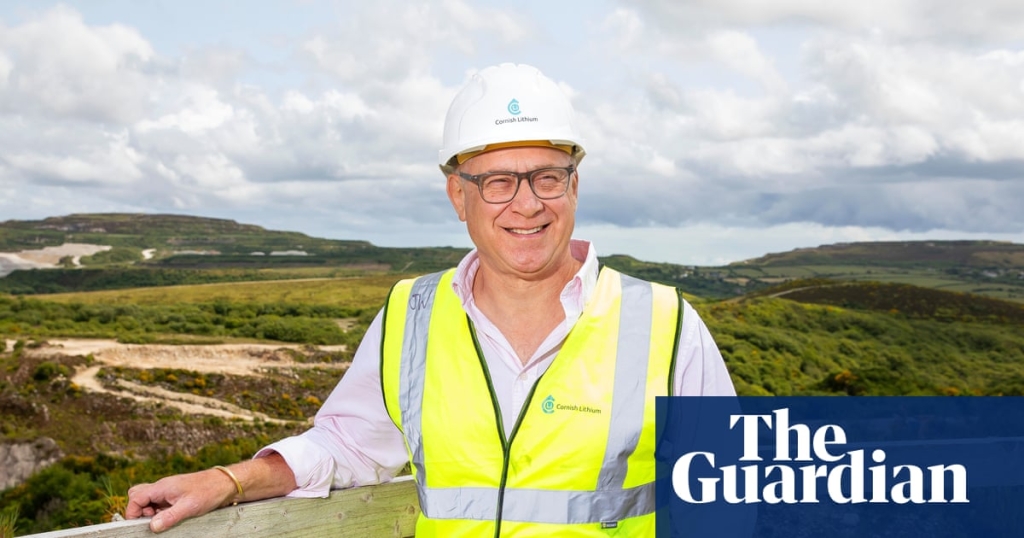
Enter Jeremy Wrathall, founder of Cornish Lithium. After graduating from the Camborne School of Mines in 1988, Wrathall witnessed Cornwall’s mining industry collapse from over 300 active mines in the 1860s to just four by the late 20th century. He pursued opportunities abroad, working in South African gold mines and later as a mining analyst in London. However, Cornwall remained in his heart.
When electric vehicles began gaining traction, Wrathall remembered Cornwall’s lithium potential. “I put lithium plus Cornwall into Google and up came four historical records of lithium being found in water,” he recalls. “I thought: that one is an awful long way away from that one, they must be geologically connected. And then I thought: maybe I’m on to something.”
Founded in 2016, Cornish Lithium has secured mineral rights and acquired 19th-century mining plans that reveal geological features and lithium-rich granite formations. The company estimates Cornwall can extract 50,000 tonnes of lithium annually for over 20 years—approximately 50% of the UK’s projected 2030 needs.
Cornish Lithium employs two extraction methods. The Trelavour site represents “hard rock extraction,” where lithium-bearing granite is blasted, crushed, and processed. Wrathall demonstrates by picking up a rock sample: “You can see the sparkly bits, that’s the mica—all of this rock, everything you can see, has lithium.”
Environmental concerns loom large in lithium mining discussions. Projects in Portugal, Serbia, and Argentina have faced fierce opposition due to water depletion, ecosystem destruction, and Indigenous rights violations. However, Cornwall’s situation differs significantly. The Trelavour quarry already exists, meaning the environmental damage is done. “You can see the damage is done,” Wrathall explains. “In Portugal, it is a pristine area, olive groves, it would be digging up people’s farms. This is not a farm.”
The extraction process at Trelavour involves traditional quarrying techniques—drilling, blasting, and transporting materials via electric crushers and potentially electric trucks. The company aims for zero-carbon operations and plans to rehabilitate the site post-extraction. Additionally, byproducts like silica for cement, sulphate of potash for fertilizer, and gypsum for plasterboard could create additional revenue streams.
Local support appears strong. The Cornwall Climate Action Network’s Charmian Larke notes that the area’s existing industrial damage makes new mining projects more acceptable. “Because the area is so destroyed anyway, the surrounding villages tend to be very poor, with poor health and educational outcomes.”
Peter Morse, general manager of the hard-rock project, embodies Cornwall’s mining heritage. His family has worked in the china clay industry for generations, and he represents the “Cousin Jacks”—Cornish miners who historically traveled worldwide for mining work. Morse returned from 30 years in the US mining industry to find Cornwall transformed: “St Dennis, the village nearest to the site, used to have three pubs and a bunch of shops. Now there is just one of each.”
The economic potential extends beyond direct mining jobs. Wrathall estimates every mining position creates at least four additional jobs in supporting industries. The company plans to triple its current 100-person workforce, potentially reversing decades of economic decline in one of Britain’s most deprived regions.
Cornwall’s second extraction method involves geothermal lithium production. At United Downs industrial estate, Cornish Lithium operates boreholes reaching 800 meters deep, with plans for 2-kilometer-deep wells at Cross Lanes farm. This method extracts lithium from hot brine while potentially providing geothermal heating for greenhouses and agricultural applications.
The geothermal approach offers significant sustainability advantages. Water at 80-90°C could heat communities and support local agriculture, creating a circular economy model. “There is an opportunity to build greenhouses there, to grow tomatoes and cucumbers,” Wrathall suggests.
However, challenges remain. Both extraction methods are still in demonstration phases, with commercial production not expected until 2028-2029. Even then, the UK will need to import half its lithium requirements. China’s dominance in processing and battery manufacturing continues to pose strategic vulnerabilities.
Political support for Cornwall’s lithium industry appears bipartisan. Labour MP Noah Law, representing St Austell and Newquay, emphasizes mining’s historical importance: “Mining is part of our heritage, it’s part of what makes Cornwall great. It has made us wealthy in the past and can do the same again.”
The global context adds urgency. Wrathall notes that critical minerals have become geopolitical flashpoints: “We’ve seen critical minerals go from ‘Who cares?’ to ‘Oh my goodness, what are we going to do?'” He references international tensions over mineral resources in Greenland, Ukraine, and Canada, joking, “I’m just hoping he doesn’t find out about Cornwall!”
Cornwall’s lithium potential represents more than just economic opportunity—it’s about energy security, environmental transition, and regional regeneration. The project could restore Cornwall’s status as an industrial powerhouse while supporting the UK’s net-zero ambitions.
As Wrathall surveys the Trelavour site, he sees possibility where others see destruction. “What are you going to do with this? It’s dangerous, fenced-off to stop people getting in. And at the end of it, we will rehabilitate it.” His vision extends beyond extraction to creating a sustainable, prosperous future for Cornwall—one that honors its mining heritage while embracing clean energy technology.
The white gold rush in Cornwall may not match the scale of South American lithium operations, but its significance lies in demonstrating how industrial transition can work at a regional level. By combining traditional mining expertise with modern sustainability practices, Cornwall could become a model for responsible critical mineral extraction in the age of climate change.
The future of Cornwall’s lithium industry remains uncertain, dependent on technological success, environmental approvals, and market conditions. But one thing is clear: after centuries of mining tin and copper, Cornwall may have found its next metal—one that could power not just electric vehicles, but the region’s economic revival.
—
#Cornwall #Lithium #CleanEnergy #MiningRevolution #WhiteGold #ElectricVehicles #UKInnovation #SustainableMining #EnergySecurity #RegionalRevival #CriticalMinerals #NetZero #CornishHeritage #GreenTechnology #EconomicOpportunity
The white gold rush that could power Britain’s EV future
Cornwall’s lithium deposits: Europe’s hidden treasure
From tin to lithium: Cornwall’s mining evolution
How Cornwall could break China’s lithium stranglehold
The Cousin Jacks return: Cornwall’s mining comeback
Geothermal lithium: The sustainable extraction method
Cornwall’s economic revival through critical minerals
Why Cornwall’s lithium matters for UK energy security
The environmental case for Cornwall’s lithium mining
Cornwall’s £1 billion lithium opportunity
How traditional mining skills meet modern technology
Cornwall’s answer to the global battery materials crisis
The geopolitics of Cornwall’s lithium deposits
Cornwall’s lithium: Balancing heritage and innovation
From china clay to lithium: Cornwall’s industrial transformation,


Leave a Reply
Want to join the discussion?Feel free to contribute!