
The Long-Lost Bones of The Fourth Musketeer May Have Been Found : ScienceAlert
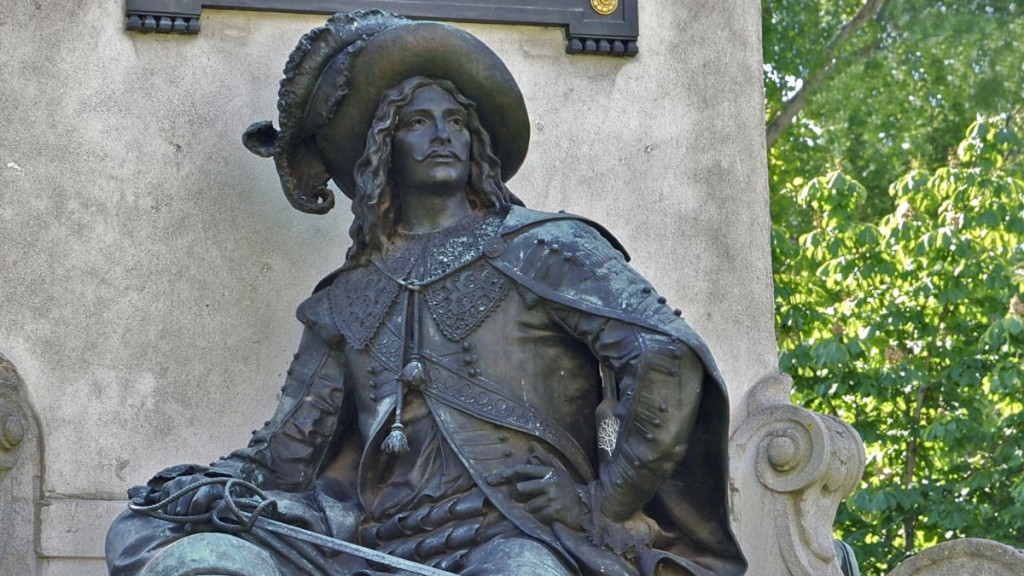
The Legendary D’Artagnan: Could His Remains Have Been Found in a Dutch Church?
For centuries, the swashbuckling adventures of Alexandre Dumas’ The Three Musketeers have captivated readers worldwide. But what if the tales of d’Artagnan, Athos, Porthos, and Aramis weren’t entirely fictional? Recent archaeological discoveries suggest that the real-life inspiration behind literature’s most famous musketeer may have finally been unearthed.
The Mystery of the Missing Musketeer
Charles de Batz de Castelmore d’Artagnan wasn’t just a character in a novel—he was a real 17th-century French nobleman who served as captain of the Musketeers under King Louis XIV. His story took a tragic turn during the Siege of Maastricht in June 1673, when he was reportedly killed by a musket shot to the neck. For over 350 years, his remains have been missing, lost to history and warfare.
The Search That Spanned Decades
Enter Wim Dijkman, an archaeologist whose obsession with finding d’Artagnan’s final resting place has lasted 28 years. His journey began with a simple question: where would a high-ranking French officer killed in battle be buried? The answer led him to St Peter and Paul Church in Wolder, Maastricht—a location that made perfect sense for several compelling reasons.
The Sun King’s Catholic faith meant that transporting d’Artagnan’s body back to France during the heat of summer would have been impractical. Instead, he would have been honorably interred on consecrated ground near where he fell. Historical records, meticulously researched by historian Odile Bordaz, indicated that top-ranking individuals killed in battle were typically buried at the nearest church.
A Discovery Born from Necessity
The breakthrough came not through planned excavation, but through an unexpected opportunity. Ground subsidence had shifted a section of the church floor, cracking some of the tiling. When repair workers began their work, they made a startling discovery—a skeleton buried beneath where an altar once stood.
“It really has become a top-level investigation,” Dijkman told Reuters. “We want to be absolutely certain—or as certain as possible—whether it is the famous musketeer who was killed here near Maastricht.”
The Evidence Mounts
The discovery was immediately intriguing. The skeleton was found buried under the altar in consecrated ground—exactly where one would expect to find a high-ranking military officer. Even more compelling was the discovery of a French coin from 1660 in the tomb, dating to the correct historical period.
The cause of death matched historical accounts perfectly. A bullet was found at chest level—consistent with the musket shot to the neck that reportedly killed d’Artagnan. The positioning and condition of the remains suggested careful, respectful burial, indicating the individual’s high status.
“We are dealing with someone who was buried under the altar in consecrated ground,” said Jos Valke, the church deacon who contacted Dijkman upon the discovery. “There was a French coin in the tomb from that time. And the bullet that killed him was at the level of his chest. Exactly as described in the history books.”
The Scientific Challenge
However, archaeologists remain cautious. The presence of a bullet and a coin, while compelling, isn’t definitive proof. After all, Maastricht was a war zone, and many soldiers could have met similar fates.
The key to unlocking this mystery lies in DNA analysis. Scientists have extracted genetic material from the skeleton’s jawbone and are comparing it with DNA from descendants of d’Artagnan’s father. This painstaking process requires both time and precision.
“We are anxiously waiting for official confirmation,” Dijkman told L1 Nieuws. “That should come within now and a few weeks. At the moment, all kinds of analyses and studies are underway at home and abroad. It really has become a top study.”
The Historical Significance
If confirmed, this discovery would be monumental—not just for archaeology, but for our understanding of how history and literature intertwine. The real d’Artagnan was already a fascinating figure: a Gascon nobleman who rose through the ranks to become one of King Louis XIV’s most trusted military advisors.
His life bridged the gap between the historical Musketeers of the Guard, established in 1622, and the romanticized version that would later appear in Dumas’ novels. The connection between fact and fiction has always been blurred, but finding his physical remains would provide a tangible link to this legendary figure.
The Cultural Impact
The potential discovery has already captured global attention. Dutch news organizations are calling it potentially “world news,” and the archaeological community is watching closely. The church where the remains were found has become a focal point for historians, literature enthusiasts, and curious travelers alike.
What makes this story particularly compelling is how it combines multiple elements that capture public imagination: the romance of Dumas’ novels, the drama of 17th-century warfare, the meticulous work of modern archaeology, and the tantalizing possibility of solving a 350-year-old mystery.
The Waiting Game
As scientists continue their analysis, the world waits with bated breath. The damaged skull presents additional challenges for facial reconstruction, but modern forensic techniques offer hope for creating a likeness of the real d’Artagnan.
The church itself has become a temporary archaeological site, with researchers working carefully to preserve both the remains and the historical building. Every bone, every artifact, every piece of evidence is being documented with the utmost care.
Whether or not the remains prove to be those of the legendary musketeer, this discovery has already achieved something remarkable: it has brought the real d’Artagnan back into the spotlight, reminding us that behind every great literary character lies a complex, often fascinating historical truth.
As we await the DNA results, one thing is certain—the story of d’Artagnan, whether fictional or historical, continues to capture our imagination, proving that some legends never truly die.
Tags: d’Artagnan, Three Musketeers, archaeology, Netherlands, Maastricht, Louis XIV, 17th century, historical discovery, DNA analysis, St Peter and Paul Church, Wim Dijkman, Charles de Batz de Castelmore, Siege of Maastricht, musketeer remains, historical mystery solved
Viral Phrases:
- “The real d’Artagnan may have been found”
- “350-year-old mystery solved”
- “Legend comes to life”
- “From fiction to fact”
- “The musketeer’s final secret”
- “History meets archaeology”
- “DNA confirms the legend”
- “The hunt for the real musketeer”
- “Church floor reveals historical treasure”
- “The Three Musketeers: fact vs fiction”
- “King Louis XIV’s lost captain”
- “Archaeological detective story”
- “The bullet that killed a legend”
- “French coin unlocks 17th-century mystery”
- “Concreted ground holds secrets”
- “The Sun King’s most trusted lieutenant”
- “Gascon nobleman’s final journey”
- “Musketeer remains identified”
- “Historical discovery goes viral”
- “The real story behind the legend”
,

Leave a Reply
Want to join the discussion?Feel free to contribute!