
The Moon Is Still Shrinking and Scientists Just Found New Moonquake Zones
The Moon Is Still Shrinking — And Scientists Just Uncovered New Moonquake Zones
In a discovery that has sent ripples through the scientific community, researchers have revealed that Earth’s closest celestial companion is not the static, unchanging world we once imagined — it’s still shrinking. A new global map of the Moon’s surface has exposed thousands of previously undetected tectonic features, suggesting that our satellite remains geologically active in ways we’re only beginning to understand.
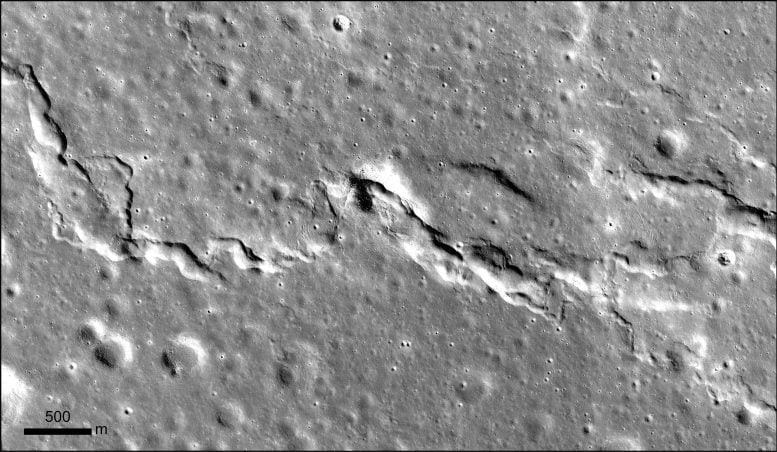
The study, published in The Planetary Science Journal, represents the most comprehensive survey to date of small mare ridges (SMRs) — long, low-relief ridges found primarily in the Moon’s ancient volcanic plains, known as maria. These subtle landforms, often no taller than a few meters, had been largely overlooked in past lunar mapping efforts due to their modest size and the limitations of older imaging technology. But armed with high-resolution data from NASA’s Lunar Reconnaissance Orbiter (LRO), scientists have now mapped over 14,000 of these features across the entire lunar surface.
The implications are profound. These ridges are more than just wrinkles in the Moon’s skin — they are surface expressions of ongoing contraction. As the Moon’s interior continues to cool over billions of years, its crust is slowly buckling and fracturing, causing the satellite to lose radius at a rate of roughly 3 to 4 meters per billion years. While that might sound negligible, on a planetary scale it’s a dynamic process with potentially significant consequences.
Even more intriguing is the link between these ridges and moonquakes. Seismometers left on the Moon by Apollo astronauts in the 1970s recorded hundreds of shallow moonquakes, some strong enough to be felt by future lunar explorers. Until now, the sources of these quakes remained a mystery. The new mapping effort strongly suggests that many of these seismic events originate from the very ridges the team has identified — essentially, the Moon is still “creaking” as it slowly shrivels.
This discovery also challenges long-standing assumptions about lunar geology. For decades, the Moon was considered tectonically dead — a fossil world frozen in time since its formation over 4.5 billion years ago. But these findings paint a different picture: one of a world that, while no longer volcanically active, is still undergoing slow but steady transformation. It’s a reminder that even seemingly inert celestial bodies can harbor surprises.
The research team, led by Dr. Nathan Williams of the Planetary Science Institute, used advanced image processing and topographic analysis to tease out the subtle signatures of these ridges from LRO data. By correlating ridge locations with known moonquake epicenters, they were able to identify several new candidate zones where future seismic activity is likely. This has immediate practical implications for NASA’s Artemis program and other planned lunar missions, as understanding where and how the Moon shakes is critical for designing safe habitats and infrastructure.
But the story doesn’t end there. The presence of so many young, active ridges also raises questions about the Moon’s thermal evolution and internal structure. If the Moon is still contracting, what does that tell us about its core? How much heat remains trapped inside? And could similar processes be at work on other rocky bodies in the solar system, like Mercury or Mars?
As scientists continue to pore over the data, one thing is clear: the Moon is far from the silent, dormant world we once thought. It’s a living, shifting landscape — one that still has plenty to teach us about the forces that shape worlds, both near and far.
Tags: Moon shrinking, lunar tectonics, moonquakes, small mare ridges, NASA LRO, Apollo seismometers, lunar geology, Artemis program, Nathan Williams, Planetary Science Institute, thermal contraction, celestial activity, space exploration, planetary science, lunar surface mapping, moon seismic activity, shrinking moon, active moon, moon research, space news, lunar contraction, moon ridge mapping, moon interior, space science, lunar evolution
,


Leave a Reply
Want to join the discussion?Feel free to contribute!