
The mystery of nuclear ‘magic numbers’ has finally been resolved
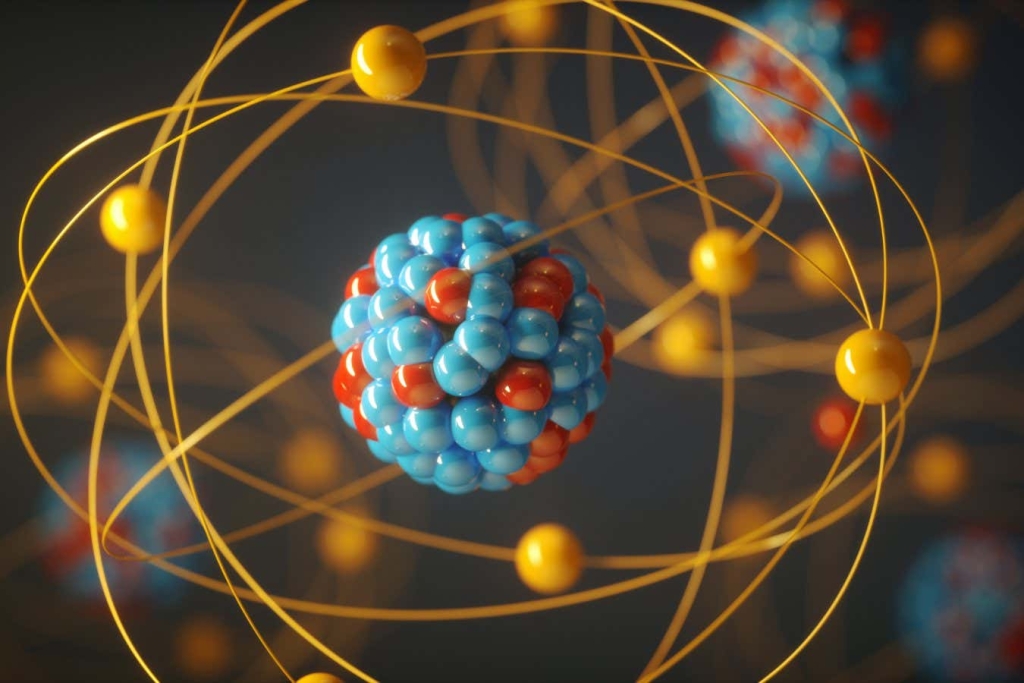
Nuclear physicists have cracked one of the field’s most enduring mysteries: the origin of “magic numbers” that make certain atomic nuclei extraordinarily stable. These special configurations—featuring 2, 8, 20, 28, 50, 82, or 126 protons or neutrons—have guided research for nearly 80 years, yet their quantum underpinnings remained elusive.
The story begins with Maria Goeppert Mayer, who in the 1940s noticed that nuclei with these specific nucleon counts were unusually abundant and stable. She proposed the nuclear shell model, likening protons and neutrons to electrons in atomic orbitals, each occupying discrete energy levels. This elegant framework explained the magic numbers beautifully—but it treated nucleons as largely independent particles, glossing over the strong, complex interactions that quantum theory says must exist.
Now, Jiangming Yao at Sun Yat-sen University and his team have reconciled this tension. Instead of starting from the shell model’s simplified assumptions, they began with a “first-principles” quantum description of how nucleons interact—how they bind, repel, and exchange energy. In essence, they built a mathematical bridge from the ultra-high-resolution reality of particle interactions down to the blurrier, experimentally friendly shell model.
“Imagine zooming out from a microscope image,” Yao explains. “As you lower the resolution, the detailed quantum states gradually morph, and the symmetries of their arrangement shift. At certain ‘zoom levels,’ the particles naturally organize into the magic-number configurations we see in nature.”
This isn’t just theoretical elegance—it mirrors how experiments actually probe nuclei. Jean-Paul Ebran of the French Alternative Energies and Atomic Energy Commission likens the approach to using a tunable microscope: “Nature looks different depending on the resolution at which you observe. This work maps directly onto what we do in the lab.”
The team’s calculations also reveal a surprising link to Einstein’s special relativity. The symmetry changes they identified are tied to relativistic effects, weaving together nuclear structure, quantum mechanics, and relativity into a single coherent picture.
So far, Yao’s group has validated their model on doubly magic tin-132 (50 protons, 82 neutrons) and several other nuclei. Looking ahead, they plan to extend their analysis to superheavy elements—normally fleeting and unstable—and to probe how such nuclei form in the extreme environments of supernovae and neutron star mergers.
This breakthrough doesn’t just solve a decades-old puzzle; it opens a new window into the quantum choreography that shapes the very matter of the universe. From the stability of the elements we’re made of to the violent births of the heaviest atoms, the magic numbers are no longer a mystery—they’re a manifestation of nature’s deep, interacting symmetries.
#NuclearPhysics #MagicNumbers #QuantumMechanics #Relativity #AtomicNuclei #FirstPrinciples #SuperheavyElements #NeutronStars #Supernovae #ScienceBreakthrough
“Unlocking the quantum code of atomic stability.” “From magic numbers to the fabric of the universe.” “Relativity meets the nucleus in a stunning discovery.” “The secret symmetry behind nature’s most stable atoms.” “How exploding stars forge the elements we’re made of.”,


Leave a Reply
Want to join the discussion?Feel free to contribute!