
The Oldest Minerals on Earth Are Rewriting the Planet’s Origin Story
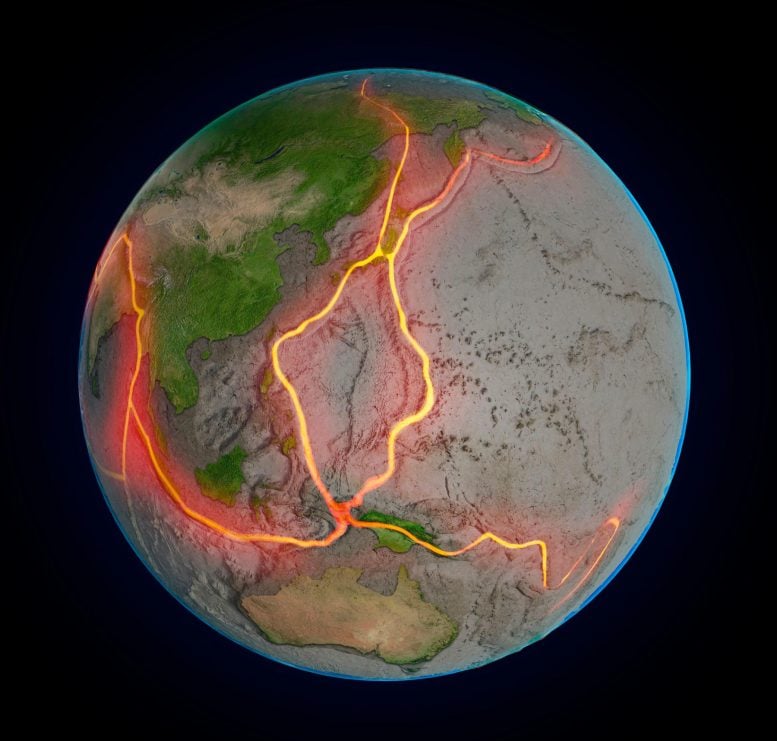
Ancient Zircon Crystals Reveal Earth’s Tectonic Secrets—Rewriting the Planet’s Origin Story
In a groundbreaking discovery that is reshaping our understanding of Earth’s formative years, scientists have uncovered evidence suggesting that the planet’s crust may have been far more dynamic and complex than previously believed. Tiny zircon crystals—some of the oldest minerals on Earth—are providing a window into a time when our planet was still in its infancy, revealing that tectonic activity, akin to what we see today, may have been underway much earlier than thought.
Zircon, a durable mineral known for its ability to withstand extreme conditions, has long been a favorite among geologists for studying Earth’s ancient history. These microscopic crystals, often no larger than a grain of sand, are like time capsules, preserving chemical signatures that can be analyzed to reconstruct the conditions of the environments in which they formed.
In a recent study, researchers examined zircons dating back over 4 billion years, to the Hadean eon—a period often referred to as Earth’s “dark ages.” This era, which began with the planet’s formation around 4.6 billion years ago, was previously thought to be characterized by a molten, chaotic surface with little to no crustal stability. However, the new findings challenge this notion, suggesting that some regions of Earth’s early crust were already undergoing processes similar to modern plate tectonics.
The key to this revelation lies in the isotopic composition of the zircons. By analyzing the ratios of oxygen and hafnium isotopes within these crystals, scientists were able to infer the presence of water and the recycling of crustal material. These findings point to a scenario where Earth’s crust was not just a static, molten shell but a dynamic system capable of supporting early forms of plate tectonics.
“This is a paradigm shift in how we view the early Earth,” said Dr. Elizabeth Bell, a geochemist at the University of California, Los Angeles, and one of the lead researchers on the study. “The evidence suggests that even in its earliest stages, Earth was a geologically active planet, with processes that laid the foundation for the world we know today.”
The implications of this discovery are profound. If tectonic activity was indeed present during the Hadean eon, it could mean that the conditions necessary for life—such as the cycling of nutrients and the regulation of the planet’s climate—were established much earlier than previously thought. This raises intriguing questions about the origins of life on Earth and whether similar processes could be at work on other planets.
Moreover, the study highlights the importance of zircon crystals as a tool for unraveling Earth’s history. These tiny minerals have proven to be invaluable in piecing together the planet’s past, offering insights that would otherwise be impossible to obtain. As technology advances, scientists are hopeful that even older zircons may be discovered, potentially pushing back the timeline of Earth’s tectonic activity even further.
The research also underscores the interconnectedness of Earth’s systems. The presence of early tectonic activity suggests that the planet’s crust, mantle, and surface were already interacting in complex ways, setting the stage for the geological and biological processes that would follow. It’s a reminder that Earth’s history is a story of constant change, with each chapter building upon the last.
As scientists continue to probe the secrets locked within these ancient crystals, one thing is clear: the story of Earth’s origins is far from complete. With each new discovery, we come closer to understanding the forces that shaped our planet and, by extension, the conditions that made life possible.
In the words of Dr. Bell, “Every zircon crystal is a piece of the puzzle. And with each piece, we get a clearer picture of how our planet came to be.”
Tags & Viral Phrases:
- Earth’s oldest minerals
- Zircon crystals reveal tectonic secrets
- Rewriting Earth’s origin story
- Hadean eon mysteries
- Plate tectonics in Earth’s infancy
- Ancient crust recycling
- Geochemical time capsules
- Oxygen and hafnium isotopes
- Early Earth dynamics
- Conditions for life on ancient Earth
- Paradigm shift in geology
- Earth’s dynamic early history
- Microscopic crystals, massive implications
- Unlocking Earth’s dark ages
- Tectonic activity 4 billion years ago
- Zircon: the key to Earth’s past
- Geological processes in Earth’s infancy
- Earth’s crust: more complex than we thought
- Ancient minerals, modern insights
- The science of Earth’s beginnings
,

Leave a Reply
Want to join the discussion?Feel free to contribute!