
The Physics Behind the Quadruple Axel, the Most Difficult Jump in Figure Skating
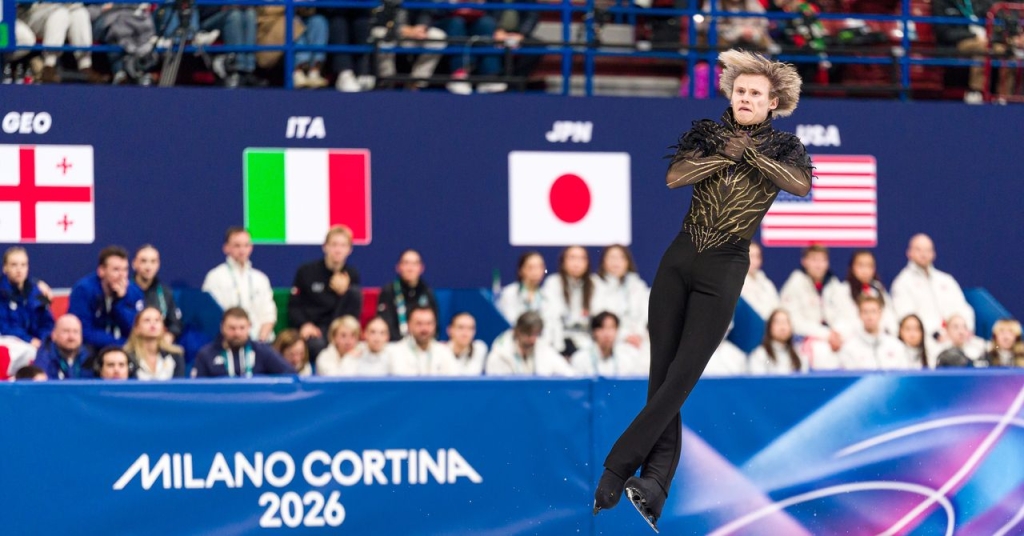
The Physics Behind the Quad Axel: How Skaters Defy Gravity to Land Figure Skating’s Toughest Jump
In the high-stakes world of figure skating, the quadruple axel stands as the sport’s Mount Everest—a jump so technically demanding that it remained unconquered for decades. That is, until 2022, when American phenom Ilia Malinin, now dazzling audiences as the “Quad God” at the 2026 Winter Olympics, rewrote the record books and redefined what’s possible on ice.
But what makes this jump so impossibly difficult? According to groundbreaking new research published in Sports Biomechanics in 2024, the secret might be simpler than we thought: you’ve got to get sky-high.
The Anatomy of an Impossible Jump
The axel jump is unique in figure skating—it’s the only jump that begins with a forward takeoff, meaning skaters must complete an extra half-rotation compared to other jumps. While a single axel requires 1.5 rotations in the air, the quadruple version demands a mind-bending 4.5 rotations before touching down again.
“It’s not just about spinning faster,” explains Seiji Hirosawa, the Toin University researcher behind the study. “It’s about maximizing the time you spend in the air to complete those rotations.”
Breaking Down the Science
Hirosawa’s research analyzed competition footage of two elite skaters attempting the quadruple axel, using advanced Ice Scope tracking technology to measure everything from vertical height to horizontal distance and skating speed.
The findings were surprising. Previous biomechanical studies had suggested that jump height remained relatively constant across different axel variations. Hirosawa’s data told a different story.
Both skaters attempting the quadruple axel achieved significantly greater vertical heights—we’re talking about clearing 20 inches off the ice—compared to their triple axel attempts. This wasn’t just a minor adjustment; it represented a fundamental shift in approach.
“The strategic emphasis on vertical height marks a departure from conventional wisdom in figure skating biomechanics,” Hirosawa notes in the study. “This finding suggests that athletes are intuitively discovering what physics has been telling us all along.”
The Math of Flight
Here’s where things get interesting. When a skater launches into a quadruple axel, they’re essentially solving a physics problem in real-time. The higher they jump, the more time they have to complete rotations around their longitudinal axis.
Think of it like this: if you’re spinning in an office chair, you can complete more rotations if someone gives you a stronger push. The same principle applies here, just with exponentially more complexity—and danger.
“The results of this study provide valuable insights into the biomechanics of quadruple and triple axel jumps, update existing theories of figure skating research, and provide insights into training strategies for managing complex jumps,” the research concludes.
Scoring the Impossible
In today’s figure skating scoring system, technical elements like jumps, spins, and steps are assigned point values by a panel of judges. At the Milano Cortina Games, this includes two technical specialists and a technical controller who evaluate each element’s execution.
The scoring reflects the inherent difficulty: quadruple jumps command significantly higher base values than triples or doubles. This creates a mathematical incentive for skaters to attempt these high-risk elements—land them, and you’re rewarded handsomely; fall, and the penalty can be devastating.
Training for the Unthinkable
So how do skaters train for something this demanding? According to coaches working with elite athletes, it’s a combination of off-ice preparation and on-ice repetition.
“We use harness systems, video analysis, and even virtual reality to help skaters visualize the rotation patterns,” says one Olympic-level coach who requested anonymity. “But at the end of the day, it comes down to feel. You have to know where you are in the air.”
The physical demands are staggering. Skaters need exceptional core strength, spatial awareness, and the ability to make split-second adjustments mid-air. They’re essentially human projectiles, controlling their rotation speed through subtle changes in body position.
The Human Factor
Despite all the science, there’s still something magical about watching a quadruple axel in person. The combination of speed, height, and rotation creates a visual spectacle that seems to defy physics.
Ilia Malinin’s performances at these Olympics have been particularly mesmerizing. The 19-year-old American has made the impossible look routine, landing quadruple axels with a consistency that has his competitors shaking their heads in disbelief.
“He’s operating on a different level,” says former Olympic champion and current commentator Johnny Weir. “What he’s doing isn’t just pushing the boundaries of the sport—it’s redefining them.”
What This Means for the Future
Hirosawa’s research doesn’t just explain how skaters are landing quadruple axels today; it provides a roadmap for what might come next. If vertical height is the key, could we see skaters attempting even more rotations?
The physics suggests it’s possible, though the human body’s limitations present significant challenges. Each additional rotation increases the rotational speed required and the precision needed for a clean landing.
Still, in a sport that’s seen quintuple jumps discussed as theoretical possibilities, today’s impossible becomes tomorrow’s routine with remarkable speed.
The Takeaway
The quadruple axel represents more than just a difficult jump—it’s a perfect intersection of art, athleticism, and physics. As researchers like Hirosawa continue to decode the biomechanics behind these elements, and as skaters like Malinin continue to push the boundaries of what’s possible, we’re witnessing the evolution of a sport in real-time.
The next time you watch figure skating and see a skater launch into that breathtaking 4.5-rotation leap, remember: they’re not just performing a jump. They’re solving a complex physics problem, mid-air, at 20 miles per hour, while wearing ice skates.
Now that’s what we call a Quad God move.
Tags & Viral Phrases:
Quad Axel physics breakthrough, Ilia Malinin Quad God phenomenon, figure skating science explained, 20 inches of air time magic, Winter Olympics 2026 skating revolution, biomechanics of impossible jumps, how to land a quadruple axel, sports science meets figure skating, the math behind Olympic gold, skating’s Mount Everest conquered, Ice Scope tracking technology, vertical height is everything, rotational physics in action, training for the unthinkable, human projectile on ice, redefining the limits of sport, the future of figure skating jumps, from impossible to routine, core strength and spatial awareness, harness systems and virtual reality training, Olympic-level physics problems, spinning at 20 miles per hour, the art and science of axels, judging the impossible in Milano Cortina, technical specialists evaluate gravity-defying moves, quintuple jumps on the horizon, human body limitations tested, split-second mid-air adjustments, the magic of 4.5 rotations, Olympic phenom at 19 years old, Johnny Weir on redefining boundaries, sports evolution in real-time, ice skates meet quantum physics, the perfect intersection of art and athleticism, decoding the biomechanics of greatness, watching history being made on ice
,


Leave a Reply
Want to join the discussion?Feel free to contribute!