
The robots who predict the future
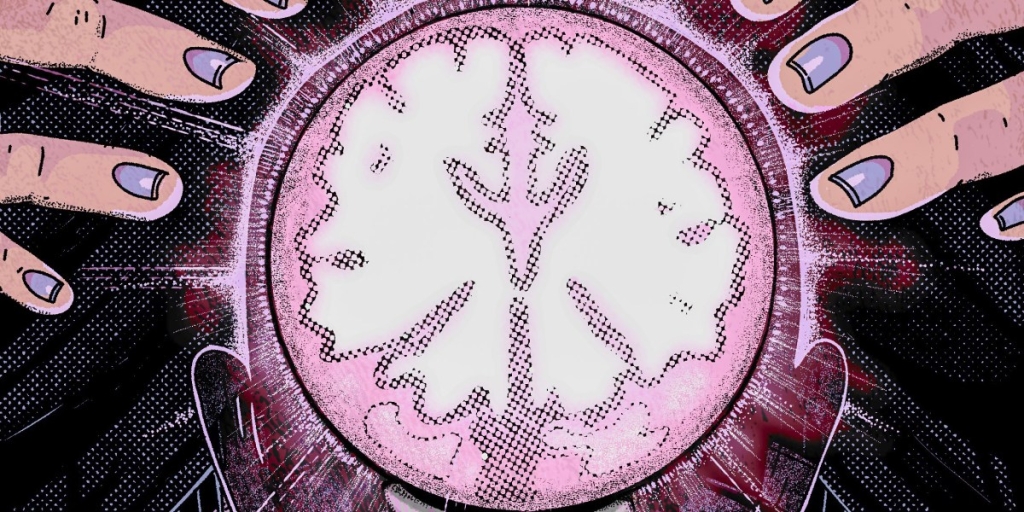
The Rise of the Machines: How Computers Became the Ultimate Decision-Makers—and Why It’s a Problem
In an era where algorithms dictate everything from your morning commute to your dating life, a new book by UC Berkeley professor Benjamin Recht is sounding the alarm on the dangers of letting computers call the shots. The Irrational Decision: How We Gave Computers the Power to Choose for Us is a provocative exploration of how humanity’s obsession with mathematical rationality has led us to outsource our most critical decisions to machines—and why that might be a catastrophic mistake.
Recht, a polymath in the Department of Electrical Engineering and Computer Science, traces the roots of this phenomenon back to the Enlightenment, but he argues that it truly took hold in the aftermath of World War II. The war’s emphasis on risk, strategy, and rapid decision-making pushed scientists and statisticians to develop mathematical models that could optimize outcomes. These models, which proved invaluable in defeating the Axis powers, became the blueprint for the first computers. The result? A machine designed to be the ultimate rational agent—one capable of making optimal decisions by quantifying uncertainty and maximizing utility.
But here’s the rub: this narrow, statistical conception of rationality has seeped into every corner of modern life. From supply chain management to social media algorithms, the core principles of optimization, game theory, and statistical prediction now drive the automated decisions that shape our world. As Recht puts it, “Every life decision is posed as if it were a round at an imaginary casino, and every argument can be reduced to costs and benefits, means and ends.”
This mindset, Recht argues, is best embodied by figures like pollster Nate Silver, Harvard psychologist Steven Pinker, and a host of Silicon Valley oligarchs. These are the people who believe that if only we all adopted their analytical mindset—weighing costs and benefits, estimating risks, and planning optimally—the world would be a better place. In other words, they think we should all make decisions like computers.
But Recht isn’t buying it. For starters, humans have been making evidence-based decisions long before the advent of automation. Advances in clean water, antibiotics, and public health brought life expectancy from under 40 in the 1850s to 70 by 1950. We built cars and airplanes without a formal system of rationality, and we somehow managed to invent modern democracy without optimal decision theory. So why, Recht asks, should we now surrender our decision-making to machines?
The answer, he suggests, lies in the limitations of mathematical rationality itself. While computers excel at solving problems with clear parameters and quantifiable outcomes, they struggle with the messy, unquantifiable aspects of human life—intuition, morality, and judgment. These are the very qualities that often guide us through life’s most important and vexing problems. So how do we convince the Pinkers and Silvers of the world that human intuition and judgment might be better tools for navigating the complexities of existence?
One way to start, Recht suggests, is by reminding them that any prediction—whether computational or otherwise—is really just a wish. This idea is explored in depth by Carissa Véliz in her book Prophecy: Prediction, Power, and the Fight for the Future, from Ancient Oracles to AI. A philosopher at the University of Oxford, Véliz argues that predictions are not neutral observations but powerful forces that shape reality. “When the force of the magnet is strong enough,” she writes, “the prediction becomes the cause of its becoming true.”
In other words, the more we rely on computers to make decisions for us, the more we risk creating a self-fulfilling prophecy—one where the world is shaped by the narrow, statistical logic of machines rather than the messy, unquantifiable wisdom of humans.
So, as we hurtle toward an increasingly automated future, it’s worth asking: Are we ready to hand over the reins to the machines? Or is it time to reclaim our humanity—and our ability to make decisions that reflect our values, our intuition, and our judgment?
Tags & Viral Phrases:
- The Rise of the Machines
- How Computers Became the Ultimate Decision-Makers
- The Dangers of Mathematical Rationality
- Why We Should Stop Making Decisions Like Computers
- The Self-Fulfilling Prophecy of AI
- Reclaiming Human Intuition in a Machine-Driven World
- The Future of Decision-Making: Humans vs. Machines
- Are We Ready to Hand Over the Reins to the Machines?
- The Messy Wisdom of Humans vs. the Narrow Logic of Machines
- The Fight for the Future: Humans, AI, and the Power of Prediction
- Why Silicon Valley’s Obsession with Optimization is a Problem
- The Limitations of Mathematical Rationality
- The Role of Intuition, Morality, and Judgment in Decision-Making
- The Legacy of World War II: How It Shaped Modern Computing
- The Illusion of Optimal Decision-Making
- The Magnet That Bends Reality: The Power of Prediction
- The Fight for the Future: Humans vs. AI
- The Irrational Decision: A Call to Reclaim Our Humanity
,

Leave a Reply
Want to join the discussion?Feel free to contribute!