
The secret of how cats twist in mid-air to land on their feet
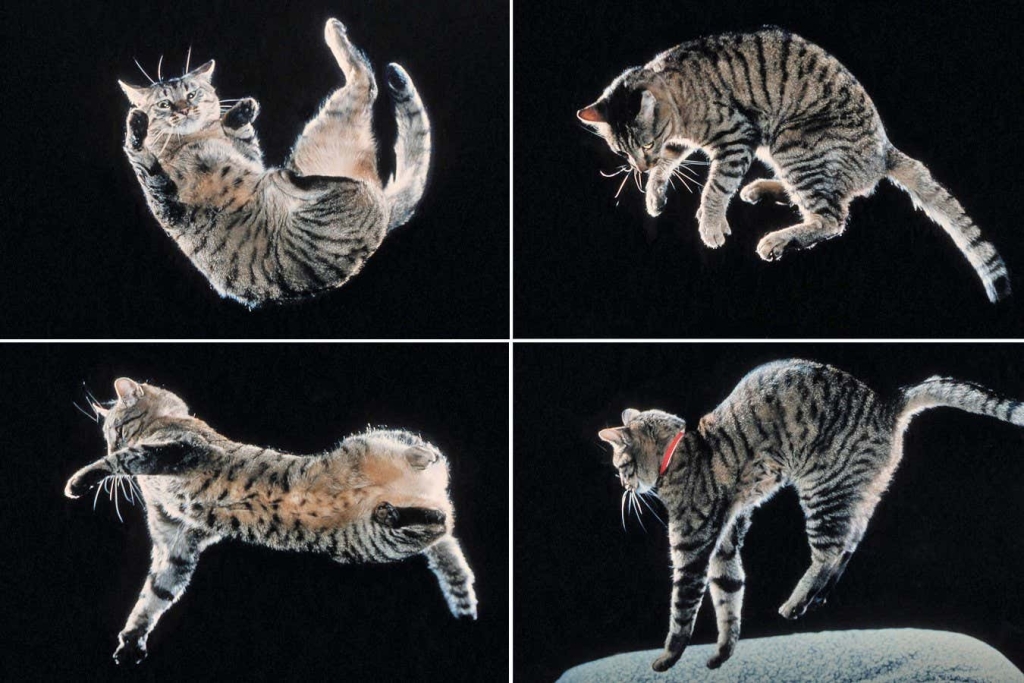
Breaking: Scientists Uncover the Secret Behind Cats’ Gravity-Defying Landings
In a discovery that’s sending shockwaves through the scientific community, researchers have finally cracked one of nature’s most mesmerizing mysteries: how cats always manage to land on their feet, no matter how they fall. This isn’t just another cute cat video waiting to happen—this is physics, biology, and evolution colliding in the most spectacular way possible.
The Feline Physics Phenomenon That’s Stumping Scientists (Until Now)
For over a century, physicists, biologists, and cat lovers alike have been obsessed with understanding how our feline friends pull off their seemingly impossible mid-air acrobatics. The question has haunted the scientific world since the early 1900s, with three competing theories battling it out for dominance.
But here’s the mind-blowing part: according to groundbreaking new research from Yamaguchi University in Japan, the answer lies in a single, extraordinary region of the cat’s spine that’s three times more flexible than any other part of their body.
The Three Contenders: Which Theory Wins the Cat Physics Championship?
Let’s break down the three main theories that have been duking it out in the scientific arena:
The Propeller Tail Theory: This one suggested cats use their tails like helicopter rotors, swinging them one way to rotate their bodies the other way. Sounds plausible, right? Well, here’s the plot twist—cats without tails can still perform this amazing feat! As Greg Gbur from the University of North Carolina at Charlotte puts it, “The tail seems to be the least important, because if it doesn’t have a tail it can still turn over.”
The Bend-and-Twist Model: Picture this—a cat bending its body into almost a perfect right angle, then rotating its front half one way and the back half the other way. It’s like watching a living, breathing origami masterpiece unfold in mid-air. The beauty of this model? Both the front and rear legs arrive at their landing positions simultaneously, creating that perfect, graceful touchdown we all know and love.
The Tuck-and-Turn Technique: This one’s all about timing and strategy. The cat extends its rear legs while keeping its front legs tucked in, twisting the front half first. Then it swaps—front legs extended, rear legs contracted—and twists the back half. It’s basically a four-legged version of the classic “now you see it, now you don’t” magic trick.
The Game-Changing Discovery: When Science Meets Cat Anatomy
Here’s where things get really interesting. The Japanese research team didn’t just theorize—they got their hands dirty (literally). They examined the spines of five deceased cats, carefully twisting each region to measure flexibility. Then they took things to the next level by filming two live cats being dropped from a height of 1 meter—talk about dedication to science!
The results? Prepare to have your mind blown. The thoracic spine (that’s the middle-back region) showed a range of motion three times greater than the lumbar spine (lower back). But wait, there’s more! When they analyzed the high-speed footage, they discovered something absolutely wild: in both cases, the cats finished rotating their fronts tens of milliseconds before their rears.
What This Means for Cat Physics (And Why It Matters)
Greg Gbur, who literally wrote the book on this topic (“Falling Felines and Fundamental Physics”), says this research is making him completely rethink everything he thought he knew. “My general impression has been that the bend-and-twist is the most important, but this paper actually makes me reassess a bit and give a little bit more credence to the tuck-and-turn,” he admits.
The highly flexible thoracic spine suggests that the front of the cat’s body might be doing more of the heavy lifting (or should we say, heavy twisting?) than previously thought. And when you watch those high-speed videos, it really does look like the upper part of the body is properly oriented first.
The Plot Twist Nobody Saw Coming: Cats Have a Preferred Twist Direction!
Just when you thought this story couldn’t get any more fascinating, here comes the ultimate curveball. Both of the live cats in the experiment rotated to the right as they fell. One did it every single time, while the other pulled it off six out of eight trials. Gbur says an audience member at one of his talks noticed the same thing in his videos—cats seem to have a rough preference for which way they twist.
But why? The leading theory suggests that asymmetries in the placement of cats’ internal organs might make it easier to turn one way than the other. It’s like they’re born with a built-in preference, just like humans being right or left-handed.
The Bigger Picture: Why This Matters Beyond Just Being Cool
This isn’t just about satisfying our curiosity about cat behavior (though let’s be honest, that’s pretty awesome too). Understanding how cats achieve these incredible mid-air maneuvers could have serious implications for robotics, biomechanics, and even space exploration. Imagine robots that can right themselves in zero gravity, or spacecraft that can adjust their orientation mid-flight using principles inspired by feline physics.
Plus, let’s not forget the evolutionary angle. This ability likely developed as a survival mechanism, allowing cats to survive falls from great heights—a crucial advantage for tree-dwelling ancestors and modern-day window-sill loungers alike.
The Viral Potential: Why This Story is About to Explode
Get ready, because this story is about to take over your social media feeds. We’re talking about:
– Cats + Science = Internet Gold
– Slow-motion footage that will make you question reality
– A 100-year-old mystery finally solved
– Cute animals doing incredible things
– Physics explained through adorable creatures
This is exactly the kind of story that combines intellectual curiosity with pure entertainment value, making it perfect for sharing across all platforms.
The Bottom Line: Cats Continue to Amaze Us
As we wrap up this deep dive into feline physics, one thing becomes crystal clear: cats are even more incredible than we thought. They’re not just adorable companions or internet celebrities—they’re living, breathing physics experiments that have been walking among us this whole time.
The next time you see a cat gracefully landing on its feet after a fall, remember: you’re witnessing the result of millions of years of evolution, sophisticated biomechanics, and some seriously impressive physics. And thanks to this groundbreaking research, we’re finally starting to understand just how they pull off these gravity-defying feats.
So here’s to our feline friends—the original acrobats, the masters of mid-air maneuverability, and now, officially, the subjects of some of the most fascinating scientific research of our time. The cat’s out of the bag, and it’s more amazing than we ever imagined.
#CatPhysics #FelineAcrobatics #ScienceIsAwesome #MindBlown #ViralScience #CatLoversUnite #PhysicsPhenomenon #NatureIsAmazing #EvolutionaryWonders #InternetGold #BreakingScience #CatFacts #AmazingAnimals #ViralContent #ScienceDiscovery #CatBehavior #Biomechanics #EvolutionaryBiology #PhysicsExplained #CuteButDeadlySmart
Tags: cats, physics, falling, spine, flexibility, thoracic, lumbar, rotation, mid-air, acrobatics, evolution, biomechanics, research, Yamaguchi University, Greg Gbur, bend-and-twist, tuck-and-turn, propeller tail, high-speed video, viral science, animal behavior, scientific discovery
Viral Phrases:
– “The cat’s out of the bag, and it’s more amazing than we ever imagined”
– “Cats continue to amaze us”
– “Living, breathing physics experiments”
– “Gravity-defying feats”
– “Mind-blowing results”
– “Game-changing discovery”
– “Plot twist nobody saw coming”
– “Internet gold”
– “Science meets cat anatomy”
– “Feline physics phenomenon”
– “Breaking: Scientists uncover the secret”
– “Prepare to have your mind blown”
– “Get ready, because this story is about to take over”
– “The next time you see a cat gracefully landing”
– “Millions of years of evolution”
– “Seriously impressive physics”
– “The original acrobats”
– “Masters of mid-air maneuverability”
– “Viral science content”
– “Cute but deadly smart”,


Leave a Reply
Want to join the discussion?Feel free to contribute!