
The Shoes and Brooms Transforming Curling at the 2026 Winter Olympics
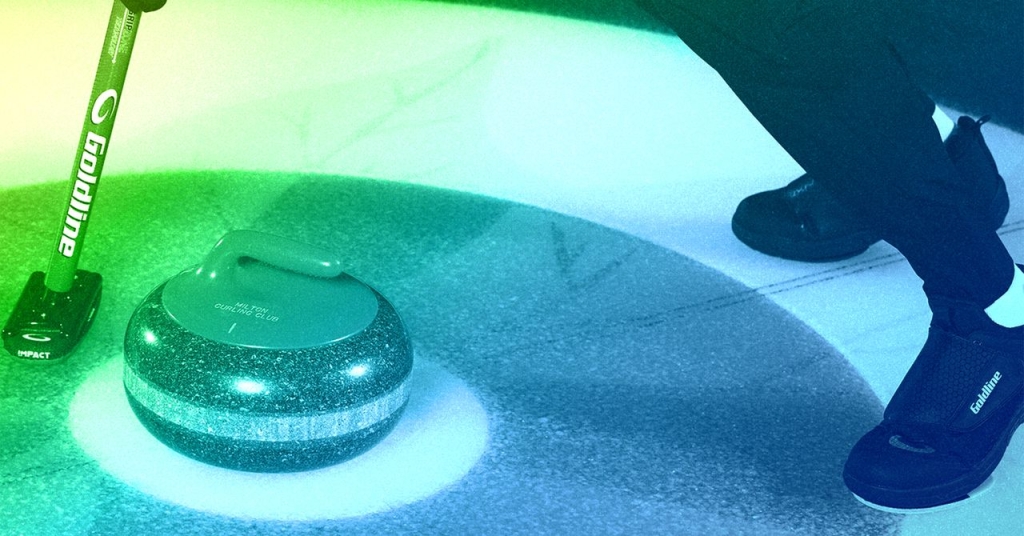
The Future of Curling: How Tech Is Revolutionizing the Ice at the 2026 Winter Olympics
As the 2026 Winter Olympics kick off in Milan-Cortina, all eyes are on the curling rink—not just for the intense competition, but for the groundbreaking technology that’s transforming this centuries-old sport. From precision-engineered stones to sensor-laden brooms, curling is experiencing a high-tech renaissance that’s captivating both purists and newcomers alike.
The Scottish Stone Legacy: Ailsa Craig’s Granite Empire
Deep in the Firth of Clyde, off Scotland’s rugged west coast, lies Ailsa Craig—a small, uninhabited island that has become the beating heart of curling worldwide. This 99-hectare volcanic plug produces the granite that forms nearly every curling stone used in competition today, making it perhaps the most important island in winter sports you’ve never heard of.
The granite from Ailsa Craig comes in two prized varieties: common green and blue hone. These aren’t just marketing terms—they represent specific mineral compositions that have been scientifically proven to resist the unique challenges of curling. The stones must weigh between 19.96 and 17.24 kilograms, a specification that ensures consistency across international competition.
What makes this granite so special? It’s all about the molecular structure. The stone faces extreme conditions: sliding 28 meters across ice while enduring temperature fluctuations, humidity changes, and the constant impact of collisions. Regular granite would crack, chip, or develop condensation issues that could ruin a game. Ailsa Craig’s granite, however, maintains its integrity through thousands of slides.
Kays of Scotland, the official supplier for the Olympics and World Championships, employs craftsmen who’ve spent decades perfecting the art of stone production. The process involves multiple stages of grinding, polishing, and quality control that can take weeks per stone. Each one is essentially a precision instrument, with tolerances measured in fractions of a millimeter.
Meanwhile, Canada Curling Stone has emerged as a major competitor, capitalizing on curling’s explosive growth in Canada, where the sport has become something of a national obsession. The company has invested heavily in automation and quality control systems that ensure every stone meets international standards.
The Broom Revolution: Where Physics Meets Passion
If the stones are the weapons of curling, the brooms are the tactical instruments that make victory possible. Modern curling brooms are engineering marvels that bear little resemblance to their humble ancestors.
Dale Matchett, general manager at BalancePlus—one of the sport’s leading equipment manufacturers—explains the challenge: “Broom technology continues to be a major focus because the physical demands of the sport continue to evolve, and one of the biggest challenges is finding the right balance between weight, strength, and effective energy transfer.”
The evolution has been dramatic. Early brooms were simple corn-straw brushes that did little more than sweep debris from the ice. Today’s brooms are sophisticated tools that can actually influence the stone’s trajectory through controlled friction and heat generation.
The handle technology alone represents years of R&D. Modern handles feature ergonomic grips designed through motion-capture studies of elite sweepers. The materials range from traditional wood to advanced carbon fiber composites, each offering different weight distributions and vibration dampening properties.
But the real game-changer has been the integration of sensors and data analytics. High-end brooms now come equipped with accelerometers, gyroscopes, and pressure sensors that track every aspect of a sweeper’s technique. These devices can measure sweep angle, pressure application, stroke frequency, and even the heat generated at the broom head.
Teams use this data to optimize their sweeping strategies in real-time. Coaches can monitor multiple players simultaneously through wireless connections, providing instant feedback on technique adjustments. Some systems even incorporate AI algorithms that suggest optimal sweeping patterns based on stone speed, ice conditions, and target position.
The broom heads themselves have undergone revolutionary changes. Modern materials like synthetic fabrics and specialized foams can generate more consistent friction while lasting longer than traditional horsehair or hog’s hair. The surface area and bristle configuration are carefully engineered to maximize the “sweeping effect”—the phenomenon where vigorous sweeping actually melts a microscopic layer of ice, reducing friction and extending the stone’s travel distance.
Footwear Technology: The Foundation of Control
While brooms and stones get most of the attention, curling shoes represent another frontier of technological advancement. These aren’t your average athletic shoes—they’re precision instruments designed for maximum control on ice.
The key innovation is the slider. Unlike regular shoes, curling shoes have one sole covered with a low-friction material (typically Teflon or stainless steel) that allows the player to glide smoothly during delivery. The other shoe features a rubber gripper for traction during sweeping or when navigating the ice.
Recent developments have focused on customizable slider thickness and material composition. Players can now adjust their sliders based on ice conditions, personal preference, and specific shot requirements. Some elite players carry multiple pairs of shoes with different slider configurations for various strategic situations.
The upper construction has also evolved, incorporating breathable, waterproof materials that keep feet dry and comfortable during long matches. Internal support structures help prevent fatigue and reduce the risk of injury during the repetitive motions of sweeping and delivery.
Smart Technology: The Digital Transformation
Perhaps the most significant technological shift in curling isn’t visible to casual observers—it’s happening in the data streams flowing from every stone and broom on the ice.
Modern curling venues are equipped with sophisticated tracking systems that monitor stone position, speed, and trajectory with millimeter precision. High-speed cameras and laser sensors create detailed 3D maps of each shot, allowing teams to analyze their performance with unprecedented accuracy.
RFID chips embedded in stones enable automatic scoring and position tracking. These systems can instantly determine whether a stone is touching the button (the center of the target) or which stones are counting for score at the end of each round. This technology has eliminated scoring controversies and sped up game play.
Mobile apps and tablet interfaces give coaches real-time access to this data during matches. They can track stone wear patterns, analyze ice conditions, and adjust strategies on the fly. Some teams use augmented reality systems that overlay tactical information directly onto their view of the ice.
The Human Factor: Technology Enhances, Not Replaces
Despite all this technological advancement, curling remains fundamentally a human sport. The technology serves to enhance natural skill rather than replace it. As Matchett notes, “The best equipment in the world won’t help someone who doesn’t understand the fundamentals of sweeping technique and strategy.”
This balance between tradition and innovation is what makes modern curling so fascinating. The sport honors its Scottish heritage while embracing cutting-edge technology that pushes performance boundaries.
The 2026 Olympics showcase this perfectly. Teams from Sweden, Canada, Switzerland, and Scotland—traditional curling powerhouses—are competing alongside the host nation’s team, featuring Stefania Constantini and Amos Mosaner, the reigning Olympic and world mixed doubles champions. Each team brings its own technological approach, creating a fascinating laboratory of innovation on the ice.
Looking Forward: The Next Wave of Curling Technology
The technological evolution of curling shows no signs of slowing. Industry insiders predict several emerging trends that could reshape the sport in the coming years.
Smart ice technology is on the horizon, with embedded sensors that can monitor temperature, humidity, and surface conditions in real-time. This data would allow ice technicians to maintain optimal playing conditions and help teams adjust their strategies based on precise environmental data.
Advanced materials science could yield even better stone compositions, perhaps moving beyond traditional granite to engineered materials that offer superior consistency and durability. Some researchers are experimenting with nano-engineered surfaces that could provide unprecedented control over friction characteristics.
Wearable technology integration represents another frontier. Smart fabrics woven into uniforms could monitor player biometrics, providing insights into fatigue levels, optimal performance windows, and injury prevention strategies.
Virtual and augmented reality training systems are already being developed that allow players to practice in simulated environments, experiencing different ice conditions and strategic scenarios without leaving their home clubs.
The Cultural Impact: Curling’s Tech-Powered Renaissance
The technological transformation of curling coincides with the sport’s growing global popularity. What was once a niche activity primarily enjoyed in Scotland, Canada, and Scandinavian countries has become a worldwide phenomenon, thanks in part to its accessibility and the dramatic improvements in equipment that have made it more enjoyable for recreational players.
Social media and streaming technology have also played crucial roles. High-definition broadcasts with multiple camera angles, slow-motion replays, and expert commentary have made curling more engaging for viewers. Interactive features allow fans to track stone trajectories, analyze team strategies, and even predict shot outcomes.
The 2026 Olympics represent a watershed moment where tradition meets innovation on a global stage. As millions tune in to watch the stone sliding and sweeping action, they’re witnessing not just athletic competition but the evolution of a sport that’s embracing the future while honoring its past.
From the granite quarries of Ailsa Craig to the sensor-laden brooms sweeping across Milan’s ice rinks, curling technology tells a story of human ingenuity, sporting passion, and the endless pursuit of perfection—one stone, one sweep, one technological breakthrough at a time.
Tags
curling technology, Winter Olympics 2026, Ailsa Craig granite, smart curling equipment, curling brooms, curling stones, curling footwear, Olympic curling, curling sensors, BalancePlus, Canada Curling Stone, curling data analytics, curling innovation, curling equipment evolution, curling smart technology
Viral Phrases
“The granite that rules the world comes from one tiny Scottish island”
“Curling brooms are now smarter than your phone”
“How sensors are changing the game of sliding stones”
“The secret technology behind Olympic curling success”
“Why every curling stone tells a story of Scottish craftsmanship”
“The broom that could win you Olympic gold”
“Curling’s high-tech revolution no one saw coming”
“From straw brushes to carbon fiber: The broom’s journey”
“The island that supplies granite to every Olympic curler”
“How data analytics is sweeping the curling world”
“The future of curling is already here—and it’s digital”
“Why curling technology matters more than you think”
“The perfect stone: Science meets tradition on the ice”
“Curling’s hidden tech: What the cameras don’t show you”
“How smart shoes are changing how curlers deliver stones”
,


Leave a Reply
Want to join the discussion?Feel free to contribute!